Arthur Krieg, MD, CSO and Founder, CheckMate Pharmaceuticals
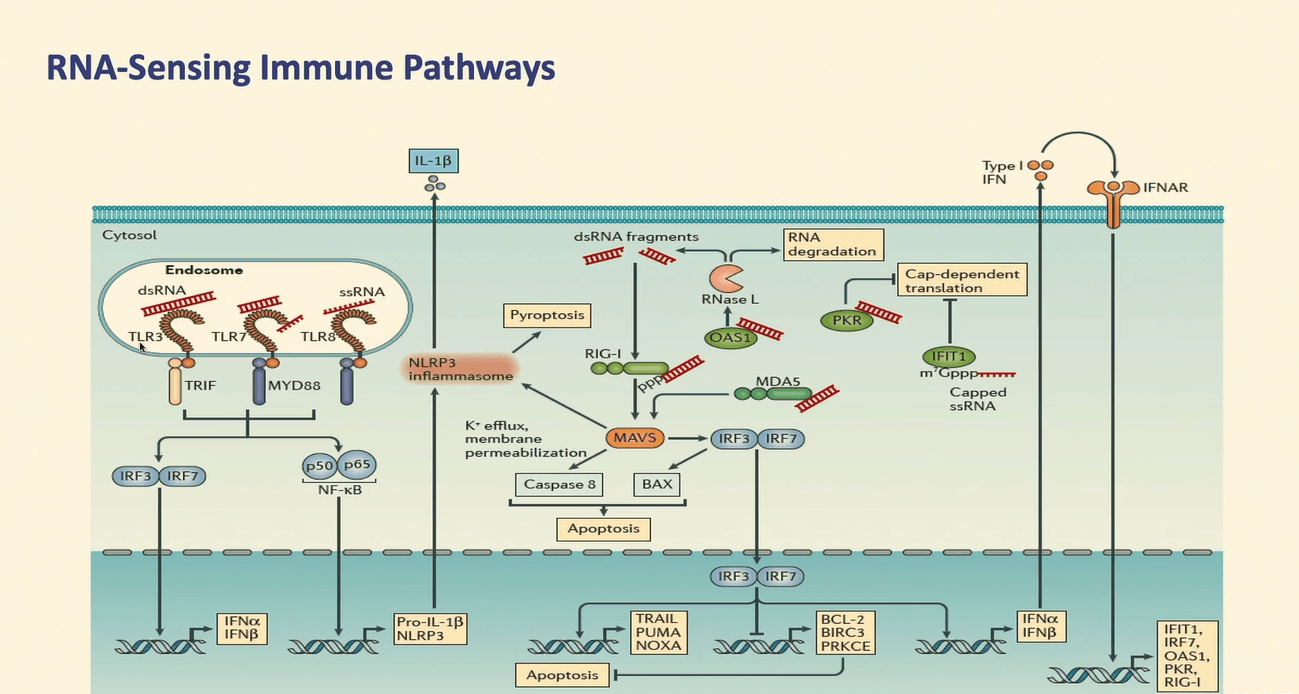
Dr. Arthur Krieg began by introducing immunostimulatory oligonucleotides by grouping them into RNA detectors and DNA detectors. In endosomes, RNA sensing is mediated by toll-like receptors (TLRs) including TLR3, TLR7, and TLR8. These receptors do not distinguish foreign and self-RNA. Downstream events take place through either a Nuclear factor Kappa B (NF-kB) pathway leading to inflammatory cytokines, or via the interferon response factor (IRF) pathway inducing type I interferon production.
Kreig described his team’s work as they conducted human peripheral blood mononuclear cell (PMBC) assays and measured IFN-α and TNF-α levels as an indication of plasmacytoid dendritic cells activation via TLR7 and monocyte activation via TLR8. They found certain patterns that stimulate TLR7 or TLR8. To do so, they used an RNA sequence that does not activate either of the receptors and inserted four bases into that sequence to obtain different RNA elements. Depending on the added bases, Dr. Krieg showed that it was possible to stimulate only TLR7, TLR8, or both. They focused on IFN-α and TNF-α to look at the readouts of TLR7 and TLR8, because these receptors are expressed in different cells. Dr. Krieg specifically pointed out plasmacytoid dendritic cells (pDCs) that express the fewest of these innate immune receptors, only TLR7 and TLR9 can induce maximal activation of the pDC to produce the highest amount of IFN-α. He explained the therapeutic importance of the fact that different subpopulations of immune cells can be activated by understanding where these receptors are expressed.
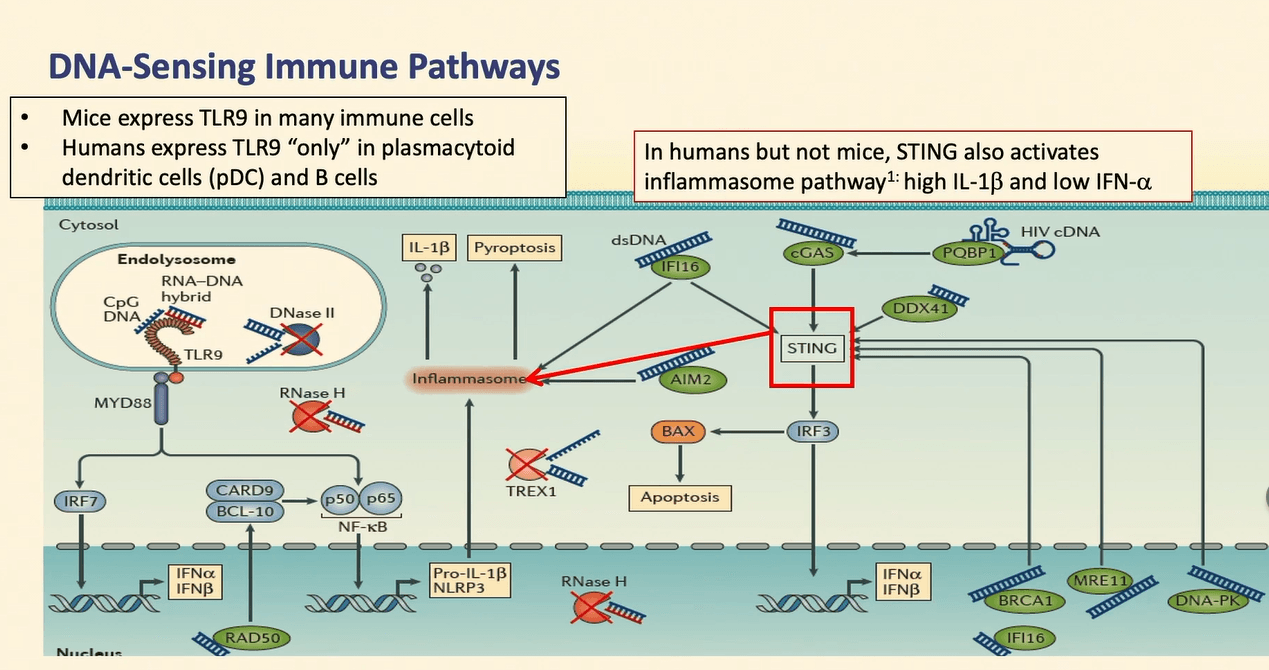
Regarding DNA sensing, Dr. Krieg stated that similar intracellular events take place. There is one receptor (TLR9) in endosomes that is responsive to several targets. Depending on the design of the TLR9 ligand, it is possible to differentially activate IRF7 and NF-kB. He continued by focusing on CpG oligos that are grouped into three: CpG-A, CpG-B, and CpG-C. Of these, CpG-A is unique with the polyG sequences forming G-quadruplexes, the presence of unmethylated CG, and it is cleavable. He showed that CpG-A induced the highest IFN-α and lowest inflammatory cytokine response in a human PBMC assay while the other TLR activators acted in the opposite direction.
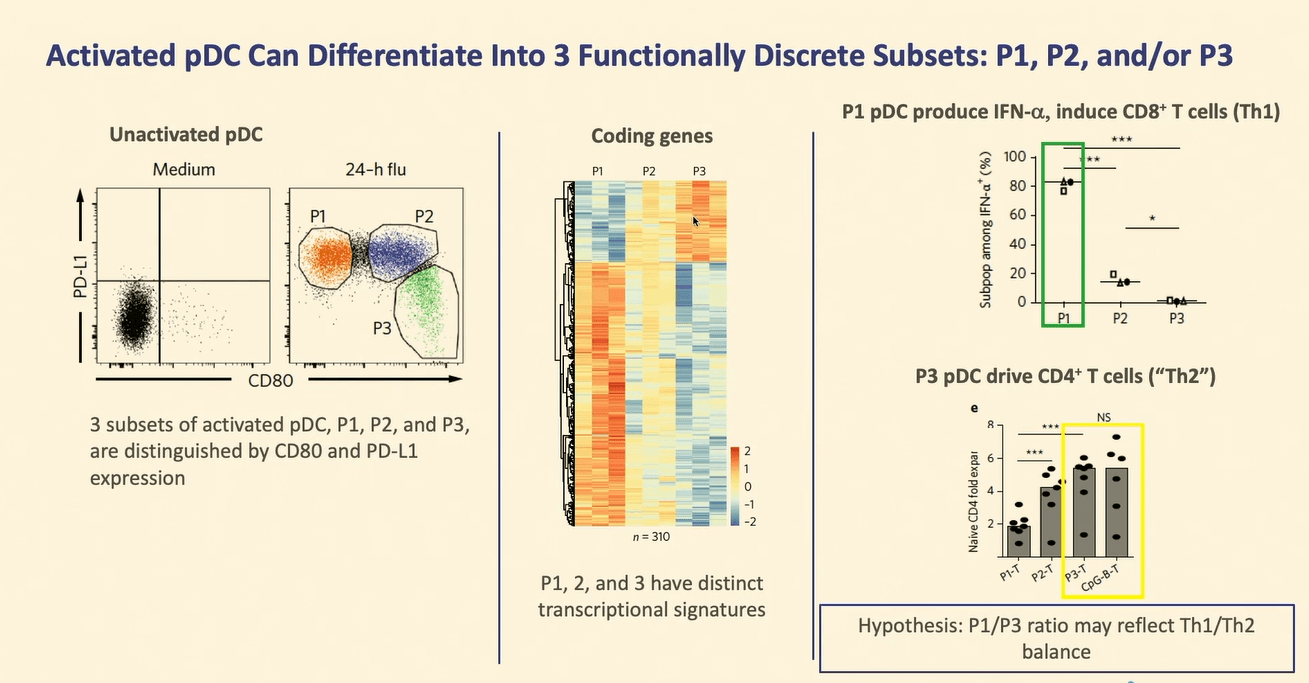
Dr. Krieg also talked about the use of the CpG in clinical development of cancer immunotherapy and explained that most CpG-B and CpG-C oligos had failed as therapeutic candidates, but why CpG-A is promising. To begin with, CD8+ T cells are the most effective tumor killer cells, however, there are some limitations. First, there are checkpoints located on the surface of the T-cells that need to be treated with checkpoint inhibitors. Second, most patients do not have a sufficient number of those T cells. Dr. Krieg shared that IFN-α must be given in a pulsatile manner and plasmacytoid dendritic cell (pDC) is key for this purpose. They regulate tolerance versus immunity, and the Th1 response like CD8+ mediated versus Th2 response like antibody-mediated response. The way that pDC regulates these distinct responses is the existence of different subtypes. While P1 makes IFN-α and induces CD8+ T cells (Th1), P3 drives CD4+ (Th2) cells. Thus, their hypothesis is P1/P3 ratio might be an indicator of Th1/Th2 ratio. For cancer immunotherapy, one can prefer P1>P3 whereas P3>P1 is more favorable for an infectious disease vaccine. He shared a set of fluorescence-activated cell sorting (FACS) data showing that inactivated pDCs are negative for PD-L1 and CD80 while activated pDCs can differentiate into three functionally discrete subsets: P1, P2, and P3, which display a different transcriptional profile. P1 subset is remarkably responsible for IFN-α release while P3 subset leads to CD4+ T cell proliferation promoting antibody responses. They also looked at different innate immune activators and demonstrated that CpG-A is different from the other agents considering the induction of P1 subset and P1/P3 ratio.
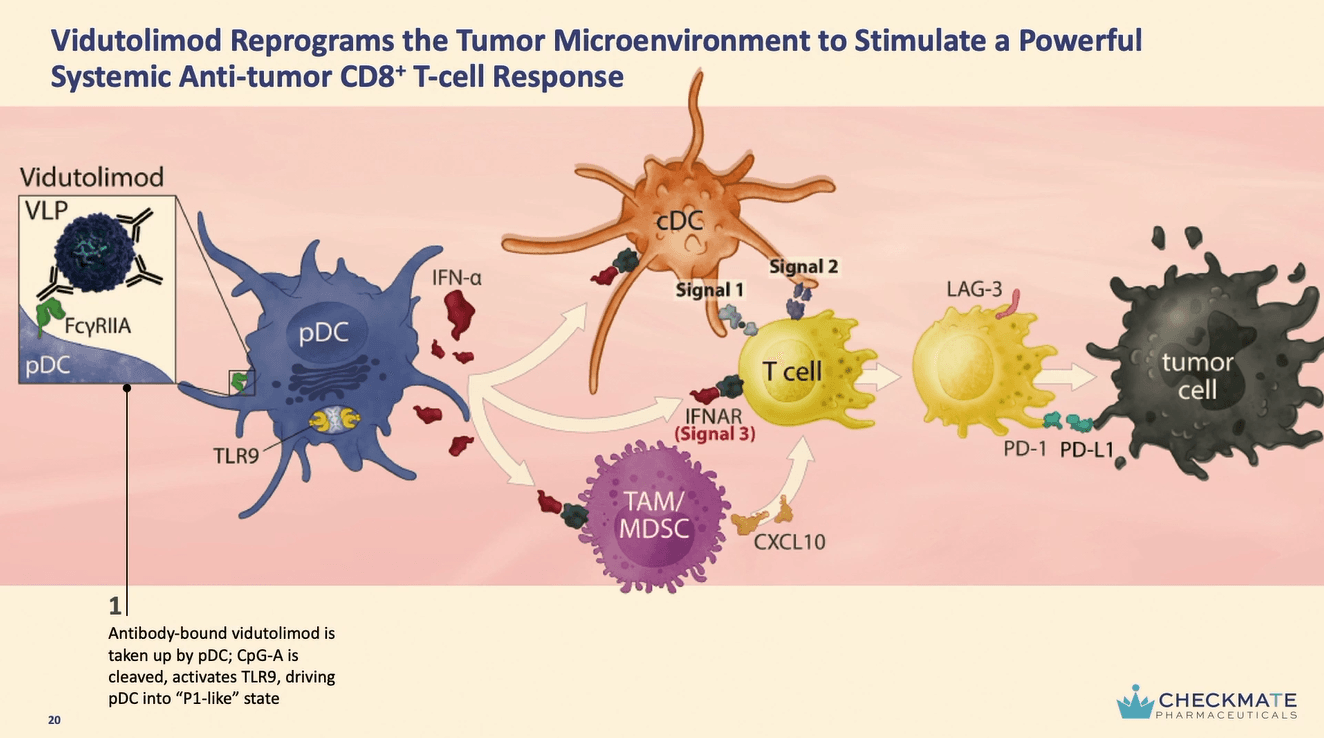
Dr. Krieg also discussed Vidutolimod the drug combining CpG-A with virus-like particle (VLP) delivery facilitating immune cell uptake via the Fc receptor. They demonstrated the importance of VLP on tumors implanted to mice. In the injected tumor sample, various CpG-A oligos displayed good local effect regardless of naked delivery or VLP-mediated delivery; however, VLP mediated delivery is remarkably important and naked CpG-A oligos did not give the same level of activity. Dr. Krieg summarized what is happening in the tumor as follows:
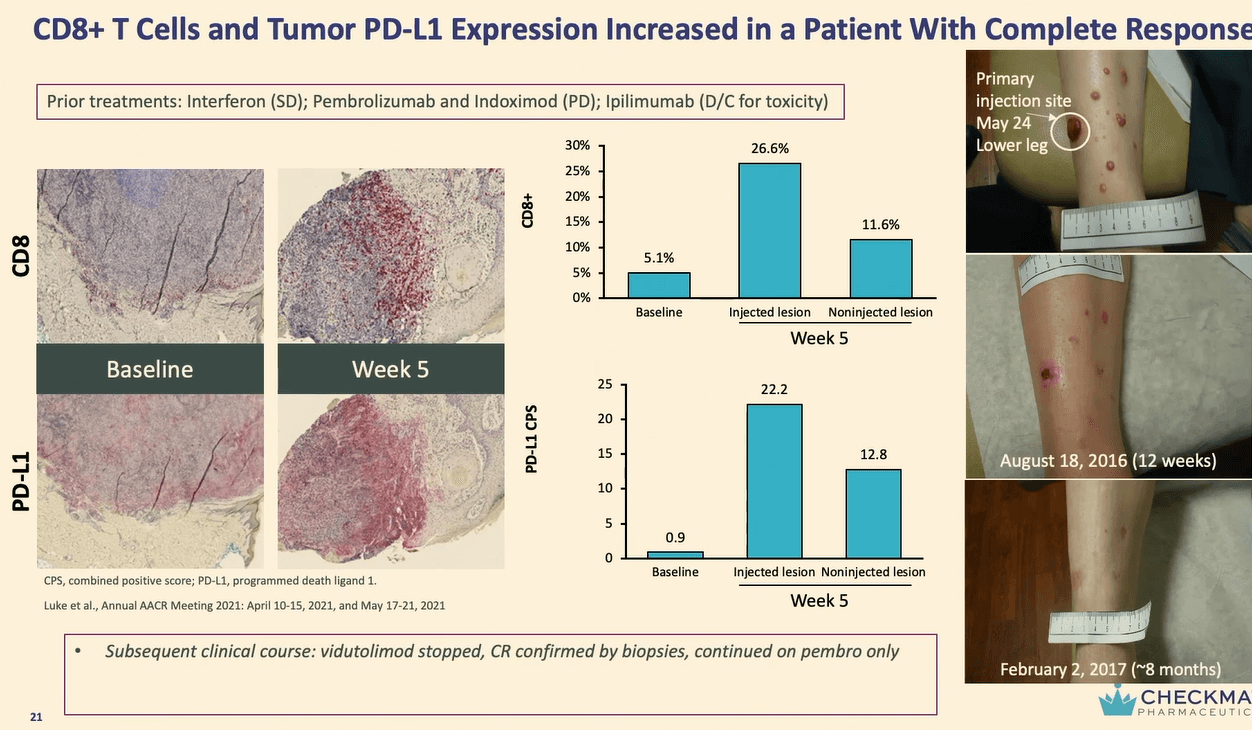
While explaining the effects of Vidutolimod in the tumor microenvironment, he underscored the importance of a combinatorial therapy to block those checkpoints along with inducing T-cell immune response and showed the data obtained from their studies with a patient with melanoma received that combinatorial treatment. CD8+ T cells together with the PD-L1 expression resulted in alleviations in not only injected lesion but also noninjected lesion, so they observed systemic responses. Additionally, the duration of the response in the patients getting monotherapy is shorter than the patients receiving combinatorial therapy. They also tested treatment-related adverse events and showed a safe profile.