Nainesh Shah Senior Project Engineer at Asahi Kasei Bioprocess America
Oligonucleotides, short strands of genetic sequences, are a critical component of many cell and gene therapies. Advances in their manufacture have paved the way for many new drugs that possess greater stability, specificity, and efficacy, targeting faults in genetic code to address the source of disease.
The process of manufacturing an oligonucleotide hinges on repetition – each step may be repeated dozens of times to achieve the desired molecule. Employing an oligonucleotide synthesizer serves to automate this process, resulting in greater reliability and reproducibility. Currently, many oligo molecules are produced via batch process in reactors; this approach creates both time and resource constraints, requiring more solvents and process analysis at each step, and the molecule may be impacted by changing conditions inside the reactor.
Identifying an equipment supplier that can facilitate oligonucleotide synthesis with state-of-the-art equipment and process support is critical to maximizing oligo production and achieving consistency at scale. Asahi Kasei Bioprocess America (AKBA), a technology solutions provider with expertise in fluid management technology, has developed a suite of manufacturing-scale equipment designed to help developers seamlessly scale their products from research to commercial validation.
Scaling Oligo Made Faster and Easier
Creating a new oligo molecule using traditional batch processing means starting from scratch. This time- and resource-intensive exercise exists in contrast to production using an oligosynthesizer, which allows for seamless scale-up between widely disparate batch sizes – operators can transition from the 1-gram scale to the 80-gram scale to a multi-kilogram scale and achieve the same results. Employing an oligosynthesizer greatly accelerates the oligo production process, taking up to a week depending on the individual process. Additionally, synthesizers introduce adaptability and flexibility to the oligo manufacturing process, enabling operators to perform changeovers by simply changing certain parameters or programming a new method.
Another means by which oligosynthesis represents an improvement over traditional oligo production methods relates to footprint – while the traditional method requires that each piece of equipment be sized according to the scale of the operation, oligosynthesizers operate at various scales based on dilution and process parameters. Because manufacturers can switch between products in minutes or hours, these factors contribute to a much lower facility footprint when compared to traditional manufacturing methods.
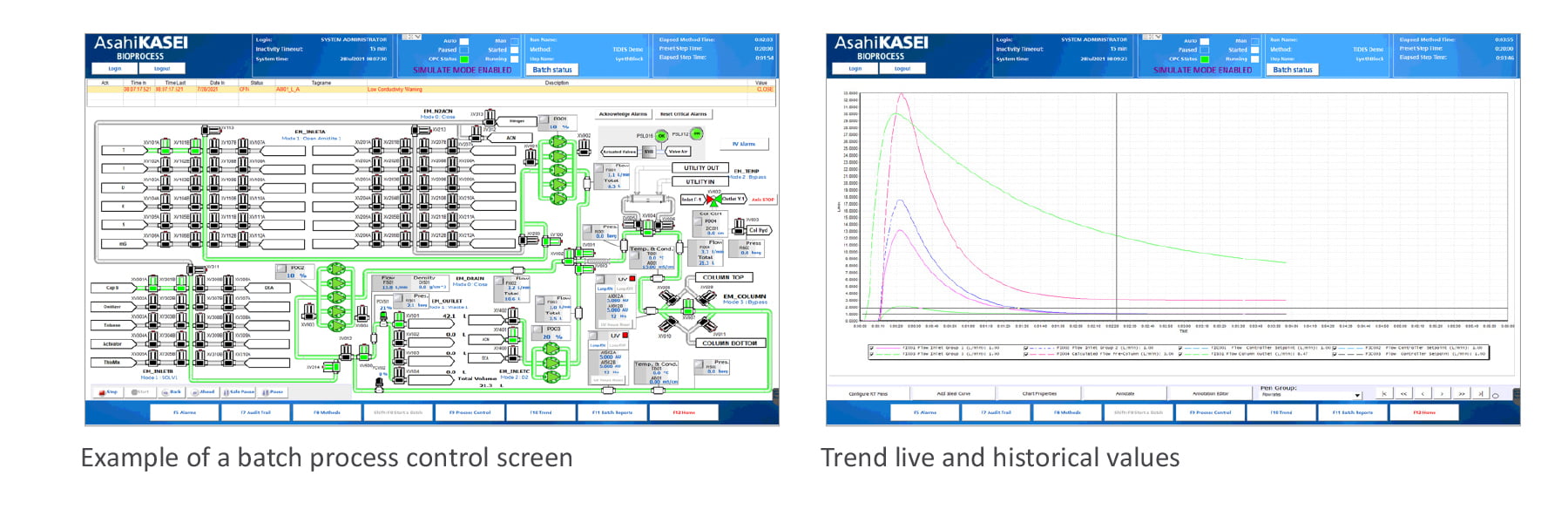
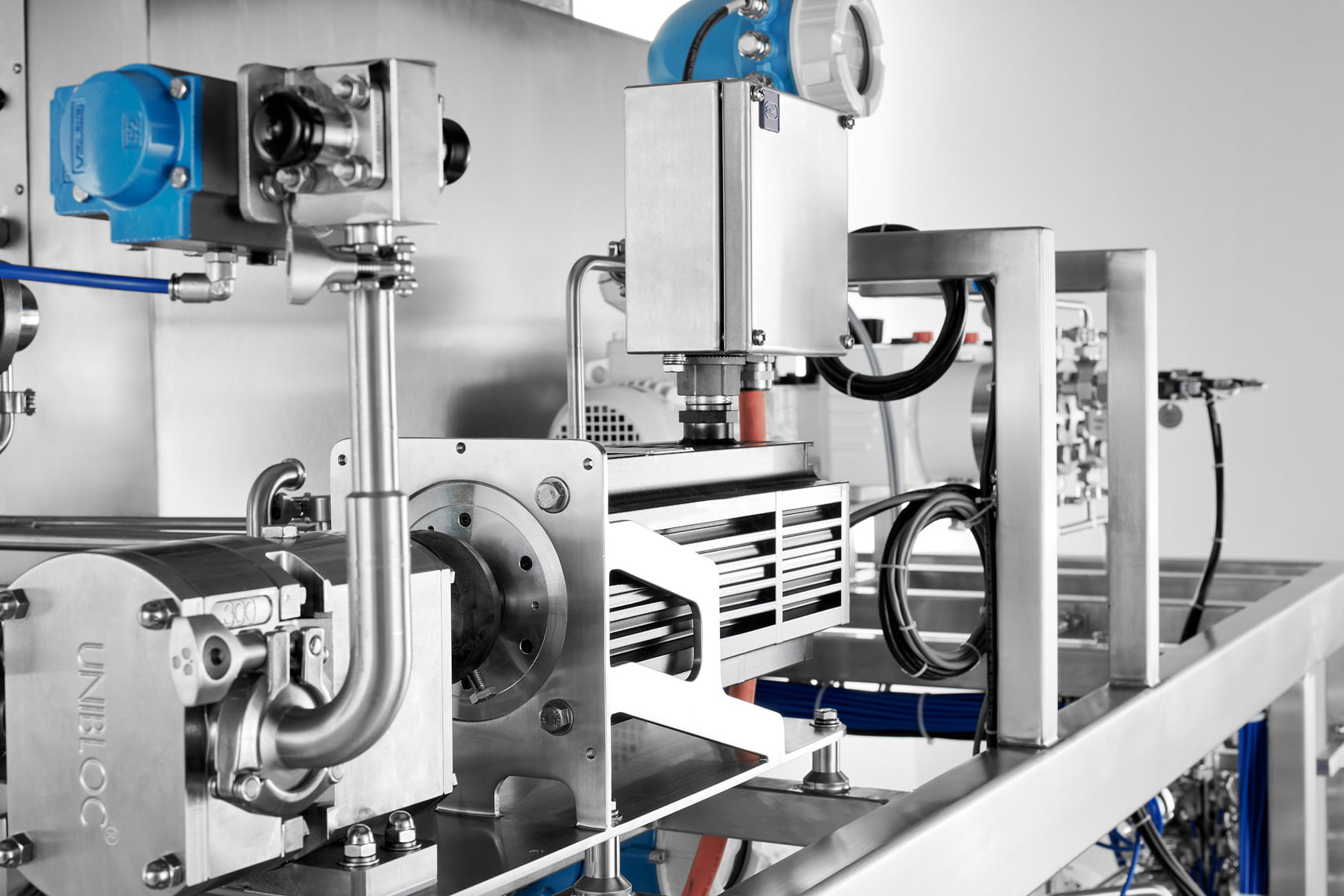
Key to optimizing oligo manufacturing with a synthesizer is having the commensurate software solutions to support operations. Ideally, a company will be afforded the latitude to fully customize its synthesizers for optimal pump sizes and flow rates, and the technology provider will tailor the supporting software to both align with the system’s initial parameters and adapt to changes in scale or method. Ensuring that this equipment is constructed both adaptably and durably is also crucial to a manufacturing paradigm’s long-term success – companies should evaluate the materials used to construct the skid to verify that it is able to handle hazardous and corrosive chemicals over time without imparting non-required materials or heavy metals to the process.
One of the biggest obstacles the biopharmaceutical sector is facing aligns with a larger industry challenge: the high degree of turnover in the labor market has created a skills gap that has impacted in-person operations across the globe. This challenge underscores the benefits of incorporating automated technologies with comprehensive software support. While the training requirements inherent to operating an oligosynthesizer are not less than traditional batch processes, their operation across multiple scales and with various methods is simplified, affording operators the ability to tweak process parameters without needing intervention from a trained chemist. Rather than requiring a chemist to oversee the manual process steps conducted by operators, an operator can oversee an automated process performed by the equipment, reducing both the number of employees and requisite expertise needed to perform the process.
Optimizing Processes through Software and Support
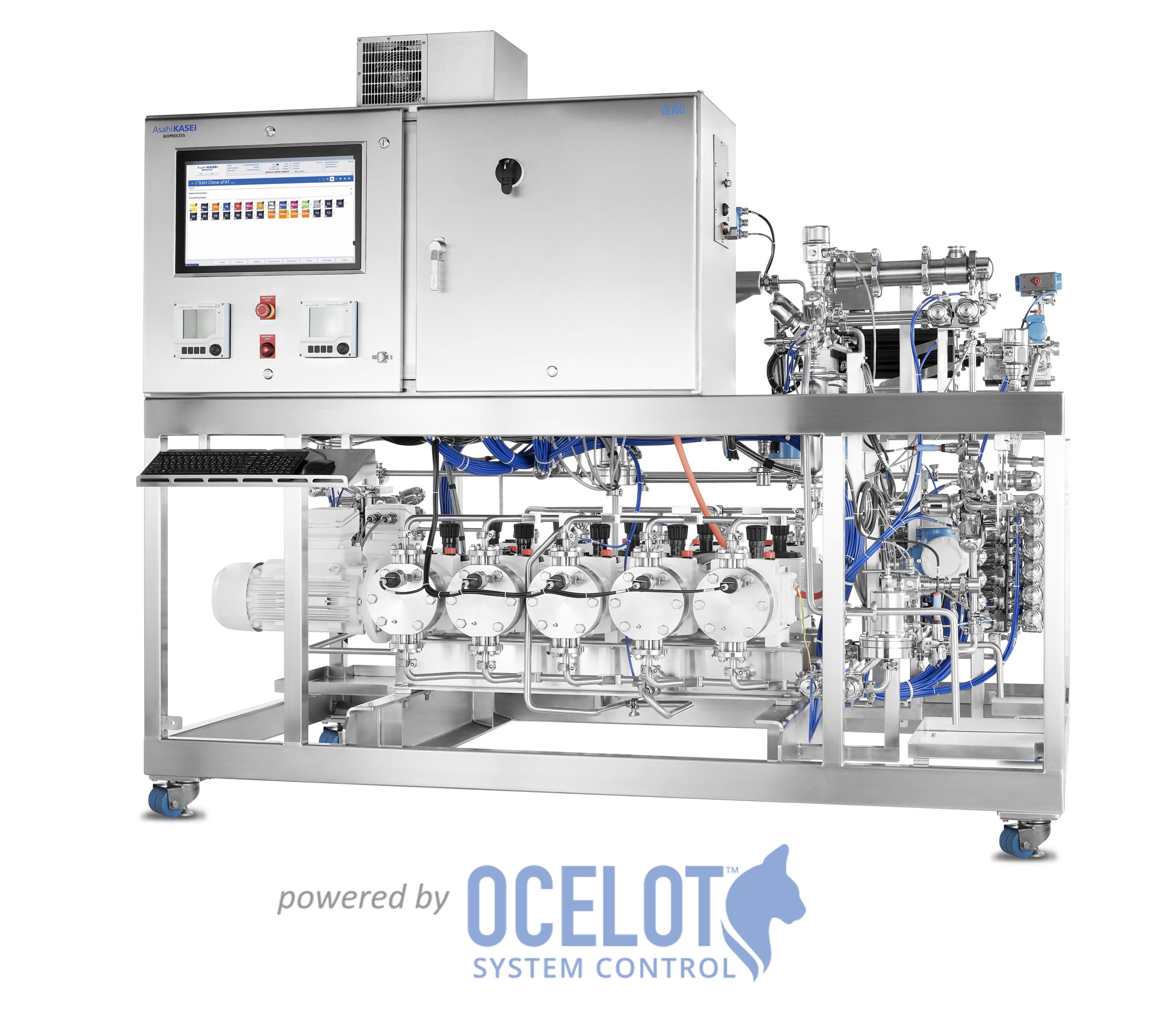
A common misconception among biopharmas producing oligos is that a given process can only produce one molecule. For oligosynthesizers, transitioning between molecules requires only writing a new method; ideally, a synthesizer will give the parameters needed to write a method, and the equipment provider will train a customer on writing a method and utilizing the analytical tools embedded in method and program. At AKBA, customer involvement starts at the initial design phase, and extends to every phase of design, from size to valve placement to skid height and everything in between. The synthesizer’s accompanying software, OCELOT™ System Control, is customized alongside the synthesizer, and AKBA trains customers on the optimal use of OCELOT in combination with their equipment through either onsite or remote support.
With more than two decades of experience in the oligonucleotide scale-up market, AKBA has cultivated expertise in the equipment and support needed to optimize these complex therapeutics. Its field service engineers, project engineers, and managers from across the globe perform site acceptance testing and provide training on each piece of equipment. These resources are available to customers throughout their process development, 24/7, for both synthesizer and software support. Furthermore, AKBA’s engineers possess a wealth of expertise to support chemists in transitioning their science to clinical and commercial settings. From ensuring skids and systems can handle the required flow rate, pressure, and temperature constraints to helping validate a range of other specifications, AKBA’s engineers are trained to make sure the equipment it provides can support the scale-up of what has been developed at a process level.
Every skid AKBA produces is built to accommodate any conditions required for a process. Additionally, they can both customize OCELOT for a given process and integrate it with existing software systems to ease the transition for operators. This level of flexibility has resulted in big payoffs for customers – AKBA has helped achieve scale factors of 75 to 80 times their original scale without issue. Its approach has also helped customers achieve significantly higher flow rates when compared to other systems, with synthesizers operating at as much as 35 liters per minute.
Advancing Oligo Manufacturing for the Future
Ultimately, the surge in oligo drugs will necessitate technology solutions that enable faster, simpler scale-up for their production. Where traditional oligo scale-up requires constant re-validation to accommodate the differences in equipment as a process scales, the continuous processing inherent to oligosynthesis helps operators eliminate process steps and scale much faster. In response to a burgeoning need for oligo production, AKBA is working to expand both its footprint at its facility in Illinois and its technical support footprint in Europe.
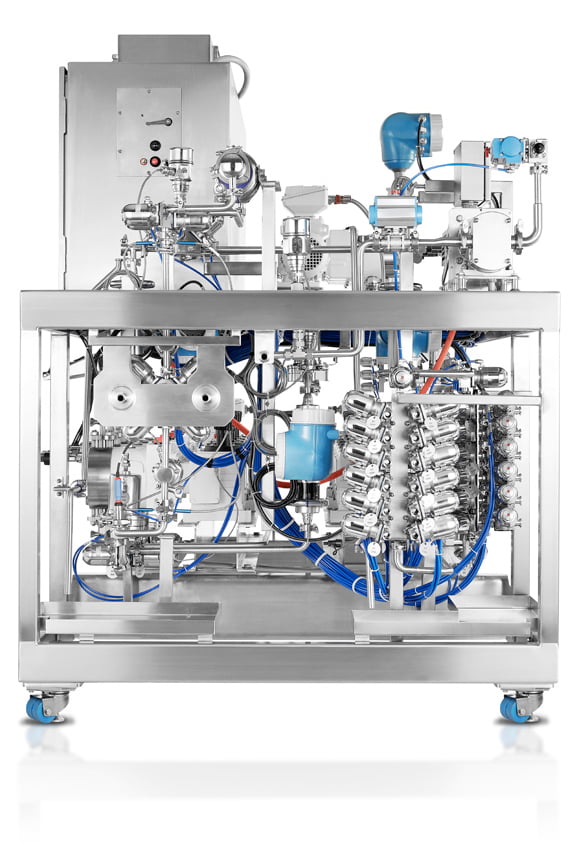
Asahi Kasei Bioprocess offers a suite of proven solid-phase flowthrough technology options in the millimole (mmol) to mole (mol) range. Its Asahi Oligosynthesizer™ has produced multiple compounds at various scales, including validation batches. The Asahi Oligosynthesizer is ideally paired with the Asahi SCS Column™ or Asahi ACS Column™ and is engineered so that processes can be seamlessly transferred from other oligosynthesizers.
AKBA’s experience in oligo scale-up, combined with its installation expertise, flexible technology solutions, and end-to-end support, make it an ideal equipment provider for companies and contract development and manufacturing organizations (CDMOs) of any size. Likewise, its other products dedicated to oligo manufacturing complete a comprehensive portfolio of state-of-the-art technology solutions geared toward a complex and growing space.
Find out more