Planting the seed
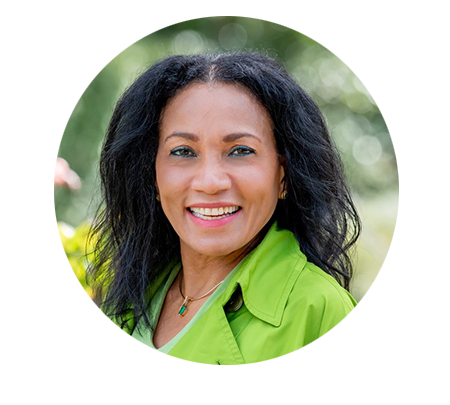
Why should you focus on seed-stage investing, diversity and data?We spoke to Miriam Rivera, CEO, Cofounder & Managing Director, Ulu Ventures, about why investing in the right way matters and their ground breaking use of data to determine success.
The things that set Ulu Ventures apart are our commitment to increasing access to capital for diverse teams makes a big difference for them. Our analytical investment decision making process and our commitment to seed at a stage where we can deliver higher returns to our LPs is unparalleled.
There's tremendous opportunity in investing in diverse teams — they outperform on boards, in public companies and more recently, in venture-backed companies. Our own experience is that our diverse teams have a multiple on non-diverse teams in terms of financial results.
Changing who gets access to capital helps the whole ecosystem to be more just, and it helps creating greater opportunities for the American economy. Women and people of colour represent a much larger percentage of the population. According to Robert Smith, about 40% of all the dollars in assets under management are coming from these diverse groups. And yet only 1.4% of those dollars is being invested in managers that are led by women and people of colour. Essentially, you're taking money from diverse people and putting it into white male-led firms. And that is likely to result in less investment in the communities where that money came from.
These communities that include pensions contributors, women teachers or minorities who are government workers, should be invested in just as much as white communities. It’s not only fair, it’s more productive. We know women have been educated at a higher rate than men for the last two decades, and yet, we're investing only about 10% of venture capital dollars in women-led companies.
As an investment category, we invest at seed because it generates double probability weighted multiple on series A financings, so we think it's a great place for LPs to earn long term returns and grow their portfolio value.
We need diversity along the full stack of assets under management, but it is fair to say that about three quarters of all diversity in assets under management is coming from venture capital alone and much of that in first time funds.
That's data that Fairview Capital provides in their annual report on the status of minority and women-led firms in the US.
Changing who gets access to capital helps the whole ecosystem in terms of being more just, economically and creating greater opportunities for the American economy.
Decision analysis is a field of study that emerged at Stanford University, where my co-founder Clint Korver was trained and received his PhD. It is something that’s been used by the oil and gas industries for decades.
There are different ways in which we use data and decision analysis. One process is called market mapping where we try to identify the market for a given company's technology. We sit in a room for three hours doing a deep dive with the company founders. We look at the business model alternatives that they may be exploring, the kinds of customers that they're serving and the adjacent markets that they can get into. Ultimately, we look at each of those parameters from a high, medium and low perspective. We apply cognitive science to how the questions are asked and how we do the measurements, so that we're de-biasing the model itself from over-optimism, for example, but also from humility. Sometimes you have founders that will only talk very knowledgeably about areas that they know specifically, whereas others are very confident and overconfident and can act like they know a lot about many different markets, or adjacent markets. What tends to happen as we do this is that we have a better sense of how to calibrate whether somebody really knows what they're talking about or just has a lot of confidence. That gives us better data for making decisions about the market opportunity.
We're also looking at dilution over time. Figuring out what percentage of the company we will own at the end of the day is a big piece of data that will help inform us as to whether or not an investment is profitable. What are the exit multiples likely to be at a certain point in time? All these things are put together in a model that we call a decision analysis model. It’s a framework for creating risk adjusted returns at seed, an area where most VCs throw up their hands and don't use data. I'm referring to other data from Harvard Professor Paul Gompers, who surveyed about 800 VCs and 78% of them said they didn't actually account for risk in their investing activity. Given that seed stage is the riskiest stage of investment, we think that it has the prospect of losing a lot of money, whereas a methodology like ours increases the chance of making great returns for our LPs.
Ultimately, we look at each of those parameters from a high, medium and low perspective. We apply cognitive science to how the questions are asked and how we do the measurements, so that we're de-biasing the model itself from over optimism, for example, but also from humility.
There are many risks of seed stage investments, and I think all VCs think about some of these same risks. From research done at Harvard Business School, we know that the founder team is one of the greatest sources of risk. 60% of start up companies will fail because the founder team doesn't get along and the business can't survive at that stage with a potential change in the founding team. The other things are obviously technological risks. Can the company build technology or software that can function and be well utilised by its customers?
Another question is whether the market will adopt the technology. Sometimes markets will adopt a mediocre technology from a leading company instead of a better technology from a small company for other reasons and we have to take those kinds of factors into consideration when we're making seed stage investments.
Ulu has a very seasoned veteran team of investors. We have about 60 years in venture capital and 40 years at seed stage. Many of us on the team have been in tech or in investments since 2001 and through the 2008 recession, a pandemic and a bank failure. What we can do to help account for risk during this uncertain time is to increase our assessment of individual risk factors, such as financing risk. We also understand that sales cycles are likely to be longer. Sales are likely to be smaller, exit multiples are likely to be less, and dilution is likely to be greater. So we look at the same factors but we're going to have different assessments for how risky this company is today than we might have had a year and a half ago.
Ulu has a very seasoned veteran team of investors. We have about 60 years in venture capital and 40 years at seed stage.
We believe that investing at seed and in diverse groups helps create growth for the overall US economy in many different ways. Companies that are five years old or less, we know, are the largest net source of job growth in the country, according to the Kauffman Foundation. We know that only 1% of companies are public, but 43% of companies are venture backed. When we think about investing in diverse teams, we know is that it creates different employment opportunities for a more diverse group of people. Our workforce is becoming ever more diverse. About a quarter of the Gen Z population is Latin X, for example. In addition, we know that Latin X will, according to the Bureau of Labor Statistics, be 30% of the US workforce very soon. The ability to invest in diverse teams will hopefully help create products that serve the workforce that currently exists and the workforce we are becoming.
It will also help to invest in groups like the Latin X population, which have been the greatest source of net new entrepreneurship in the United States since 2004. That will help everyone, because if we invest in the most entrepreneurial groups and the younger population (for example Latin X average population is about 25 years old compared to white population averages 44), these are the people that will be supporting our social security system. Making investments in them serves all of us.
Want to learn more about Miriam Rivera and Ulu ventures? Explore their work here.