By John Bewsey, Technical Director, Trailblazer Technologies
Trailblazer Technologies (Pty) Ltd (TBT) was founded in 2008 by three shareholders who have collectively more than 110 years of experience in the fertilizer industry. Their initial project used pulse combustion technology to produce soluble fertilizers with superior non-caking properties.
Recognizing the growing challenge of acid mine drainage (AMD) – known as acid rock drainage (ARD) in the U.S. – TBT shifted focus to water recovery. Conventional reverse osmosis (RO) treatment of mine effluents leaves behind highly saline brines that require long-term storage, is accumulative and RO also has a substantial cost of operation. TBT developed the KNeW process (Potassium Nitrate ex Waste), which not only avoids any brine creation but also converts the pollutants into valuable fertilizers at, usually, no net cost of operation. This breakthrough has been patented across numerous mining jurisdictions.
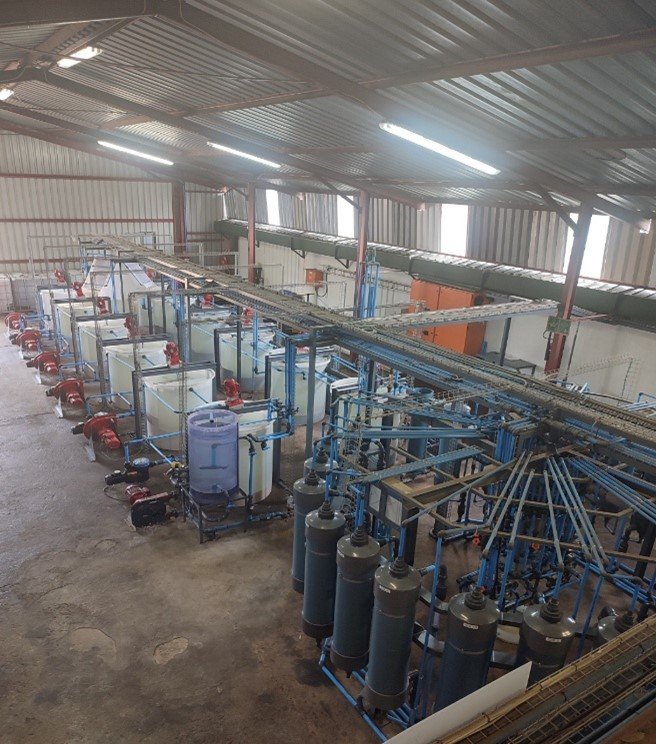
Pilot plant where mine effluents were successfully treated.
TBT photo
From pilot plant to proven process In 2018, South Africa’s Technology Innovation Agency funded TBT to build a pilot demonstration plant covering the KNeW process under real conditions. Over five years, the unit processed more than a dozen actual mines effluents, treating waters ranging from 2,300 ppm to 46,100 ppm TDS (total dissolved solids). Every trial achieved near-total recovery of the water, in every case meeting demineralizedwater standard.
For context, RO typically recovers only ~40% from seawater at 35,000 ppm TDS and ~75% from AMD at 10,000 ppm – an average AMD pollution level. The KNeW process, therefore, represents a step-change in performance, transforming what is a waste into pristine water and productive fertilizer with no remaining residue to store.
During this period, the team also discovered that alternating the flow pattern between cation and anion extraction reactors delivered total demineralization, now patented globally as the ZIX-Zak process.
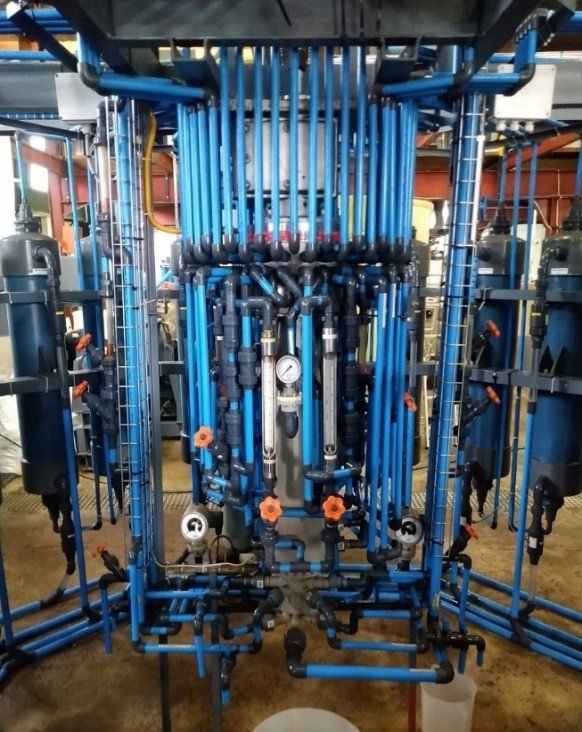
Multiport valve – at the heart of the resin regeneration process.
How the KNeW process works - Stage 1: Heavy metals (iron, chromium) and hardness ions (calcium, magnesium) are substantially removed by adjusting pH to ~10 with sodium carbonate and filtering.
- Stage 2: Ion-exchange resins capture the soluble ions such as sodium, chloride, and sulfate ions operating in the ZIX-Zak configuration.
- Stage 3: The ion exchange resins are regenerated with nitric acid for the cation stream and ammonia for the anion arm, using a multiport system, producing concentrated product streams.
- Stage 4: Regeneration products are processed into marketable fertilizers:
• Potassium nitrate – crystallized after sodium/potassium separation. • Ammonium sulfate – concentrated directly from regenerant. • Calcium chloride – from treated ammonium chloride. • Feed-grade salt – purified by recrystallization.
- Stage 5: The regenerated resins are returned back to the extraction cycle at stage 2. The result: no waste brine, complete pristine water recovery, and a portfolio of valuable co-products.
Potassium nitrate fertilizer – Premium soluble product derived from mine effluent. TBT image
Fertilizer market potential Each commercial KNeW plant can produce:
- 10,000–30,000 tpa of potassium nitrate, and around - 15,000 tpa of ammonium sulfate
• depending on their relative saline loading in the feed water.
These volumes are easily absorbed into global markets, where the demand ~2.0 million tpa potassium nitrate and ~4.1 million tpa ammonium sulfate. Fertilizer revenues effectively offset the plant operating costs, making water recovery financially self-sustaining.
Commercial plants in the pipeline United States: In the Southwest, water scarcity is acute: the Colorado River rarely reaches the Gulf of Mexico, while decades of irrigation pumping have partially drained the enormous Ogallala Aquifer. The deeper Rio Puerco aquifers, although brackish and silica-rich, are ideal for KNeW since silica does not hinder ion exchange. By recovering this water without producing brine, KNeW offers a cost-effective alternative to conventional desalination. The residual brine from reverse osmosis (RO) operation may no longer be disposed of back down into the feed aquifer, as it is now illegal and makes this previously widely used process impossible to apply.
South Africa: Deep-level mining operations generate large volumes of toxic saline water that must be pumped out to protect working conditions. RO has provided partial relief, but accumulating brine in holding dams now poses a severe environmental hazard. TBT is working with stakeholders to implement KNeW solutions at scales from 2–30 Megaliters (ML)/day, with designs for units eventually up to 100 ML/day.
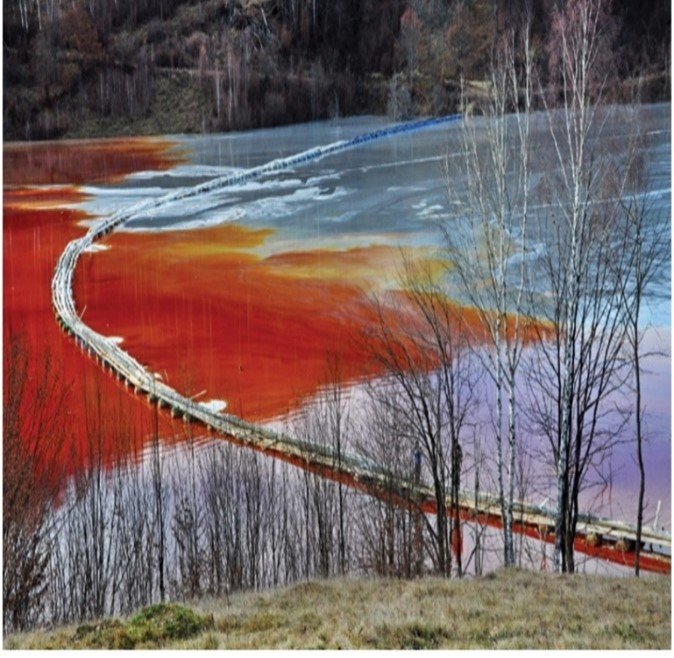
Typical AMD Residual Dam – illustrating the challenge KNeW helps to solve. TBT photo
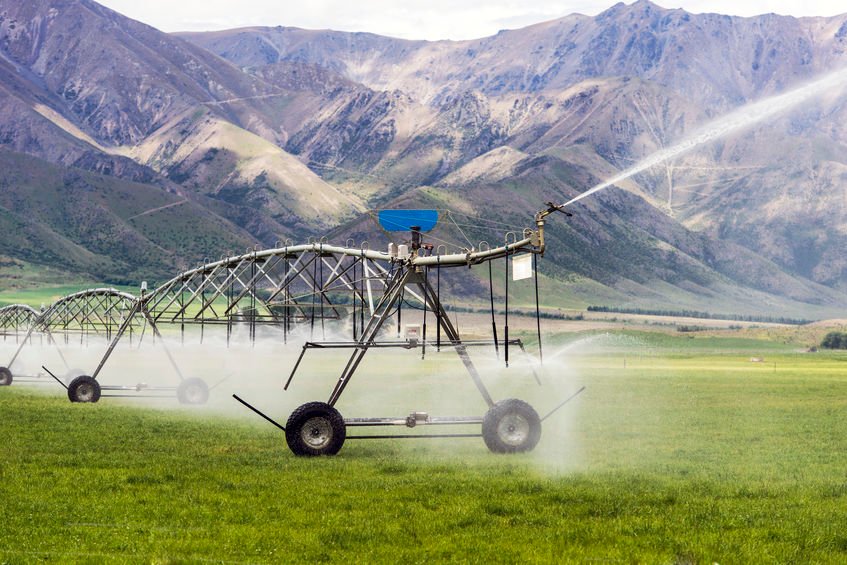
New frontiers: Agricultural runoff Nitrogen and phosphorus runoff from farming and livestock operations threaten waterways on every continent, prompting stringent regulations that will probably inhibit agricultural production. TBT proposes capturing this runoff at strategic collection points and processing it through KNeW water plants close to site with the recovered clarified water returned for irrigation. The nutrient concentrates would be transferred to a centralized fertilizer production unit for processing to end fertilizer products.
This closed-loop system could preserve agricultural productivity while meeting regulatory requirements, turning this pollution liability into a sustainable resource. ●
Conclusion Trailblazer Technologies has pioneered a process that simultaneously helps in the solution of two global challenges: polluted water and fertilizer demand. By converting AMD and brackish sources into demineralized water and marketable fertilizers, the KNeW and ZIX-Zak processes replace waste with value.
With patents secured worldwide, a proven pilot record, and commercial projects underway, TBT is positioned to play a pivotal role in reshaping how industry, agriculture, and communities think about water recovery and resource efficiency.
In the face of increasing drought and water shortages, an innovative new research project is tapping into the power of nature to help Canadian dairy farmers treat wastewater and reuseit for crop irrigation.
Led by Dr. Audrey Murray, a research scientist with Agriculture and Agri-Food Canada (AAFC), the five-year initiative aims to harness constructed wetlands as a natural treatment system for dairy farm wastewater. The project is a collaboration between researchers from Prince Edward Island, Alberta, and Ontario, and is funded by Alberta Innovates and Results Driven Agricultural Research.
“I’ve always had an interest in water reuse,” says Dr. Murray. “Water is a limited resource and drought conditions in Alberta have increased the need to improve water use efficiency. Certain natural climate solutions can provide many ecosystem benefits likehigh-quality water.”
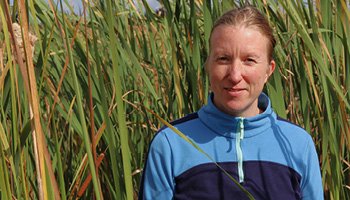
Dr. Audrey Murray is researching wetlands constructed on farms onPrince Edward Island andhopes they can be used totreat dairy wastewaterin Alberta. Photo: AAFC
Turning waste into water Dairy farms in southern Alberta rely heavily on water to irrigate feed crops, support cattle, and maintain household needs. But with water increasingly scarce, farmers are often forced to prioritize livestock over crops.
At the same time, these farms generate significant amounts of wastewater – from milk house rinsing water and used bedding straw to manure – all of which is stored in holding lagoons. Currently, this wastewater is mixed into a slurry each spring and applied to fields as fertilizer. But Dr. Murray’s team sees another opportunity:treat the water within the lagoons and reuse it throughout thegrowing season.
The solution? Constructed wetlands, paired with mixing ponds, to naturally filter and polish the wastewater before it's reusedfor irrigation.
The science of separation Over time, wastewater in lagoons separates into layers – much like cream in milk. The middle layer, which contains the cleanest liquid, can be piped downhill into a constructed wetland, where it undergoes natural treatment. This method mimics common designs in municipal wastewater systems, using gravity to move the water and wetland plants to help clean it.
After passing through the wetland, the water enters a mixing pond where it’s blended with clean water to ensure it meets quality standards for irrigation.
“The ideal scenario is to build a wetland sightly downhill from the holding lagoon,” notes Murray. “A pipe is placed into the right location of the holding lagoon, connecting it to the wetland, and then gravity does the rest. This engineering solution is very common in municipal wastewater treatment plants.”
This approach improves with each stage of treatment, she adds. The lagoon settles solids, the wetland filters and biologically treats the water, and the mixing pond provides the final polish.
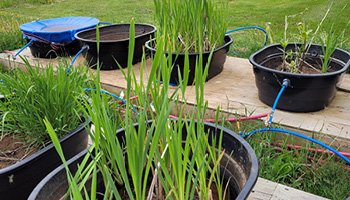
Simulating nature in miniature Before applying the system on a full-scale Alberta farm, Dr. Murray is testing her hypothesis on a smaller scale at the Harrington Research Farm in Prince Edward Island. There, she’s building a series of mesocosms – outdoor experimental setups that replicate wetland conditions using wastewater from local dairy farms.
Before developing a full-scale wetland in Alberta, Dr. Murray is testingthe concept in mesocosms, shown above, at the Harrington Research Farm.
Photo: AAFC
Each mesocosm uses different wetland materials, like various soils and plants, to determine the most effective design for treating wastewater. Results from these tests will guide the final system layout, treatment time, and cost estimates for a full-scale implementation.
Looking ahead The team is currently seeking a volunteer dairy farm in Alberta to host the full-scale pilot. If successful, the system could become a cost-effective and environmentally friendly way for dairy farms across Canada to address water scarcity and wastewater management.
In the long run, Dr. Murray hopes this nature-based system will help dairy producers not only reuse water but also contribute to broader climate goals – by enhancing biodiversity, improving soil health, and even sequestering carbon.
Key Takeaways:
Drought response: As water shortages become more common, researchers are developing a system to recycle dairy wastewater for crop irrigation.
Natural treatment: The system uses gravity, wetlands, and mixing ponds to clean wastewater naturally.
On-farm application: A scaled-down model is currently being tested in PEI, with plans to implement a full system on an Alberta dairy farm.
Ecosystem benefits: The approach supports water conservation, carbon capture, and biodiversity. ●
Interested Alberta dairy farmers can contact Dr. Murray’s teamto participate in this groundbreaking project.
By Farnaz Sheikhi* and Farhad Maleki**
Tiny but mighty, honeybees play a crucial role in our ecosystems, pollinating various plants and crops. They also support the economy. These small producers contribute billions of dollars to Canada’s agriculture industry, making Canada a major honey producer.
However, in the winter of 2024, Canada’s honey industry faced a severe collapse. Canada lost more than one-third of its beehives, primarily due to the widespread infestation of Varroa mites.
Traditional methods for controlling these parasites now seem less effective, and the industry needs a transition to smart beekeeping if it is to survive.
We are currently conducting research to develop a non-invasive and sustainable method for the early detection of Varroa mites. Our proposed approach uses artificial intelligence (AI) to analyze images from beehives, automatically classifying them based on the presence of Varroa mites and the level of infestation.
Varroa infestations Varroa mites are tiny parasites that attach to honeybees, feed on their body tissue and transmit viruses throughout the colony. Over the years, these parasites have developed resistance to the traditional control methods, necessitating more aggressive treatments. However, these treatments can endanger the health of honeybees.
The Prairie provinces – Alberta, Saskatchewan and Manitoba – are Canada’s top honey-producing regions, with Alberta alone contributing almost 40 per centof the country’s total honey production.
Canada lost an average of 34.6 per cent of its bee colonies in the winter of 2024 – 2.4 per cent more than the loss of the previous year. The winter losses across Canada ranged from
9.8 per cent in Newfoundland and Labrador to 61.3 per cent on Prince Edward Island. In the Prairie provinces, colony losses reached almost 40 per cent.
Investigations reported that Varroa mite infestations were a key contributing factor causing the devastation.
Economic impact on Canada Winter 2024 losses had a devastating effect on Canada’s beekeepers. The high cost of honeybees as well as the intensive labour and time needed to rebuild hives make them difficult to replace.
Within a stable environment and a thriving industry, increased investment yields higher returns. In 2023, the number of beekeepers and bee colonies in Canada increased by 3.29 per cent and 2.4 per cent, respectively.
Yet, in 2024, Canada experienced an 18.3 per cent decrease in honey production. The total national value of the harvest declined by 24.5 per cent, dropping from from $283 million in 2023 to $214 million. The Prairie provinces were hit hardest; the value of honey solely produced in Alberta fell from $100 million in 2023 to $75 million in 2024.
Limitations of current monitoring methods Preventing mites requires frequent hive monitoring. Although timely detection is critical for treating hives, manual inspection is time-consuming and labour-intensive. Furthermore, frequent manual monitoring can pose risks to the health and well-being of honeybees.
Alcohol washes, sugar shakes and using sticky boards are among the methods for Varroa mites monitoring. In a typical alcohol wash test, about 300 bees per colony are sampled. These bees are washed in rubbing alcohol. Then, they are shaken rigorously to check for Varroa mites. The problem with this method is that all the bees tested die in the process.
While other methods, such as the sugar shake and using sticky boards, do not kill the bees tested, they deliver limited results and are not always as accurate.
This makes none of the current methods ideal; each involves a trade-off between invasiveness and accuracy. And given that testing must be done frequently, they all pose risks to the health of honeybees themselves. So what’s the solution?
Using AI to detect Varroa mites There is an urgent need for the beekeeping industry to evolve to help prevent further losses and support the resilience of bee populations. Climate change and resistance of mites to traditional treatments are environmental alarms demanding a change in our beekeeping approaches.
This is where artificial intelligence comes in. Using imaging systems, sensors embedded in hives, image-processing techniques and AI, researchers are now able to continuously collect and analyze hive data to detect Varroa mites.
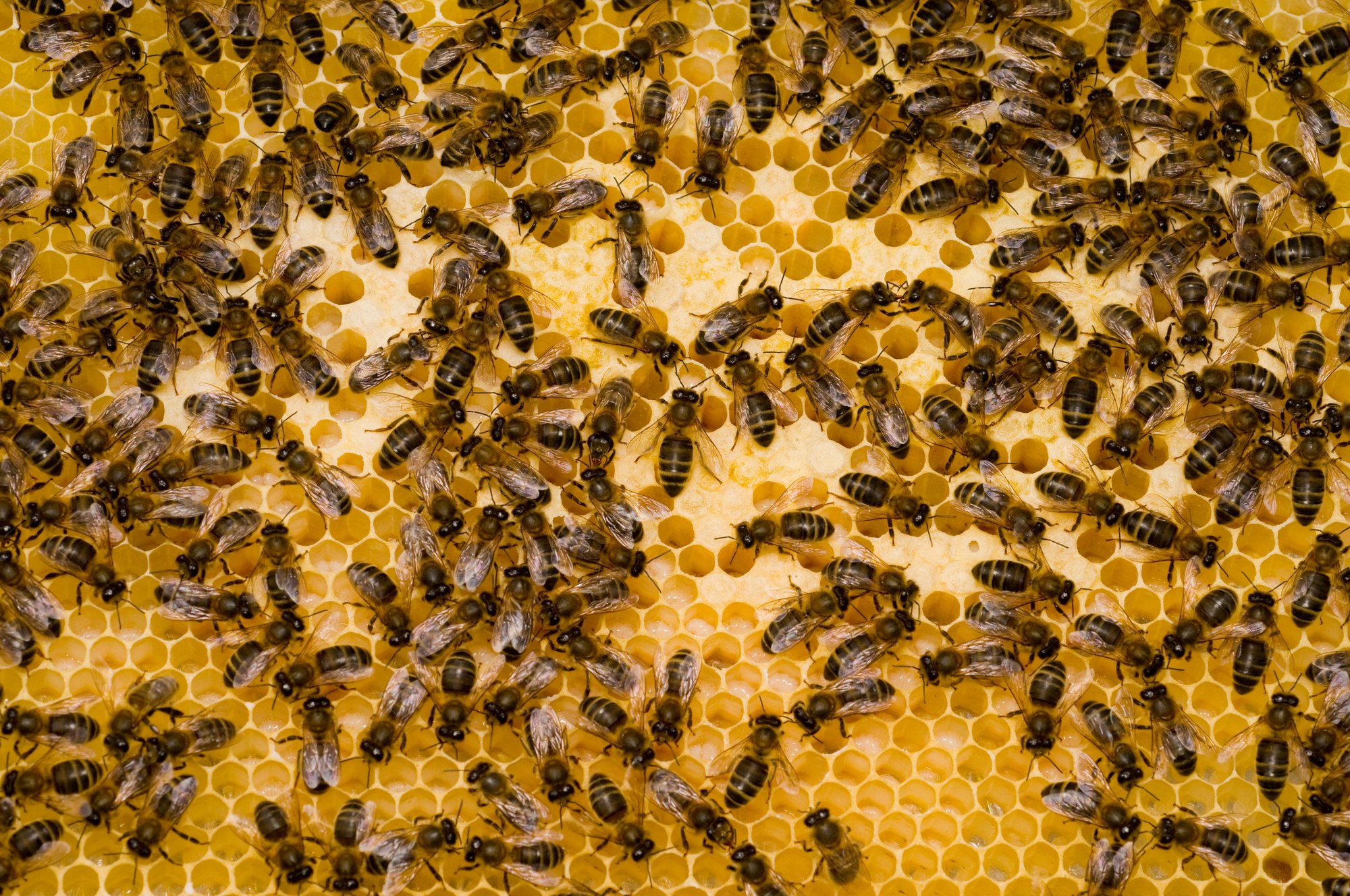
In this approach, a camera is placed inside the beehive brood box to capture images of the honeybees. These images are then transmitted via Wi-Fi or Bluetooth for storage and analysis.
A neural network can be trained on the collected images — first to detect bees using object-detection algorithms, and then to identify Varroa mites on the bees through colour transformation techniques. Once mites are detected, their number within the hive can be automatically counted.
Using this technology, beekeepers can benefit from automatic monitoring of the hives. When the level of infestation is specified by the system, it can also recommend effective treatments for hives. This way, Varroa mites can be detected and treated at an early stage, allowing hives to survive the winter more smoothly.
Transitioning to smart beekeeping is a strategic solution that is non-invasive and environmentally friendly, cost-effective and profitable in the long term. The good news is that researchers at the University of Calgary and beekeepers are already working together to make this happen and preserve the sweetness of honey across our land. ●
*Farnaz Sheikhi, Postdoctoral Associatein Computer Vision, University of Calgary
**Farhad Maleki, Assistant Professor, Department of Computer Science, University of Calgary
Originally published on The Conversation
By University of South Australia
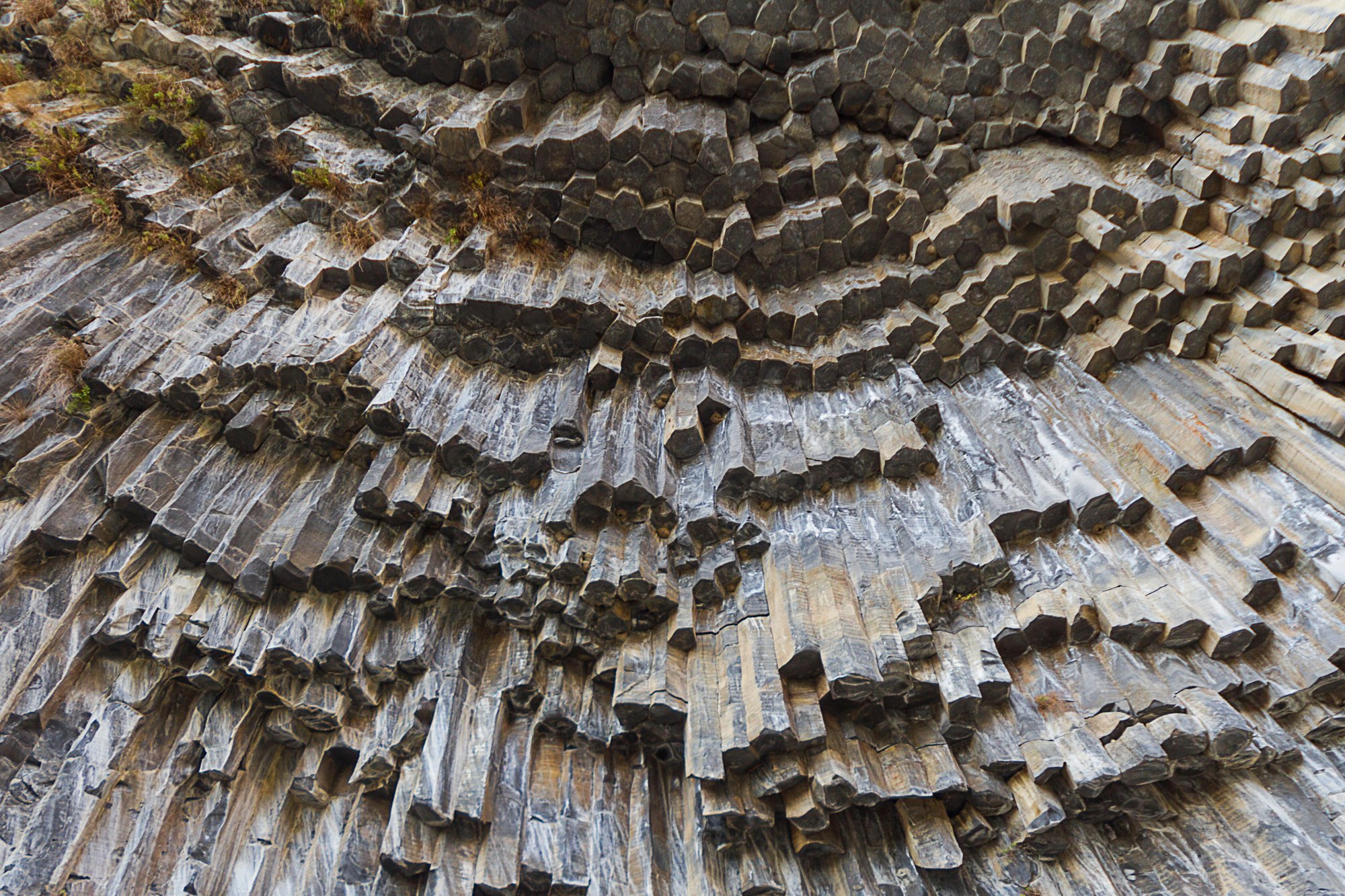
Cheap volcanic rock that languishes in open cut mines and quarries could transform Australia’s farming sector as a natural fertilizer, boosting crop yields and removing carbon dioxide from the atmosphere.
It turns out that crushed basalt – a common rock used to make roads, houses, schools and hospitals – may address two very critical issues of our time: climate change and acidic soils.
University of South Australia (UniSA) environmental researcher Dr. Binoy Sarkar is leading an Enhanced Rock Weathering trial that involves applying crushed basalt to agricultural soils, measuring its nutrient release and carbon capture.
Dr. Sarkar, from UniSA’s Future Industries Institute, is collaborating with James Cook University, the Tropical North Queensland Drought Hub, and industry partner Carbonaught Pty Ltd. on two projects, funded by the Federal Government and Cascade Climate.
“Australian farmers spend nearly $1.2 billion a year to tackle soil acidification, using expensive liming materials that in themselves contribute to greenhouse gas emissions,” Dr. Sarkar says.
“Large volumes of adequately fine rock particles – a byproduct of the mining and construction industry – can be bought for as little as $30 per ton and applied to soils using existing farm equipment, with negligible expense.
“Basalt does not completely replace chemical fertilizers, but it can cut fertilizer amounts needed to grow crops, saving farmers a lot of money and substantially improving their profit margins.”
Farming with basalt solves two critical challenges facing Australian agriculture: improving infertile soils and simultaneously removing greenhouse gas emissions from farming practices that include nitrogen fertilizers, deforestation and land clearing.
“As a country, we have committed to achieving net zero greenhouse gas emissions by 2050. Almost 18 percent of our emissions are produced by the agricultural sector, primarily from crop production and emissions from livestock,”Dr. Sarkar says.
“Lime is commonly used for correcting soil acidity, but it is expensive and contributes heavily to on-farm carbon dioxide emissions. Basalt naturally reduces acidity, captures carbon, and it also releases nutrients such as phosphorus,
calcium, magnesium and silicon into the soil.”
Dr. Sarkar says the research will not only benefit Australia’s agricultural sector, but also the mining sector, where basalt is a byproduct that has to be dug and moved aside before reaching valuable minerals located at depth.
This byproduct is already crushed to make road building and construction materials, but finer fractions are stockpiled, often taking up large amounts of space with negligible commercial use.
Society at large is also a winner, thanks to basalt scrubbing gigatons of carbon dioxide from the air.
Dr. Sarkar’s collaborative team is the first in Australia to receive significant R&D federal funding ($5 million)
to trial the low-cost carbon cutting technology nationally.
“I hope we can see a lot more trials in the next few years, to build confidence and propel a large-scale adoption of this rock weathering technology.
“It will also provide opportunities for farmers and quarry owners to sell carbon credits and earn additional profits. Our farmers will be able to take advantage of this huge market when we have a strong monitoring, reporting and verification program for the technology.” ●
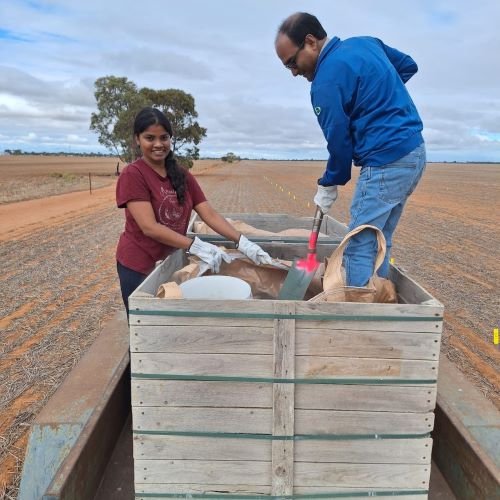
UniSA researcher Dr. Binoy Sarkar and a student spreading basalt onto crops.
Photo: UniSA