By Janet Kanters
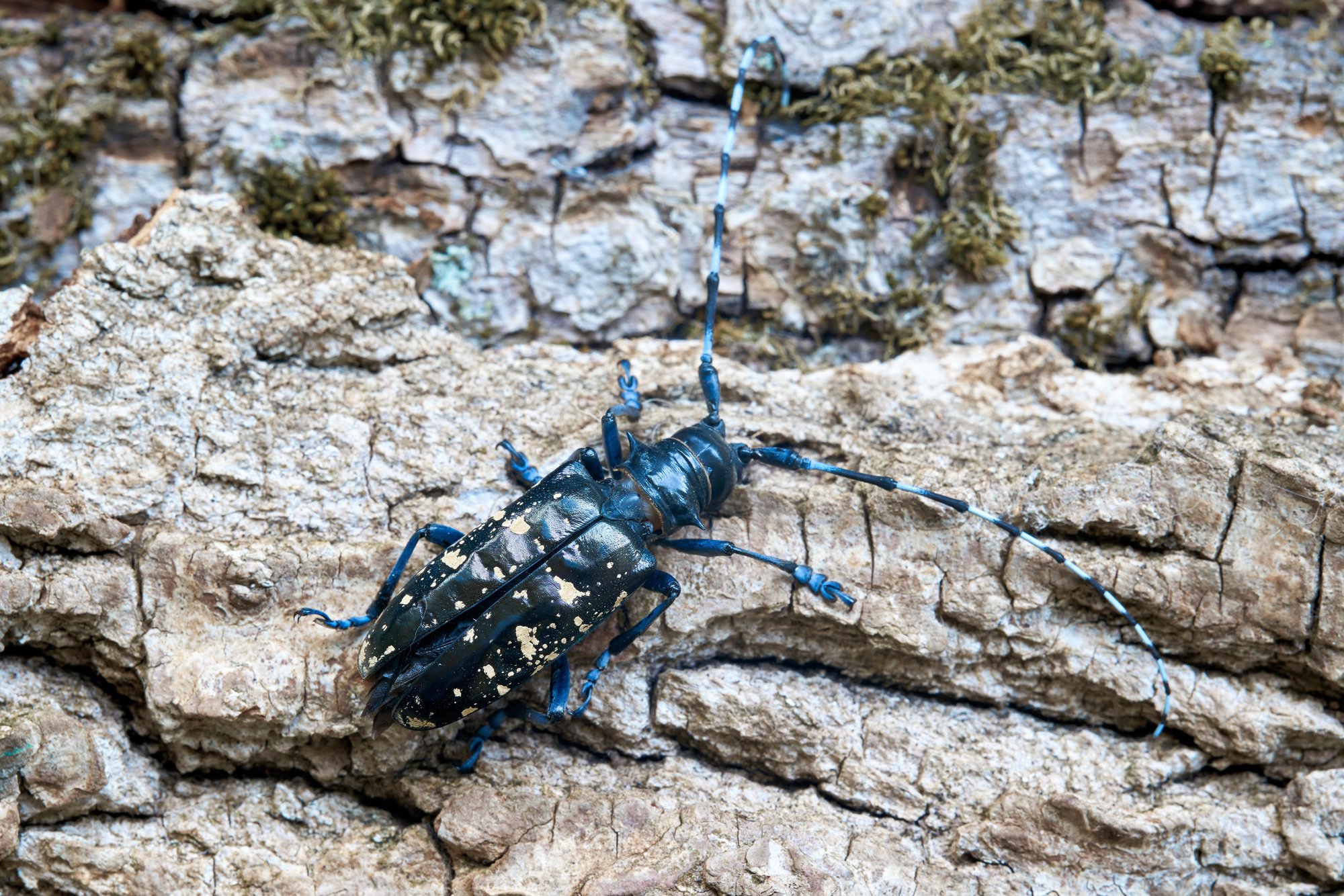
A new scientific review is shedding light on promising biological alternatives to combat the Asian longhorned beetle (ALB), a highly destructive tree pest that has threatened North America’s hardwood forests for nearly three decades.
Since the beetle’s discovery in Brooklyn, New York, in 1996, forestry managers have relied on one grim solution: identify infested trees, cut them down, and destroy them. But now, researchers are exploring how nature itself may provide a more sustainable line of defense.
The study, led by Dr. Ann Hajek, professor emerita of entomology at Cornell University, highlights a growing body of work investigating natural enemies of the beetle – including fungi, bacteria, and parasitic nematodes. These biocontrol agents could provide long-term tools for suppressing beetle populations, should eradication efforts ever falter.
“We’ve found that insect-killing fungi like Beauveria and Metarhizium species show significant promise,” Hajek said. “They infect adult beetles from the outside, ultimately killing them – and in some cases, even reducing their ability to reproduce.”
One innovative delivery method involves wrapping tree trunks with bands infused with fungal spores. Inspired by a commercial product used in Japan to combat related pests, Hajek’s team adapted the technique for ALB control. In laband limited field trials, beetles exposed to these fungal bands showed shorter lifespans and laid fewer eggs.
Yet turning these biological tools into viable pest-control solutions hasn’t been straightforward.
The U.S. strategy has focused almost exclusively on total eradication of ALB. Infestations are rare and, when found, are quickly eliminated through tree removal – a strategy that leaves few opportunities for researchers to test biocontrol methods on a meaningful scale. As a result, much of the fieldwork has taken place in China, where the beetle is native and populations are more stable.
Even there, environmental conditions posed a challenge. “The fungi need moisture to work effectively, and ALB populations in China were often in very dry areas,” Hajek explained. After multiple seasons with low beetle numbers and poor fungal performance, the team discontinued trials in the region.
Back in the U.S., researchers shifted to evaluating the longevity and effectiveness of fungal bands in outdoor conditions, bringing samples back to a quarantine lab at Cornell to assess their potential for infecting beetles. Crucially, all U.S. trials have used native or EPA-approved strains to avoid introducing new risks.
The review also highlights encouraging results from other biocontrol agents. Tiny parasitic nematodes, Steinernema carpocapsae and S. feltiae, have shown high efficacy in laboratory settings. These microscopic worms infiltrate beetle tunnels, drawn in by frass (beetle droppings), and kill the larvae within days.
Other approaches, such as using Bacillus thuringiensis (Bt), a widely used microbial insecticide, were less successful due to the larvae's hidden feeding behavior deep inside trees. And while a microsporidian parasite, Nosema glabripennis, was identified infecting ALB in China, it has not been detected in U.S. populations.
Despite the advances, none of these biological tools have been deployed widely in the U.S. – largely because the aggressive eradication strategy has kept outbreaks limited and localized. Still, Hajek sees biocontrol as a valuable insurance policy.
“These tools might not be needed now on a broad scale, but they’re ready to be scaled up if conditions change,” she said. “Japan is already using fungal bands successfully. We could follow a similar path if suppression ever becomes necessary.”
With growing concerns over invasive species and the increasing cost of manual tree removal, Hajek and her colleagues believe that biocontrol could one day become a vital component in the long-term defense against the Asian longhorned beetle – if not as a first line of attack, then as a reliable backup. ●
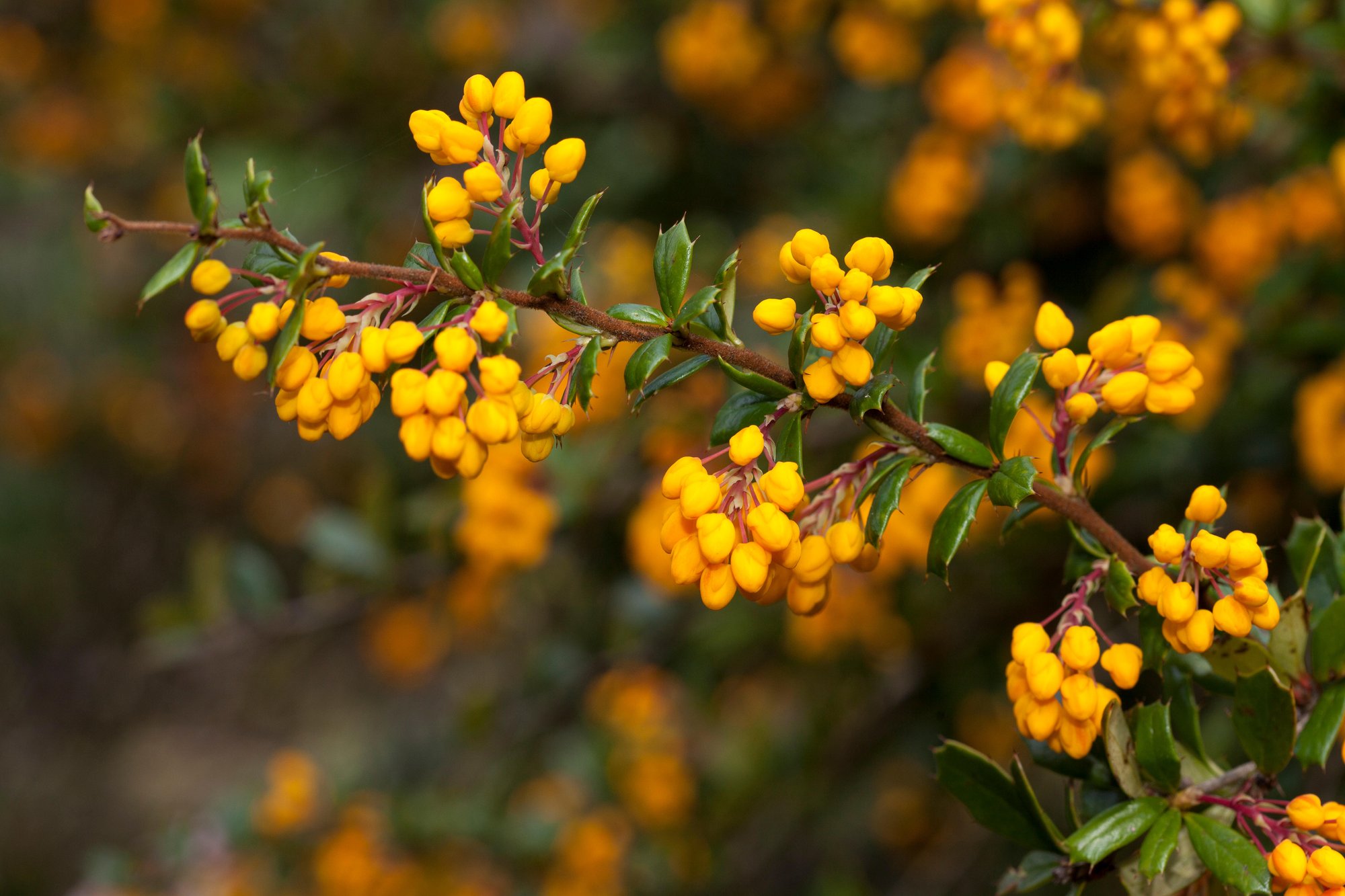
New Zealand’s Evironmental Protection Authority has approved a rust fungus and a flower weevil to control Darwin’s barberry, a spiny invasive shrub.
Environment Canterbury, on behalf of the National Biocontrol Collective, applied to use two biological control agents to combat Darwin’s Barberry (Berberis darwinii) in New Zealand. Those biocontrol agents are a rust fungus (Puccinia berberidis-darwinii) and the Darwin’s barberry flower weevil (Anthonomus kuscheli).
Darwin’s barberry, native to Chile and Argentina, was introduced to Aotearoa New Zealand as a garden plant in the 1940s. It is a resilient noxious weed found in disturbed forests, pastures, shrubland and short tussock-land throughout New Zealand, and in particular in the Canterbury, Otago and Wellington regions. It is a threat to indigenous ecosystems, as well as to pastures where livestock graze. Fruit-eating birds deposit seeds far from the parent bush, increasing its spread.
Both the flower weevil and the rust fungus proposed for introduction are native to South America. All organisms new to New Zealand must receive approval from the EPA before being released into the New Zealand environment.
“The independent decision-making committee approved the introduction of these two organisms following a rigorous, evidence-based assessment,” said Dr. Chris Hill, general manager of Hazardous Substances and New Organisms at the EPA.
“The applicant’s risk assessment showed that these agents are highly unlikely to harm native plants or animals. The weevil does not bite or sting, so there is no health risk to people, and the rust fungus is also benign.”
In recent years the EPA has approved other biocontrol agents for weeds such as purple loosestrife, old man’s beard, Sydney golden wattle and moth plant. ●
Darwin's barberry