An increasingly challenging environment
In the current context of climate change, weather forecasts predict more frequent droughts and heavier but less frequent rainfall. Water stress has become a daily reality for many farmers, particularly in arid areas or areas subject to climate irregularities. Water scarcity is forcing a profound transformation of agricultural practices.
Gabrielle Chautard, Product Manager for Biostimulants & Plant Nutrition
At Elephant Vert, we believe that water management cannot be separated from soil health and plant resilience. Our biosolutions are part of a regenerative agriculture approach, where every intervention aims to do more with less, particularly with water.
2 key commitments 1 - Contribute to optimising every drop through soil management and improving crop resilience 2 - Working alongside farmers to promote best practices
Soil-related challenges Soil is more than ever a tool for preserving water resources for crops. Degraded soil leads to runoff and erosion, which limits water infiltration and storage. Conversely, healthy soil acts like a sponge, increasing the availability of water for plants.
In the soil, water is present in three states, not all of which are accessible to plants. The aim of our products is therefore to optimise the proportion of water that is accessible by acting on the texture and structure of the soil in order to significantly improve its useful water reserve.
Gravity or saturation water: This is the water that circulates between soil aggregates but is not retained by particles and flows naturally (if the soil is like a sponge, this is the water that flows without applying any pressure). In excess, it leads to soil water saturation and even suffocation. Here, it is necessary to work on the soil's water retention capacity.
Unusable water: Water that is present in the form of a very thin film around soil particles, retained too energetically for the absorption power of the roots to attract it (water still present in the sponge but which does not flow out, even when the sponge is squeezed). The soil's ability to act like a sponge mustbe supported in order to optimise the proportion of water in the usable reserve.
The usable reserve: This is the only water in the soil that is directly available to the plant. It forms a film around soil particles or in the fine pores of the soil, where plants are able to absorb it.
EV offers product solutions that work at different level
1. Making the soil more alive and more permeable: organic amendments and fertilisers
Amendments
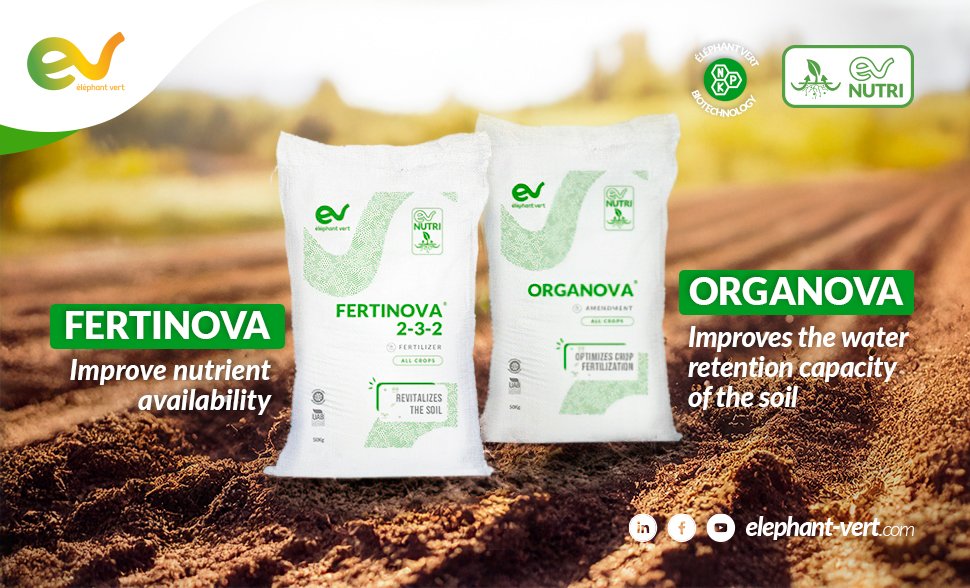
Our soil amendments, rich in organic waste, promote soil structure, porosity and water retention capacity:
They enrich the soil with organic matter (OM), influencing water circulation and infiltration, as well as capillary rise during periodsof drought.
OM acts as fuel for biological activity (micro- and macro-organisms) in the soil, stimulating humus production and improving porosity, and therefore water and air circulation. This also stimulates root development, allowing roots to explore the soil more effectively in search of available water.
Humus has significant water retention capacity, retaining up to 15 times its weight in water. It also helps improve soil structural stability and limits the formation of hardpan, which hinderswater infiltration.
Fertilisers:
It is common to observe a decrease in soil moisture after a prolonged period of drought, but it is not widely known that this leads to a decrease in nutrient uptake by plants. This is because these elements are often dissolved in the soil solution, so if the amount of water available is reduced, the ability of plants to absorb nutrients is also reduced. Fertiliser efficiency is therefore reduced in the event of water shortage, which impacts crop yields and quality.
EV organic fertilisers provide nutrients in an assimilable form, but also supplement organic matter to improve soil health. The nutrients provided are therefore optimised thanks to better water circulation resulting from the action of organic matter.
2. Improving water retention and plant resilience: biostimulants
Stimulate the rhizosphere: the proprietary EV strain, I-4613
Our Xurian & Ovalis Rhizofertil products are composed of the proprietary strain of Pseudomonas putida I-4613, which has many benefits for the soil and plants:
Improved humification of organic matter (OM)
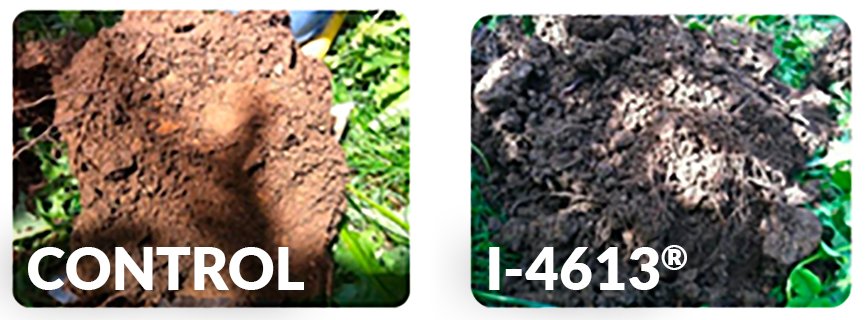
I-4613 releases enzymes that accelerate the humification of soil OM. Humification is the gradual transformation of OM into humus, improving the availability of nutrients, biological activity and soil structure for better water circulation. I-4613 results in richer, more aerated soil, as shown in the photos below:
Impact on root development
I-4613 also produces a phytohormone from the auxin family, which optimises root development. This has a positive impact on root length and branching, allowing for better soil exploration and a larger surface area for water and nutrient exchange. In addition, numerous deeper roots promote water uptake in the soil.
Impact of anti-stress enzymes
Pseudomonas putida secretes an enzyme, ACC deaminase, which increases the plant's resistance to abiotic stress and therefore has a protective effect against drought. This action does not act directly on the soil's RU, but allows the plant to react better in the event of water stress (reduction in chlorosis, delayed senescence, etc.).
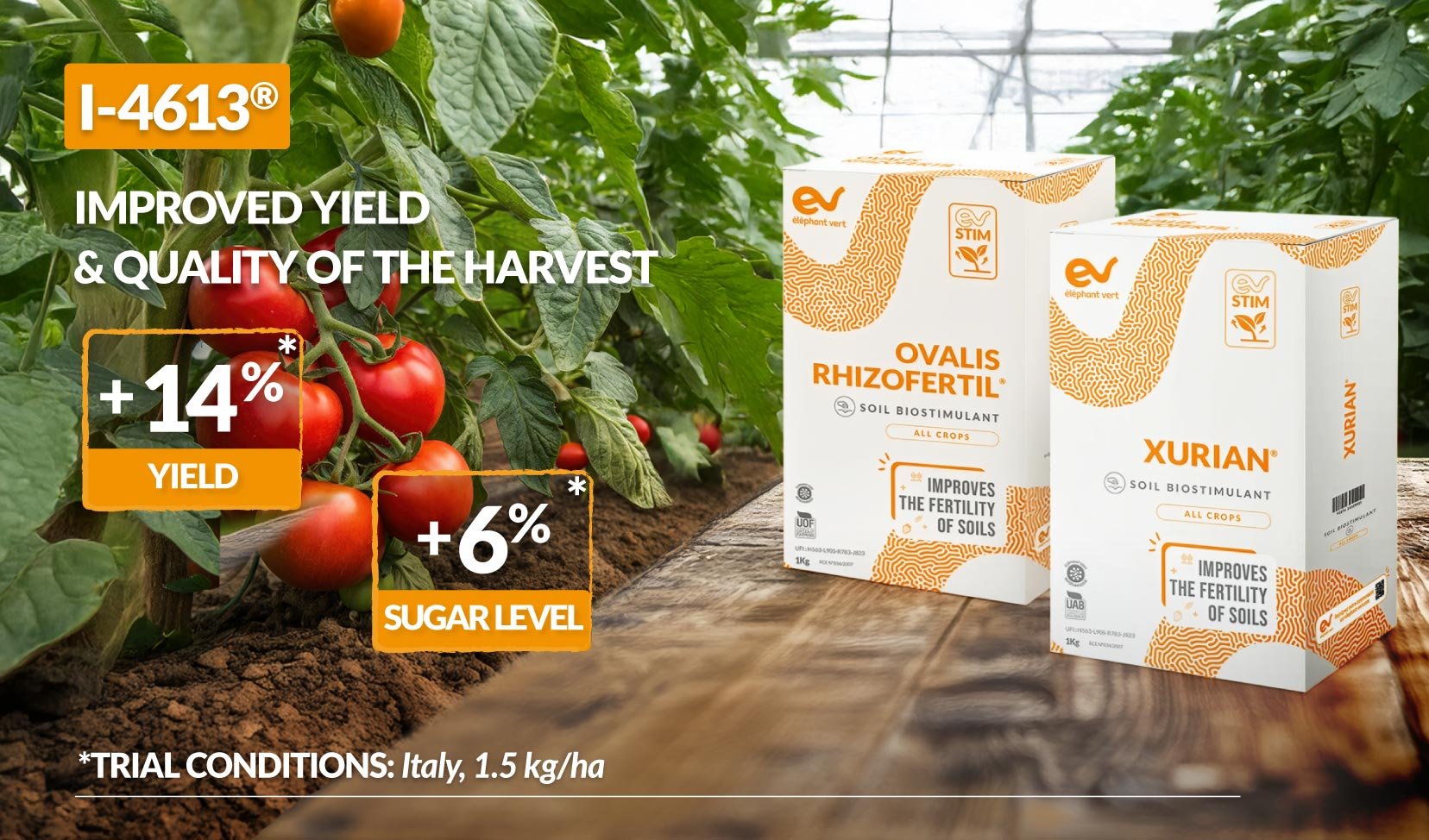
The application of Pseudomonas Putida I-4613 not only maintains but also increases yield and harvest quality parameters in the tomato trial above:
Acting on the leaves to increase stress resistance: Vitality
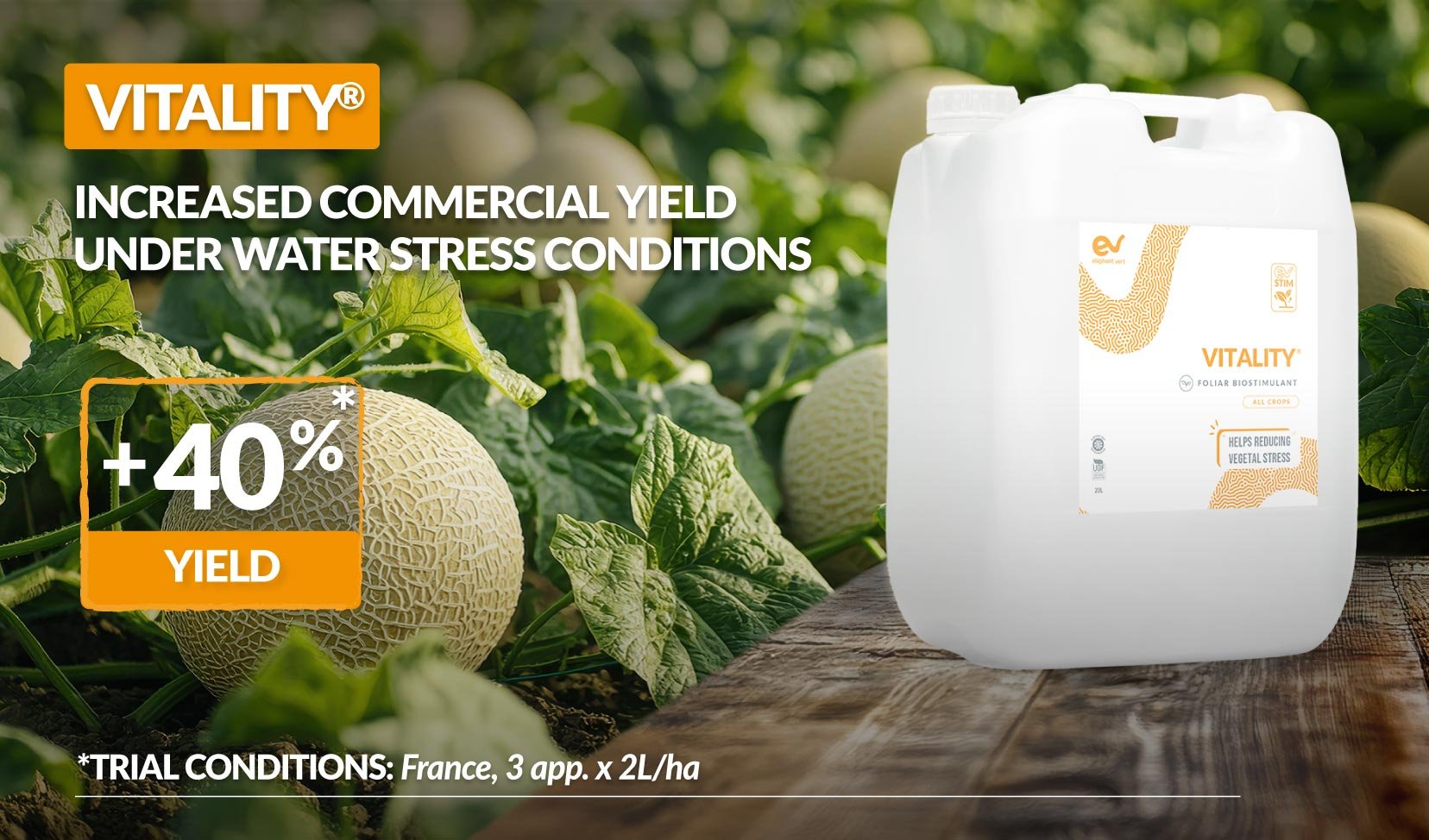
VITALITY® is a vitality stimulator that activates the plant's natural defences for an effective anti-stress barrier under water stress conditions. Its composition, based on a laminar concentrate, is rich in active ingredients.
Silica stimulates the hydromineral nutrition of plants by limiting water loss through transpiration. It also strengthens plant cell walls, making them more resistant to climatic hazards and shocks.
Glucans, which are part of the polysaccharide family (glucose chains) and a component of cellulose, activate an anti-stress barrier by stimulating the immune defences of plants for better resistance to stress (including water stress).
Finally, amino acids, the building blocks of proteins, are known for their many roles in plant metabolism. In particular, they help maintain plant cell homeostasis (i.e. maintaining water and mineral salt concentrations, pH, conductivity, etc.), increasing their resistance to abiotic stress.
Under simulated water stress conditions, the test below shows that Vitality limits the impact on marketable yield.
EV thus offers a comprehensive range of products that address the challenges of water stress and water management through several levers: the soil and plant tolerance.
3. Working alongside farmers to promote best practices Daily actions to promote best practices
Beyond the performance of its products in combating water stress, EV supports its customers in their efforts to improve water resource management.
Our goal is to encourage practices that are increasingly respectful of good water management through personalised support and advicefor our customers.
Our expert field representatives share their know-how with farmers through regular monitoring and agronomic advice tailored to their specific challenges. By being present throughout the crop cycles, they establish a close and trusting relationship with farmers. Their expertise enables them to tailor their recommendations to the specific characteristics of each plot, the climatic conditions and the production objectives. This personalised approach helps to optimise yields, preserve natural resources and ensure the sustainability of farms.
We are committed to providing field training to disseminate good agricultural practices in water management. Nearly 10,000 farmers are trained each year in our subsidiaries in Africa. These practical training courses, often organised directly on the farmland, enable the transfer of concrete techniques adapted to local conditions, such as rational irrigation, soil moisture management and water loss reduction. By strengthening farmers' skills, we are contributing to more efficient agriculture that is resilient to climate change and respectful of water resources.
In addition, we offer product solutions that are in line with these commitments. For example, several of our products are compatible with drip irrigation systems, allowing targeted water application to limit losses. Some of our subsidiaries also offer a range of seeds to provide local varieties that are better suited to the climate or specifically selected for their resistance. We also offercover crop solutions, a well-known best practice for protecting the soil surface from erosion and runoff.
Finally, we are also implementing measures to transition towards recycling the water resources available in our facilities, such as installing rainwater recovery systems at our industrial sites. These initiatives aim to reduce pressure on freshwater resources by reusing rainwater, for example. By integrating innovative and sustainable solutions, we at are helping to improve the water efficiency of agricultural and
industrial activities, while raising awareness among our partners about more circular and responsible water management. ●