By Janet Kanters
Soil biology has long been the hidden engine of agriculture. Now, thanks to cutting-edge DNA testing developed by Waypoint Analytical, scientists and farmers alike are unlocking a new understanding of the soil microbiome – one that promises smarter nutrient use, improved crop yields, and long-term soil health.
At the forefront of this effort is the Soil Biology Report, developed by Waypoint Analytical, the largest agricultural laboratory networksin North America.
“Microbes are really the engine that run the soil nutrient cycle,” explains Elizabeth French, soil biology manager at Waypoint. “And now we have the ability to measure those microbes and use that information along with our standard soil fertility information to be able to then drive improved nutrient use efficiency and improved soil health”
Why microbes matter Soil microbes are foundational to everything that happens in the field. Acting as the engines of the soil ecosystem, they are responsible for cycling nutrients like nitrogen (N), phosphorus (P), potassium (K), and sulphur (S). They help decompose organic material, store nutrients in their biomass, and release those nutrients in plant-available forms in a process called mineralization.
Some microbes even work in symbiosis with crops, producing
hormones that enhance root growth or improving drought tolerance. Others, however, are less helpful. Certain microbial processes, like denitrification, lead to nitrogen losses into the atmosphere, reducing fertilizer efficiency and contributing to greenhouse gas emissions.
It’s obvious, then, that a more balanced microbial community – with high nutrient cycling capacity and low nutrient loss potential – means better nutrient use efficiency, fewer inputs, and healthier crops.
“Microbes are key to a lot of the processes underground that determine how well a crop will grow and the long-term productivity of the soil,” French explains. “If we know how the microbial community is functioning, we can start to fine-tune how and when we apply fertilizers, and even select biological products
that will enhance the rightmicrobial processes.”
A new lens: The Soil Biology Report Historically, soil health assessments have focused on physical and chemical characteristics – pH levels, organic matter, nutrient concentrations. Biological activity, despite being central to nutrient cycling and plant health, remained elusive. That’s changing with Waypoint's Soil Biology Report.
The Soil Biology Report takes a unique, DNA-based approach to understanding soil life. Rather than identifying individual species – which vary widely from field to field and don’t necessarily correlate to function – the test focuses on functional genes. These are the actual genetic blueprints microbes use to perform tasks like nitrogen fixation or phosphorus solubilization.
Waypoint recommends testing for one of two reasons: to diagnose variability within a field (such as high vs. low yield zones), or to assess the impact of a soil-applied product. The latter use case is growing rapidly, as biological products become more mainstream in regenerative and sustainable farming strategies.
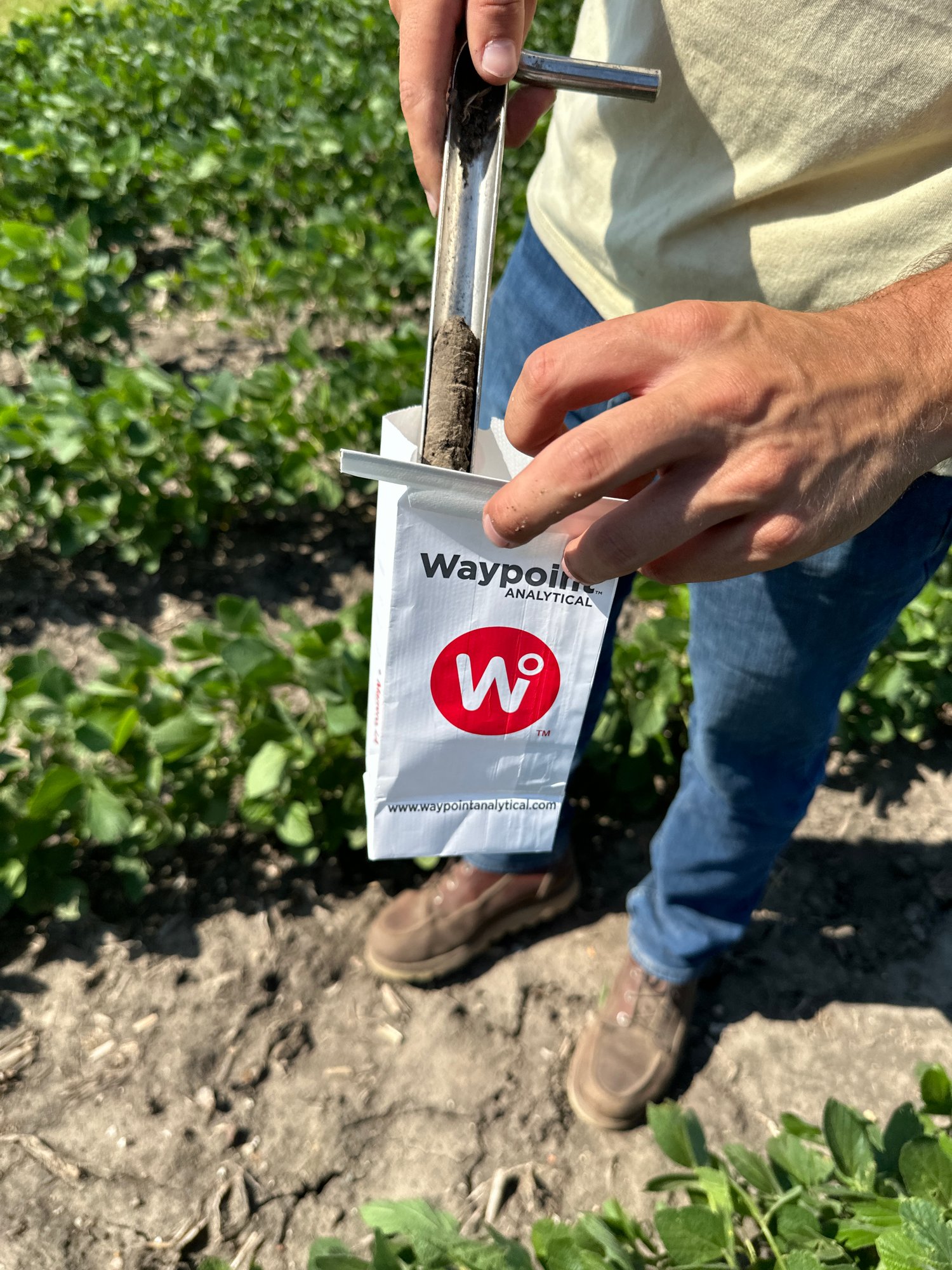
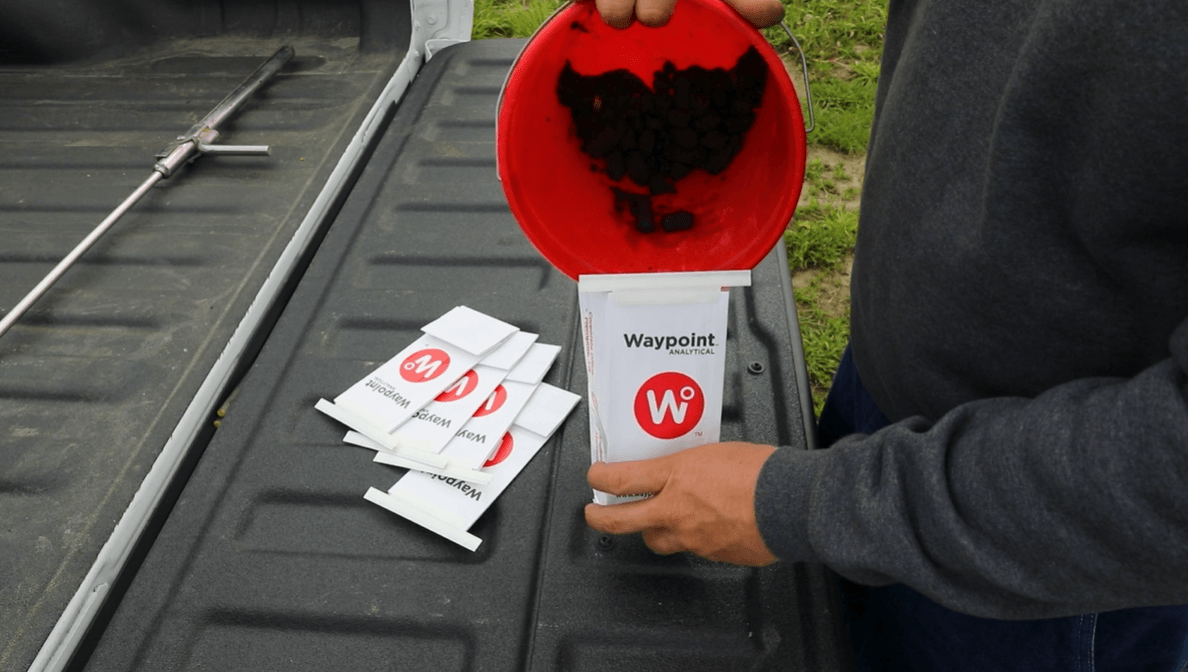
Here’s how it works: Farmers and agronomists collect composite samples from the top six inches of soil – typically 8-10 cores per sample – and submit them alongside their regular fertility tests. No special equipment is required, and samples can be shipped in paper bags, just like standard soil tests.
“The idea was to make this scalable,” French says. “You don’t need to overhaul your operation or do something complicated. Just take the same soil sample you were already going to send in, and we’ll give you both fertility and biology insights.”
Once a soil sample arrives at the lab, microbial cells are broken open, and their DNA is extracted. Scientists then analyze the DNA for the number of copies of specific genes – say, those related to nitrogen fixation or sulphur cycling. These results are compared against a national database and assigned a percentile score from 1 to 100, indicating how active or abundant that particular function is relative to other fields.
“This gives us a precise look at what the microbial community is doing, not just who’s there,” says French. “That’s a much more powerful tool when you’re trying to manage nutrient use or test how a product is working in your soil.”
Waypoint’s unique approach integrates soil biology testing into the normal soil sampling process, requiring no special tools or protocols. It’s fast, cost-effective, and designed to be repeatable – allowing growers to benchmark and track changes over time.
Inside the microbial metrics Growers can use soil biology testing for two main purposes:
Diagnosing field variability. By sampling high-, medium-, and low-performing areas of a field, farmers can identify whether microbial imbalances are contributing to yield differences.
Evaluating products and practices. Testing before and after a biological product is applied can show whether it’s impacting microbial activity – particularly if it targets functions like nitrogen fixation or P/K solubilization.
Indeed, one of the most powerful applications of the Soil Biology Report is product validation – something especially relevant in today’s crowded market of biologicals, inoculants, and soil amendments. Instead of relying on anecdotal results or inconsistent yield gains, farmers can now measure whether a product is actually shifting microbial function.
Waypoint recommends taking samples both before and after applying a product, typically 2-6 weeks apart. For more in-depth trials, a randomized block design can help isolate treatment effects from natural field variability.
The Soil Biology Report breaks down results into several key areas:
Biofertility – Nitrogen: Assesses microbes that fix, mineralize, or lose nitrogen. High denitrification scores, for example, may suggest that your soil is at risk of nitrogen loss and could benefit from split applications or inhibitors.
Biofertility – Phosphorus, Potassium, and Sulphur: Measures the presence of microbes that solubilize these nutrients from unavailable forms, making them accessible to crops.
General Biofertility: A holistic view of the soil’s microbial “horsepower,” including decomposition rates and organic matter processing.
Soil Characteristics: Waypoint offers multiple soil test packages, including traditional Mehlich 3 extractions that provide essential baseline context for interpreting the biological data.
The report can integrate any soil test package available through Waypoint, ensuring flexibility and compatability with the grower’s preferred testing method.
“Our tests are designed to give agronomists and growers the information they need to make better fertility decisions,” French says. “You can tailor applications, validate whether a product is having an effect, or track how your soil is changing over time.”
While the test offers standardized results, French emphasizes that interpreting those results always depends on context. Soil biology is shaped by texture, pH, organic matter, and climate. A microbial community thriving in sandy soil under dry conditions will look very different from one in rich, loamy Midwest farmland.
“The microbial species will vary, but the core functions – like nitrogen cycling – are almost always there to some degree,” says French. “What matters is how strongly those functions are represented in your specific soil.”
Moisture levels, irrigation quality, past management practices, and even recent weather events all affect microbial activity. That’s why Waypoint offers interpretation support, asking key questions about sampling timing, irrigation, and prior treatments to help users make sense of their reports.
From testing to transformation Since launching in 2023, demand for the Soil Biology Report has doubled year over year. While it began as a service exclusive to Nutrien Ag Solutions clients, Waypoint is now working with agronomists, retailers, and grower groups across the U.S. and Canada, as well as exploratory partnerships in Latin America and Australia.
Looking ahead, the Soil Biology Report will expand to include new genetic markers for microbial functions and possibly more crop-specific data. French sees this as a foundational step toward transforming how we understand and manage soil.
“We have all these buzzwords floating around – sustainability, regenerative ag, soil health,” she says. “But the lynchpin to all of it is the soil itself. If we don’t understand what’s going on biologically, we’re missing half the picture.”
With tools like the Soil Biology Report, farmers are no longer flying blind. They can see exactly what their soil is doing, how their practices are shaping it, and where there’s room to improve.
“It’s about setting yourself up for the long term,” French adds. “If we want to keep farming this land for generations, we need to understand and invest in the life beneathour feet.” ●
Sampling Tips for Soil Biology
When to sample:
Fall is ideal for benchmarking soil health, especially if aligned with standard soil fertility testing.
Spring or in-season sampling (2-6 weeks post-treatment) is recommended for testing the impact of soil-applied products.
How to sample:
Use 8–10 soil cores from the top 6 inches to make a composite sample.
Target root zones or application bands for the most relevant microbial data.
Label and ship samples within 3–4 days; avoid shipping on Fridays. DNA can degrade if exposed to high heat.
What to avoid:
Don’t use this test for foliar-applied products.
Be cautious when interpreting data from overly dry or overly wet samples, as extreme conditions can skew microbial activity.
Elizabeth French, soil biology manager,Waypoint Analytical
A team led by Dr. Tim C. Paulitz of the USDA Agricultural Research Service (USDA-ARS) and Dr. Olga Mavrodi of Washington State University has uncovered how wheat plants influence and reshape their root microbiomes depending on environmental conditions, including drought and irrigation. The findings, published in Phytobiomes Journal, suggest that wheat isn’t just a passive host, but an active architect of its microbial partners.
“The plant directs the assembly and composition of microbes on its roots, much in the same way the gut microbiome in humans is determined by what we eat,” said Mavrodi.
Using next-generation DNA sequencing, the researchers studied bacterial populations in the rhizosphere as well as inside the root tissues themselves. Samples were collected over eight growing seasons from both irrigated and dryland plots at the USDA’s Lind Dryland Research Station in central Washington, one of the driest wheat-growing regions in the U.S., receiving just nine inches of annual rainfall.
Unlike short-term trials, this long-term field study captured the evolutionary dance between wheat and its microbiome under real-world agricultural conditions – complete with tilling, planting and harvesting. The study revealed that microbial communities shift significantly not just across a growing season, but also over years, influenced by repeated exposure to differentwater regimes.
The wheat plants were found to favour different microbes depending on soil moisture. Under irrigation, genera such as Rhizobium and Acidovorax increased in abundance, while under dryland conditions, drought-tolerant microbes like Massilia and Burkholderia thrived.
Interestingly, while soil water shaped microbial diversity in the rhizosphere, microbial populations inside the roots – the endosphere – were more influenced by the age and physiological state of the plant than by water availability. Over time, many of these internal microbes, especially Actinobacteria, declined in abundance, suggesting that the maturing plant exerts tighter control over its inner microbial community.
The researchers indicated that this isn’t random colonization. They assert that the plant is clearly making choices – whether by controlling its root exudates or modifying root structure – to encourage certain microbesover others.
The implications of this research are significant. By identifying which microbes consistently thrive under drought stress, scientists can begin to design microbiome-based strategies to improve wheat performance in water-scarce regions.
Indeed, understanding how these microbial communities change over time helps researchers see which ones are resilient and which ones might support the plant through stress. This could guide new, sustainable approaches to crop management, especially as climate change increases variability in rainfall. ●
Dr. Tim C. Paulitz,USDA Agricultural Research Service (USDA-ARS)
Dr. Olga Mavrodi,Washington State University
Source: Phytobiomes Journal | USDA-ARS | Washington State University