Increasingly stringent regulations on maximum residue levels (MRLs)in export markets is driving growth in biopesticides in Southern Africa.As these prove their worth, the road is being paved for biostimulantsand biofertilisers to enter the fore.
By Lindi Botha
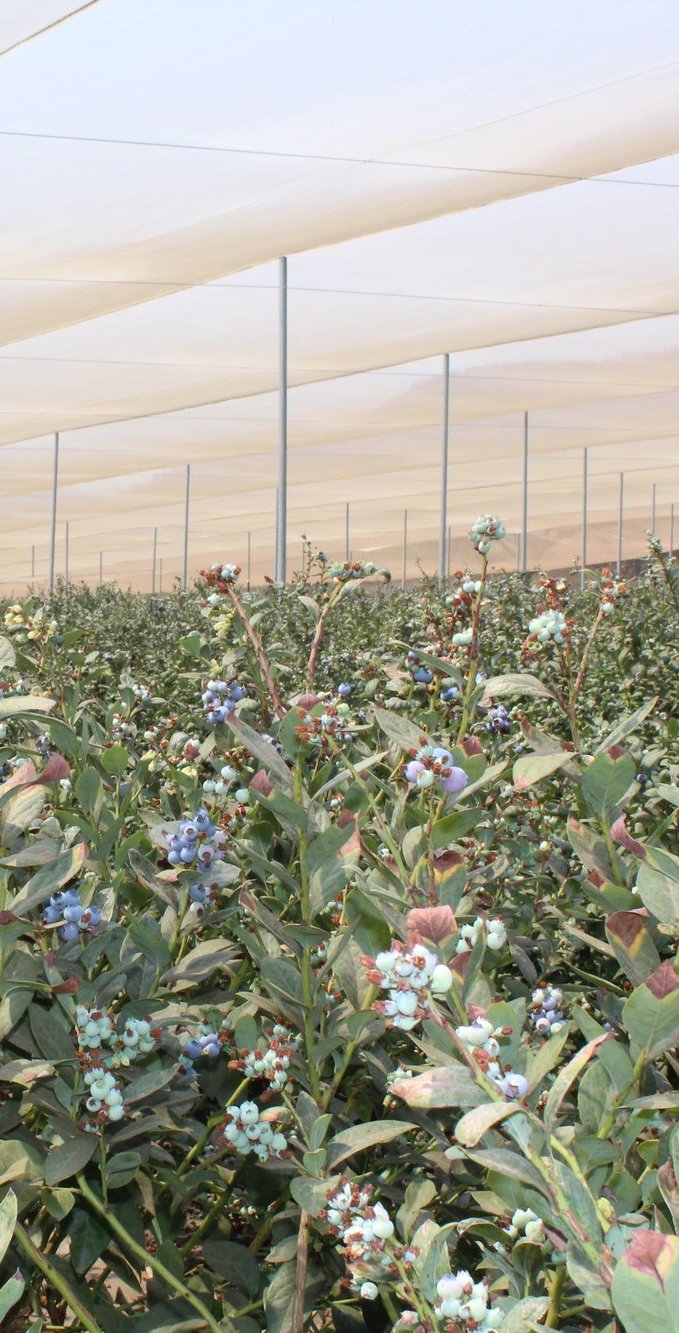
The boom in blueberry production in Zimbabwe and South Africa presents much opportunity for increasingthe market share of biological pest control.Photo: Lindi Botha
The agricultural sector in countries in Southern Africa differ as vastly as the terrain, with small scale subsistence farmers on the one end, and vast, commercial enterprises on the other. Inputs and knowledge about production practices therefore differ widely. But one common denominator is emerging: the use of biologicals to fight pests, boost crops and nourish roots.
“Biologicals are moving into mainstream agriculture,” says Dr. Michael Niland, Andermatt’s business development manager for Central and Eastern Africa. “People used to look at you like you crawled out of cheese when you mentioned
biologicals. But today, farmers across the region are starting to understand what they entail, and how to use them to get best results.”
Dr. Michael Niland, Andermatt’s business development manager, Central and Eastern Africa.
The use of biologicals varies widely across Southern Africa. Thérèse Gohin, regulatory project officer at the International Biocontrol Manufacturers Association, notes that South Africa is by far the most advanced in adoption, availability, and regulatory environment, while other countries are gradually catching up. “Exact market size figures are not well-documented and vary by region and product type. In some countries limited regulatory frameworks, infrastructure, or awareness means there’s still little to no significant use.”
According to Grand View Research, the South African biologicals market generated a revenue of US$57.8 million in 2024 and is expected to reach US$81.5 million by 2030. Representing a compound annual growth rate of 5,5%, it is the fastest growing biologicals market in Africa and the Middle East.
Niland notes that Zambia and Zimbabwe are leading close behind South Africa, with rapid uptake of biologicals used on export crops. “Botswana and eSwatini are progressing well, with Namibia starting to see uptake in the table grape industry. Mozambique is lagging far behind, and since they struggle to generate forex, have limited scope to import products.
“Angola has not even started using biologicals yet. Tanzania and Malawi are showing signs of growth, but Malawi’s economy is struggling, and they too have run out of forex, so potential for increasing uptake is limited,” adds Niland.
A Mordor Industry Intelligence report on the biologicals market in Africa states that the African biopesticides industry is experiencing significant transformation, driven by the increasing adoption of sustainable pesticides and integrated pest management (IPM).
The African biopesticides market is fragmented, but the mix of multinational corporations and emerging local players has its benefits. “Global companies are leveraging their advanced research capabilities and established brand presence, while local players capitalise on their understanding of regional farming practices and distribution networks,” the report states.
An example is the collaboration between the International Centre of Insect Physiology and Ecology, based in Kenya, and Real IPM, which led to the commercialisation of two
biopesticides: Campaign (ICIPE69) and Achieve (ICIPE 78). These products have been particularly effective in combatting a host of pests, including mealybugs, thrips, and fruit flies, in cucumber, mango, papaya, rose, and tomato crops. Both products are registered for use in Tanzania, South Africa, Ghana, Kenya and Ethiopia.
Biopesticides lead the way Gohin points to specific categories that are showing promise in the region: “We’re seeing significant innovation in areas like bionematicides, which are attracting increasing interest. Bioinsecticides are growing fast, with biofungicides experiencing the quickest portfolio expansion among companies.”
Thérèse Gohin,regulatory project officer, International Biocontrol Manufacturers Association
The urgency of combatting pests in food crops has meant a faster uptake of biopesticides in Southern Africa, compared to biostimulants and biofertilisers. “When farmers start the biologicals journey it’s because they need to address residues left by pesticide chemicals. So their first port of call is biopesticides, which is why it’s the largest of the three segments within biologicals, and the fastest growing.
“But once they see the benefits of biologicals, they soon start to explore the fuller range. This includes using beneficial bacteria and fungi like Trichoderma, mycorrhizae and Bacillus to keep roots healthy,” says Niland.
He adds that a lack of understanding previously dampened growth in this market, but with product manufacturers and NGOs running education campaigns, biologicals are being used with greater success, which is spurring popularity.
Awareness over root health is a key area of growth Niland has witnessed. This is especially relevant on row crops, where seeds are treated with biological stimulants to boost root development. Biopesticides have however made smaller inroads in row crops, since most are consumed locally, and not destined for MRL-conscious export markets.
Gohin notes that Trichoderma- and Bacillus-based products are the most widely adopted in the region. Biopesticides – especially microorganisms like Beauveria bassiana – are gaining traction, while semiochemicals, particularly mating disruption products, are popular for pest management in crops like pome fruit.
Some crops are benefitting more than others, with especially export crops like pome fruit, citrus, berries, avocados, and table grapes seeing
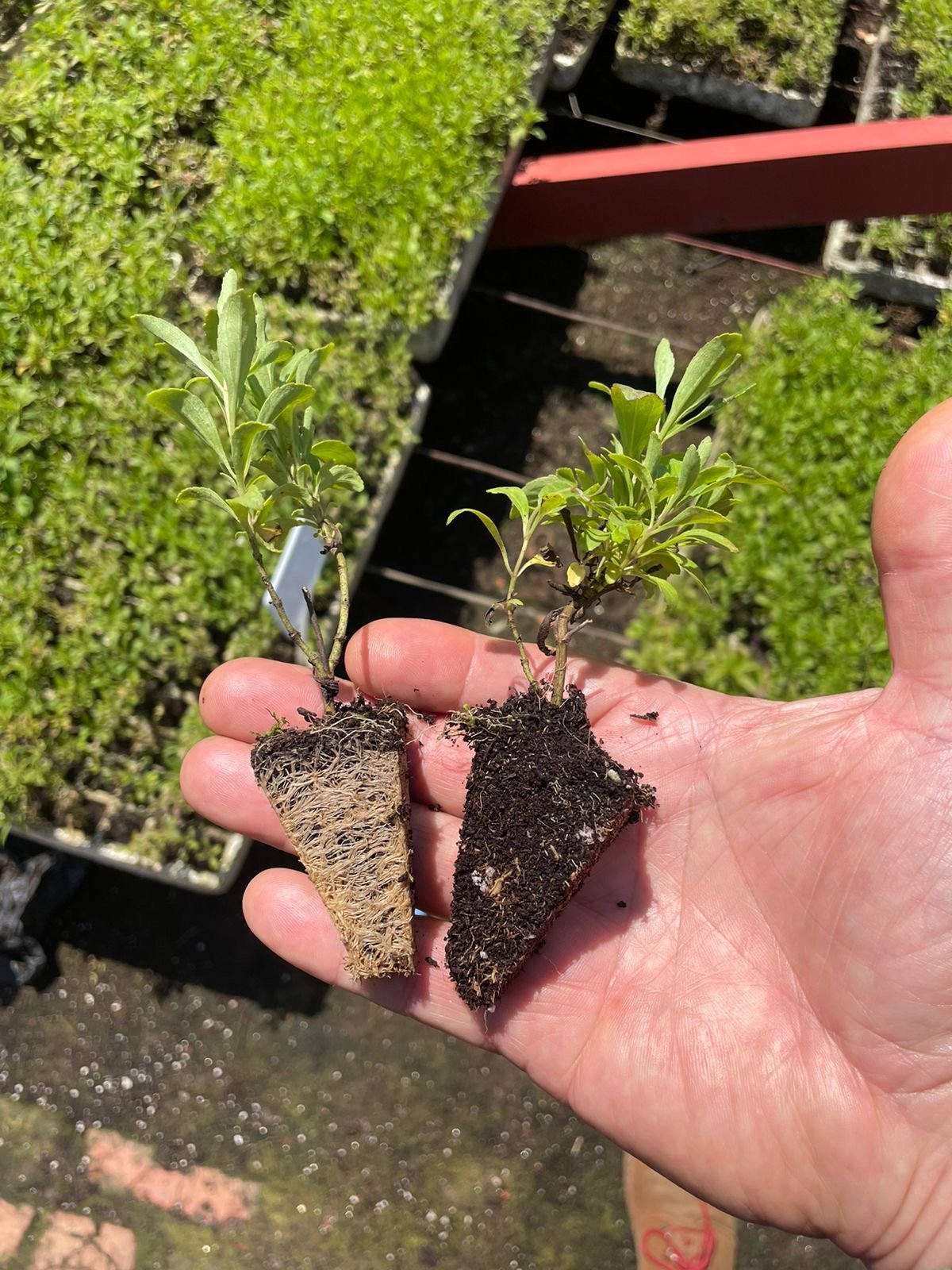
Education programmes to convince farmers of the benefits of biologicals are needed in Southern Africa. In this trial, the seedling on the left was treated with a biological root health programme, while that on the right was left untreated, proving efficacy. Photo: Andermatt
high adoption of bioinsecticides and biofungicides. “In tomatoes, biologicals – including semiochemicals – are being used to fight Tuta absoluta, while citrus growers are making notable use of mating disruption for false codling moth (FCM) control. Soybeans are a major user of biofertilisers, especially Rhizobium seed treatments,” says Gohin.
The industry is mostly geared towards larger, commercial farmers. Gohin explains that many products aren’t yet economically viable for smallholders, though low-cost options like Bacillus and mycorrhizae are in use.
“Export-oriented farms, in particular, are motivated by the need to manage residue levels, but awareness of soil health and sustainability is driving interest across all farmer segments."
An area where biopesticides hold particular promise is for the control of fall armyworm (FAW), which has been known to devastate maize crops, a key staple in Southern Africa. FAW is largely managed through the use of synthetic chemical pesticides using a field-by-field approach. The Center for Agriculture and Bioscience International (CABI) reports that in Zambia, nearly 43% of farmers use
pesticides every season to control FAW. This has however led to pesticide resistance.
CABI’s PlantWise Plus programme has therefore undertaken research to test the viability of using a biocontrol to fight FAW in Zambia. Possible options include baculoviruses and entomopathogenic fungi alongside 15 local parasitoid species that have been identified to develop successfully on the pest.
Shining stars With export orientated fruit industries leading uptake of biologicals, the countries in the region that are showing the most promise for continued expansionare South Africa, Zimbabweand Zambia.
Nadine Botha, senior technical field agent, Insectec, South Africa
Nadine Botha, senior technical field agent at Insectec in South Africa, says that the boom in blueberry production in South Africa and Zimbabwe is spurring demand for biologicals. Here, specific products like predatory mites to combat thrips and red spider mite have seen a rapid rise in demand. “We’ve also seen a big increase for products that help to control pests in crops like citrus, avocados and macadamias. Use on vegetables is also picking up,” she notes.
Farming company Verdant Orchards, which has operations in Mozambique, South Africa and Zambia, has implemented IPM programmes on their citrus and avocado farms in the latter two countries. Limited availability of biologicals in Mozambique has meant a full IPM strategy has not been possible there.
Verdant Orchards note that biopesticides are especially useful in combatting pests when the harvest season is nearing, since most chemicals would result in higher MRLs than that which is allowed.
Rodney Mackay, who leads Verdant’s operation in Zambia, says the country has seen a big drive towards using biologicals to control pests and improve soil health. Subsequently, the availability of products has improved. “The industry is still small compared to South Africa, but looking at the growth trajectory, Zambia will bea major player in the next threeto four years.”
Rodney Mackay,Verdant’s operation in Zambia
With Verdant’s citrus destined for the European market, combatting FCM is vital since shipments found to contain this pest can be rejected and market access revoked indefinitely. “FCM is rife in Zambia. Lately, we’re seeing FCM numbers climb late in the season – four to six weeks
before harvest – when synthetic chemicals are off the table. Instead, we use mating disruptors throughout the season to keep numbers low,” notes Mackay.
Predatory wasps that feed on the moths’ eggs have also been used with much success. Mackay however notes that using a live biological can be challenging as they need to be transported at optimal temperatures. “There are only a few companies that operate in Zambia, with many of the products flown in from Kenya or South Africa. To ensure quality is maintained throughout the value chain, Zambia needs to improve its cold storage infrastructure at warehouses and during transportation.”
With the South Africa biologicals industry being more developed, Verdant’s South African farms have taken advantage of the abundance of solutions. Kobus Kotze, farm manager at Verdant’s South African farm, says that biostimulants, biofertilisers and biopesticides are employed. The latter entails mating disruptors for FCM, and the fungal inoculant Eco-Bb for red scale.
While Kotze notes that biofertilisers have not been widely used on citrus farms in South Africa, Verdant recently started applying the biofertiliser NutriCAST to their soils. Trichoderma and guano are also used across farms in South Africa and Zambia to boost soil health.
Holding up progress The biologicals industry in Southern Africa has not escaped this sector’s biggest challenge: convincing farmers of efficacy amidst a negative legacy left by unregistered, ineffective products.
Niland and Gohin note that so-called ‘snake oils’ have damaged farmers’ trust. Improvements in regulatory frameworks in certain countries have however cleaned up this space as product developers need to prove efficacy before products can be registered and sold.
“But the battle is far from being won,” says Niland. “Most countries don’t have a clear framework for approvals. South Africa’s framework is robust, but it adds to the time it takes to get a product registered, taking up to seven years. However, once it is registered in South Africa, it is easier to have it accepted and registered in most other SADC [Southern Africa Development Community] countries.”
Gohin adds there is growing recognition that biologicals work differently from chemical pesticides and need a more holistic
assessment of field performance. “There are ongoing efforts to develop guidelines for registering bioinsecticides and semiochemicals, but regulatory expertise is still developing in most countries in Southern Africa. Misclassification remains an issue, with some pest-control claims registered under fertiliser categories because it’s easier and cheaper,” she says.
Most uptake of biologicals in Southern Africa has occurred on large-scale commercial farms, with smallholders lagging far behind. Even so, Niland says that countries beyond South Africa are not as well serviced, regardless of their size. “There is a longer supply chain going in both directions so getting the products to the farmers takes time. It is not so easy to get things done in Africa, and this limits how much the farmers can get done.
“But commercial farmers at least have the means to transport and store the biologicals at the right temperatures. Smallholders don’t. The current range of products available in the region are not positioned or packaged for smallholders,” he explains.
Increasing uptake among farmers requires education on how to apply the products to get the best results, since their mode of action is different to synthetic chemicals. “It’s a lot more work to farm using biologicals than it is using chemicals. It requires understanding of pests and their lifecycles. This steep learning curve is delaying greater uptake,” says Niland.
This education process becomes even more challenging when working with smallholders.
Dr. Arne Witt, regional coordinator for invasive species, CABI Africa and Asia
Dr. Arne Witt, regional coordinator for invasive species at CABI in Africa and Asia, explains that educators need to reach millions of smallholders to be effective. “It’s pointless for one farmer or a few farmers among many in a landscape to practice IPM. Many of the harshest pesticides are available in Africa and widely used despite the availability of more benign alternatives. If their use isn’t halted, biologicals will be ineffective.”
Incentivising farmers to use biologicals is crucial to turn the tide. “Most people in Africa live hand-to-mouth so nobody is willing to pay more for food that may have been grown with fewer pesticide inputs. Yes, there may be reduced costs with regard to pesticide-use, but organic crops require more applications, and so higher labour costs,” says Witt.
Mordor’s research confirms that success in the African biologicals market requires a multi-faceted approach combining product innovation, market access, and customer support. “Building strong distribution networks and partnerships with local agricultural institutions is crucial for market penetration.
“Successful players are those who can provide comprehensive solutions, including technical support and training to farmers. The ability to maintain product quality while keeping prices competitive is essential given the price sensitivity in the market. Companies must also focus on developing effective formulations that can withstand challenging storage and application conditions.”
A promising future With residue management increasingly under the spotlight, certain sectors are ripe for accelerated adoption. Gohin believes the biggest potential lies in export crops like citrus, berries, and grapes, where residue management is essential. “Soybeans are another high-opportunity area, especially for biofertiliser seed treatments, while tomatoes present scope for tackling Tuta absoluta with biologicals.”
While the biologicals industry in Southern Africa is maturing, it still has some distance to go. “The industry is in a transitional phase. It’s not in its infancy anymore, but it’s not fully established either,” Gohin explains. “Over the past three years, product availability has grown significantly, yet adoption remains slow due to a lack of farmer understanding, fear of failure, and past issues with unregistered or ineffective products.”
Despite these challenges, the long-term case is compelling. “Greater adoption of biologicals could bring major benefits to Southern African farmers,” Gohin notes. “These include improved resistance management, enhanced biodiversity and soil health, lower residue levels for export market access, and greater long-term sustainabilitywith reduced dependence on synthetic chemistry.” ●
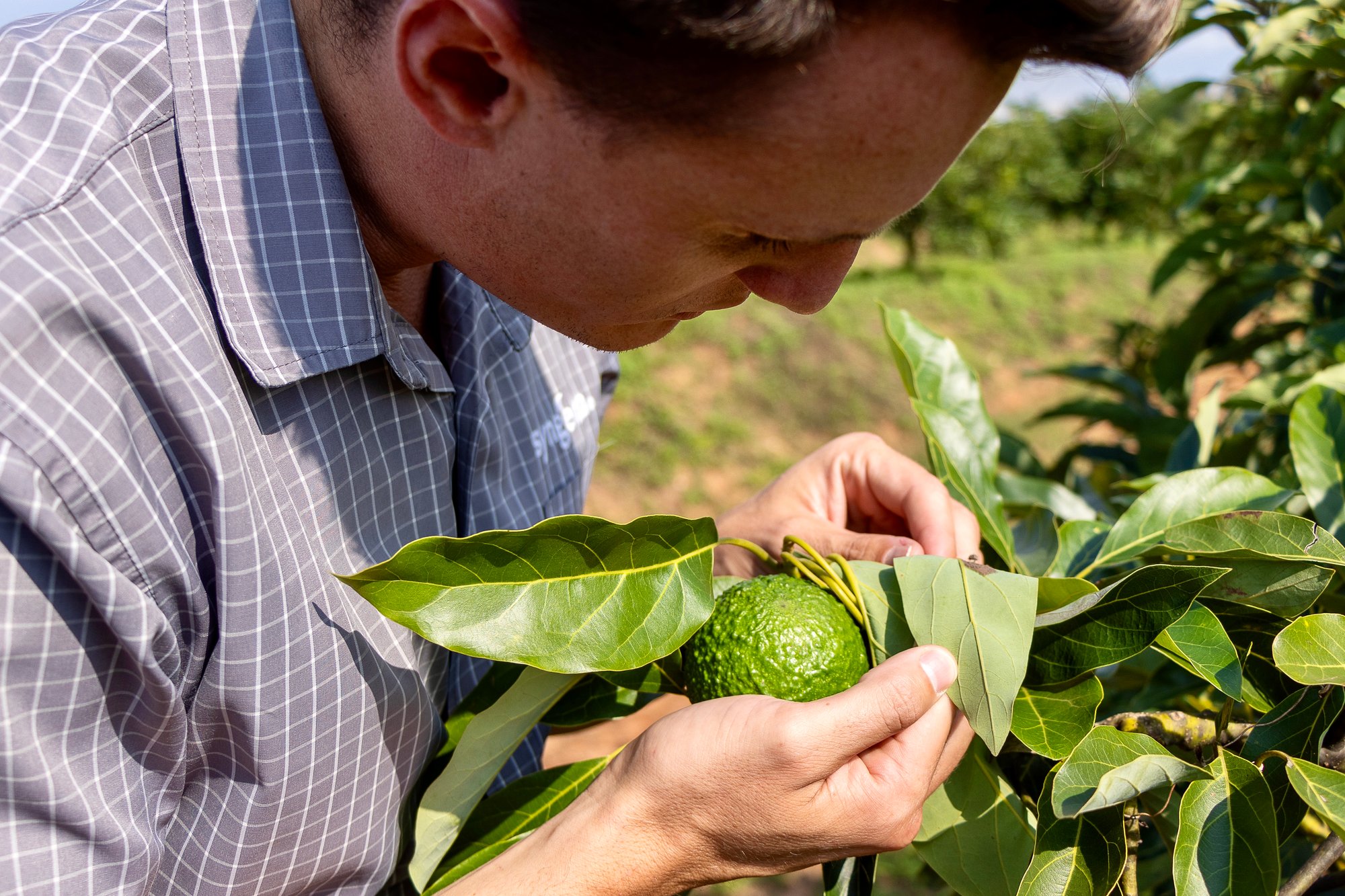
Uptake of biologicals in Southern Africa is most prevalent for exports crops like avocados. More intensive pest management that includes scouting, is however a barrier for many farmers.
Photo: Andermatt