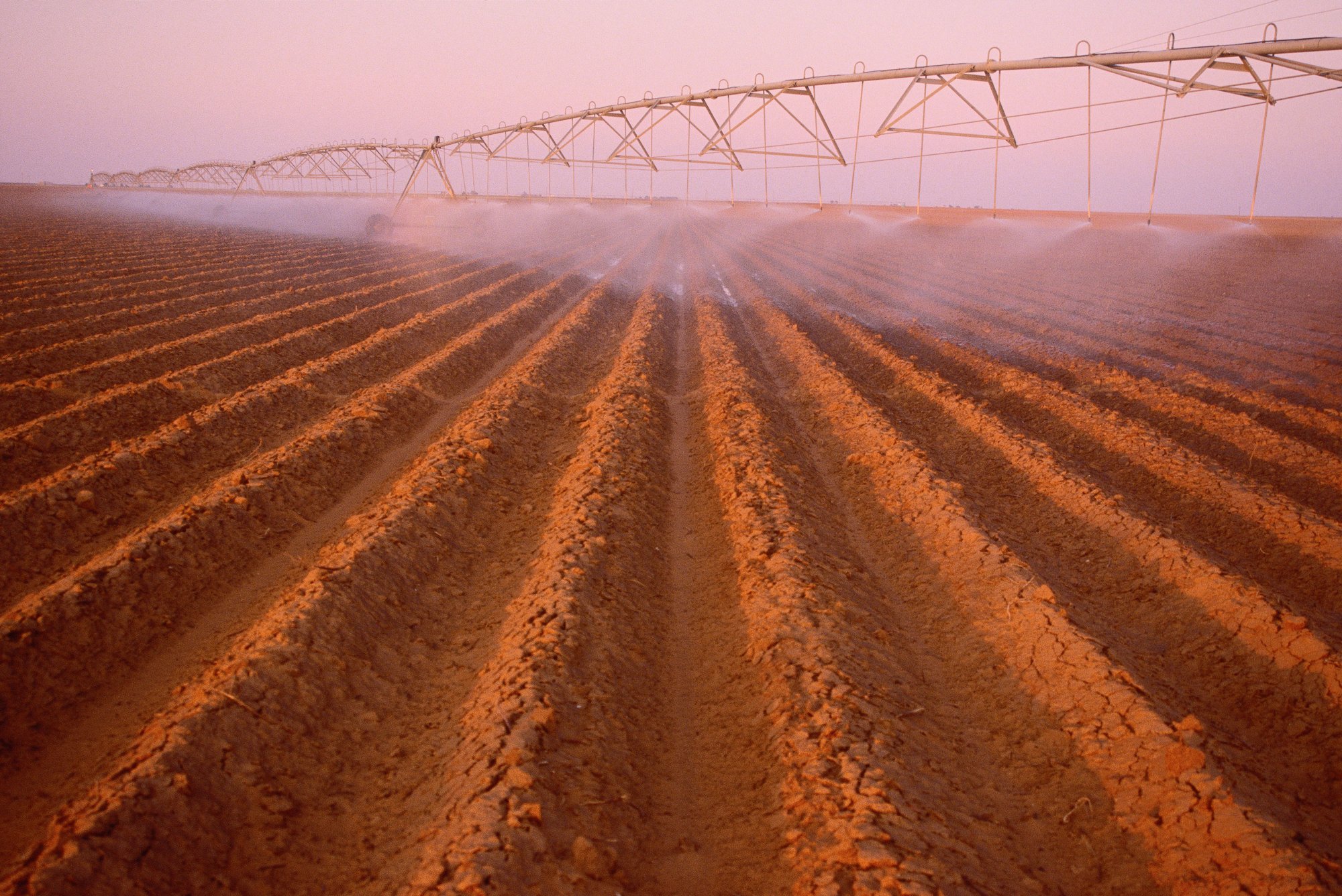
Irrigation, Texas, USA
The U.S. irrigation equipment industry has long enjoyed a competitive advantage in manufacturing and global exports. But as trade policy continues to shift under the Trump administration, the sector is bracing for potential turbulence from retaliatory tariffs in key markets.
According to the U.S. Census Bureau’s USA Trade Online database, irrigation exports were strong in 2024, prior to the execution of tariffs, particularly in North America. Canada and Mexico accounted for nearly half of all U.S. irrigation equipment exports – more than US$239 million worth – underscoring the importance of the United States-Mexico-Canada Agreement (USMCA) trading bloc.
“While U.S. trade policy remains in flux [in 2025], the IA strives to provide the industry with insights to better understand how the evolving tariff news is likely to affect our industry specifically,” says Andrew Morris, associate director of regulatory and technical affairs at the Irrigation Association (IA). The U.S. is a net exporter of irrigation equipment, so the primary area to watch is retaliatory tariffs from key trading partners.
Andrew Morris, associate director of regulatory and technical affairs at the Irrigation Association (IA)
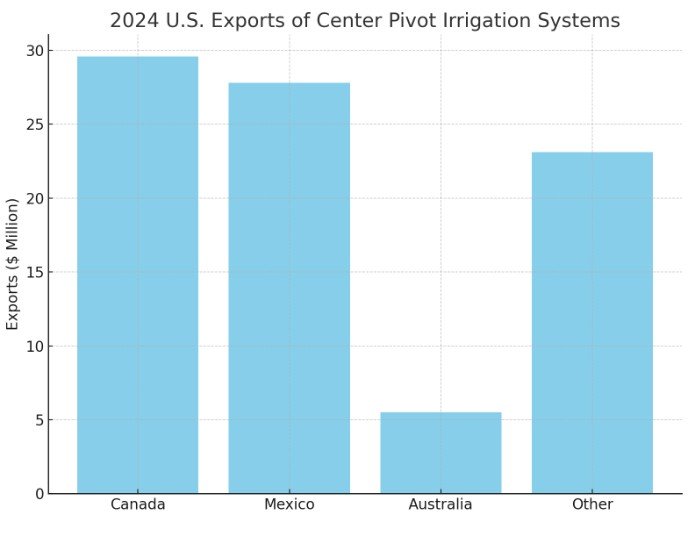
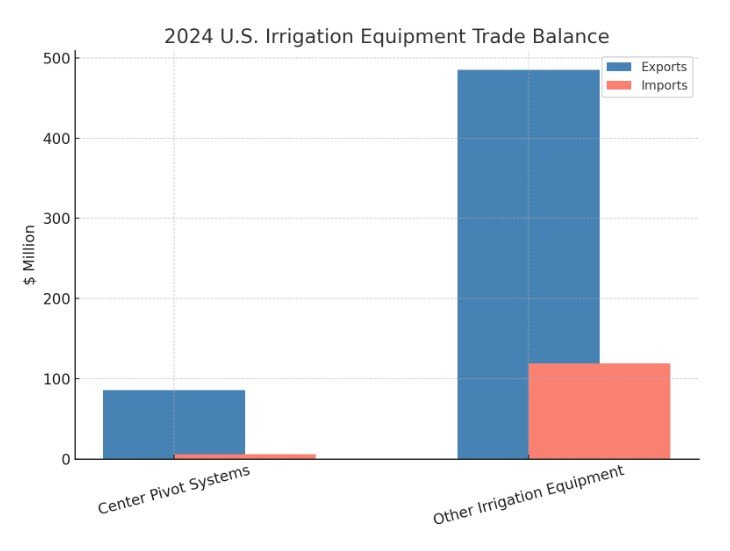
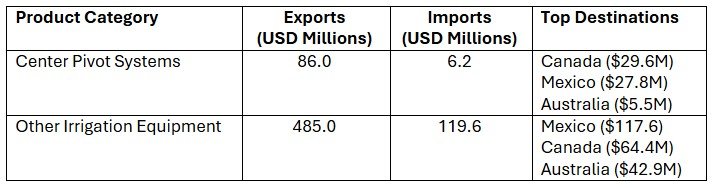
Understanding North Americaleads U.S. irrigation marketsbefore tariffs Exports of self-propelled center pivot irrigation systems (HTS 8424.82.0010) totaled $86 million in 2024. Nearly 70 percent of those exports went to Canada ($29.6 million) and Mexico ($27.8 million), with Australia ($5.5 million) representing a much smaller share. By comparison, the U.S. imported just $6.2 million in pivot systems last year, reflecting the strength of domestic manufacturing.
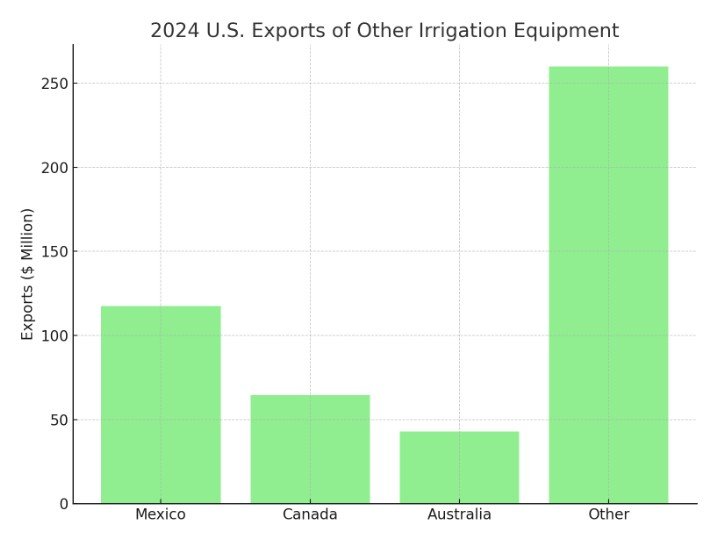
Beyond pivots, exports of broader irrigation equipment and components – tracked under HTS codes 8424.82.0020 and 8424.82.0090 – reached $485 million in 2024. Mexico led with $117.6 million, followed by Canada ($64.4 million) and Australia ($42.9 million).
“We’ve decided to focus most on ag irrigation exports because these are the areas of most direct and immediate importance to our members’ businesses,”Morris explained.
Tariff uncertainty looms In March 2025, the administration imposed a 25 percent import tariff on goods from Canada and Mexico. The measure was later suspended for products qualifying for duty-free status under the USMCA. However, eligibility depends on how products are sourced and assembled, making it difficult for companies to know where their shipments stand.
“Because the United States is a leading supplier of irrigation equipment and a net exporter, the biggest risk for these products is retaliatory tariffs by Mexico and Canada,” Morris noted.
So far, Mexico has not imposed retaliatory tariffs on U.S. irrigation equipment. Canada, however, has levied a 25 percent tariff on a range of U.S. goods, including food and appliances. Fortunately for irrigation equipment manufacturers, these measures have not directlytargeted the sector.
A net-export advantage For now, the U.S. maintains a net export advantage in irrigation equipment, exporting far morethan it imports across majorproduct categories.
“The U.S. is a net exporter of irrigation equipment,” Morris emphasized. “This is an example of the U.S.’s leadership in this manufacturing area, and ensuring the success of the irrigation industry can be a contributor to the overall task of reducing the U.S. trade deficit.”
The Irrigation Association has pledged to continue tracking tariff developments and updating its members with timely analysis.
“As trade dynamics continue to shift, the IA will deliver timely updates and data-driven insights to support the irrigation industry’s efforts to navigate global risks and protect access to key export markets,” Morris said. “The analysis of 2024 irrigation equipment exports clearly shows that Canada and Mexico serve as major buyers of U.S.-made irrigation systems, and the USMCA and good trade relations with these partners is critical to theirrigation industry.”
For ongoing updates, the IA points members to its Economy Issues webpage, where it posts trade analyses and policy resources. ●
2024 U.S. Irrigation Equipment Trade Snapshot
By Treena Hein
As world population rises, demand for water grows and droughts become more common, the need to boost crop production through innovative approaches is clear.
Indeed, according to the International Center for Biosaline Agriculture (ICBA) in the United Arab Emirates, about 25 percent of the world’s arable land is impacted by salinity. In many parts of the world, approaches include irrigating with saline water, using crops that are being developed not just to tolerate this but to thrive.
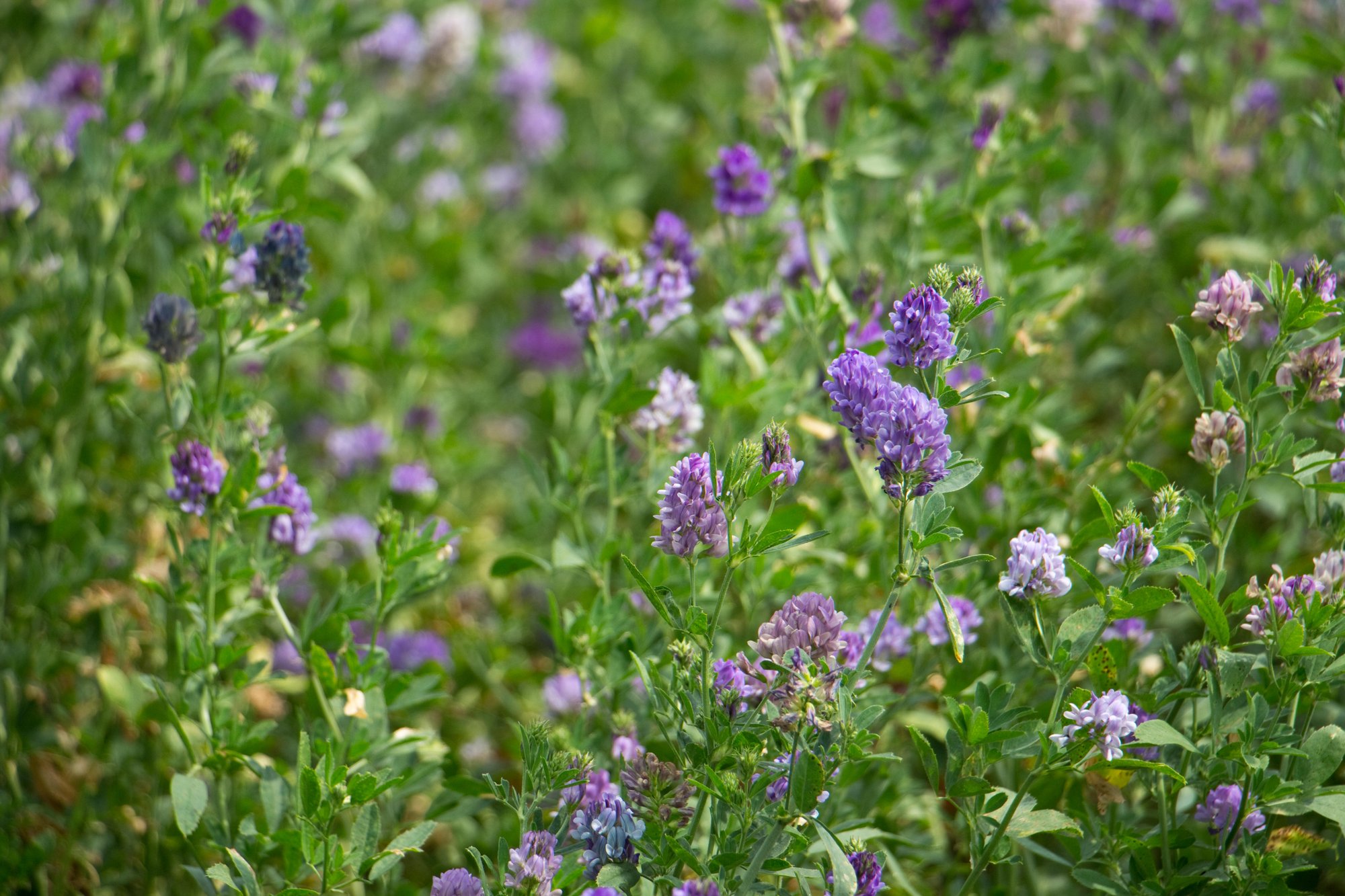
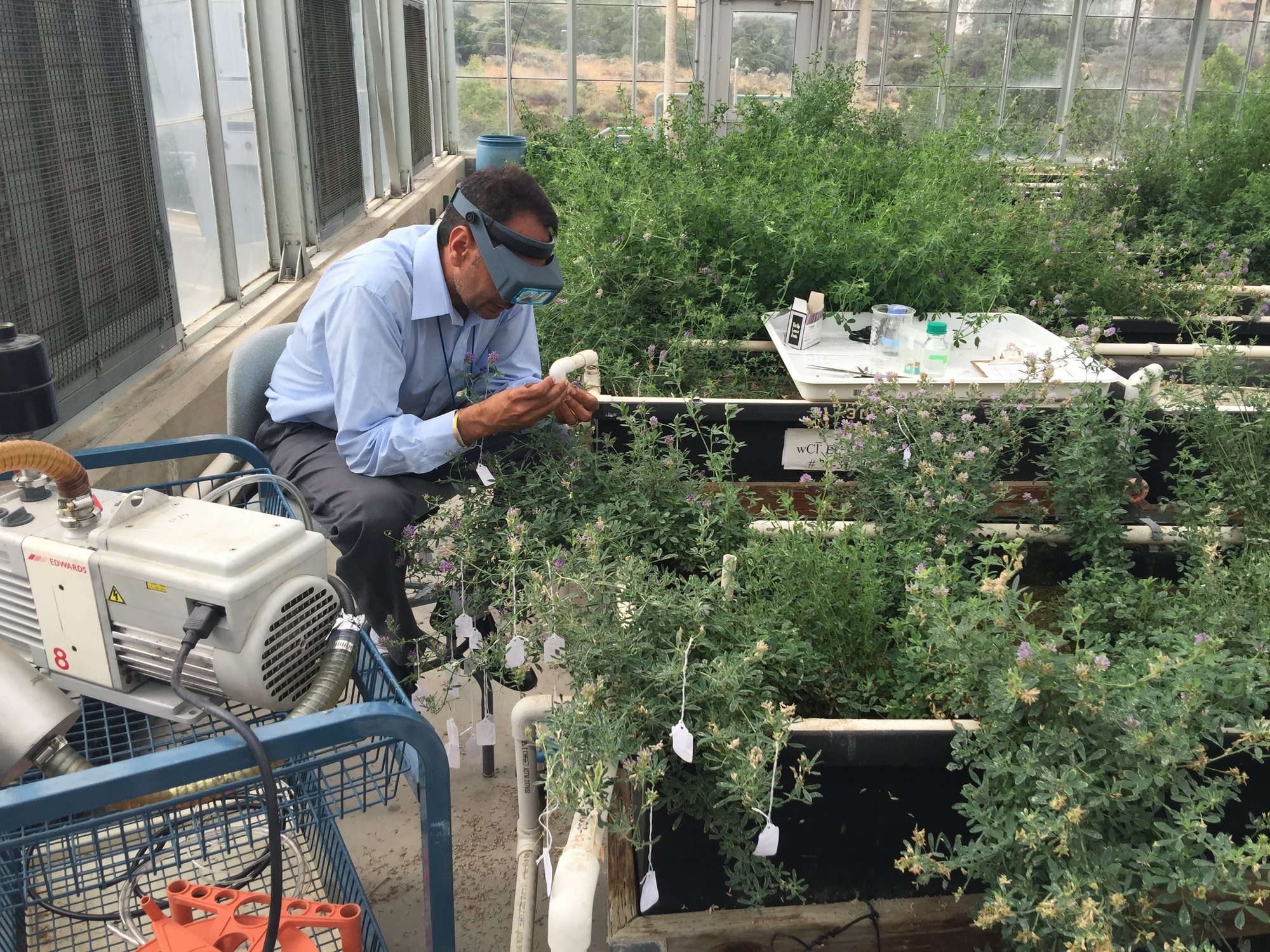
Alfalfa is of particular interest for this purpose, in California. “The dairies need alfalfa to be grown here as it’s too bulky and expensive to ship it from other states,” explains Dr. Devinder Sandhu, a research geneticist in the Agricultural Water Efficiency & Salinity Research Unit at the USDA (U.S. Department of Agriculture) U.S. Salinity Laboratory in Riverside, California. However, Sandhu explains that “we want to grow alfalfa where the soil is too saline for almonds [which is a very high-value crop]. There are parts of many other U.S. states where saline soil is an issue, including Virginia, Arizona, Utah, New Mexico, Colorado, Nebraska, Wyomingand Idaho.”
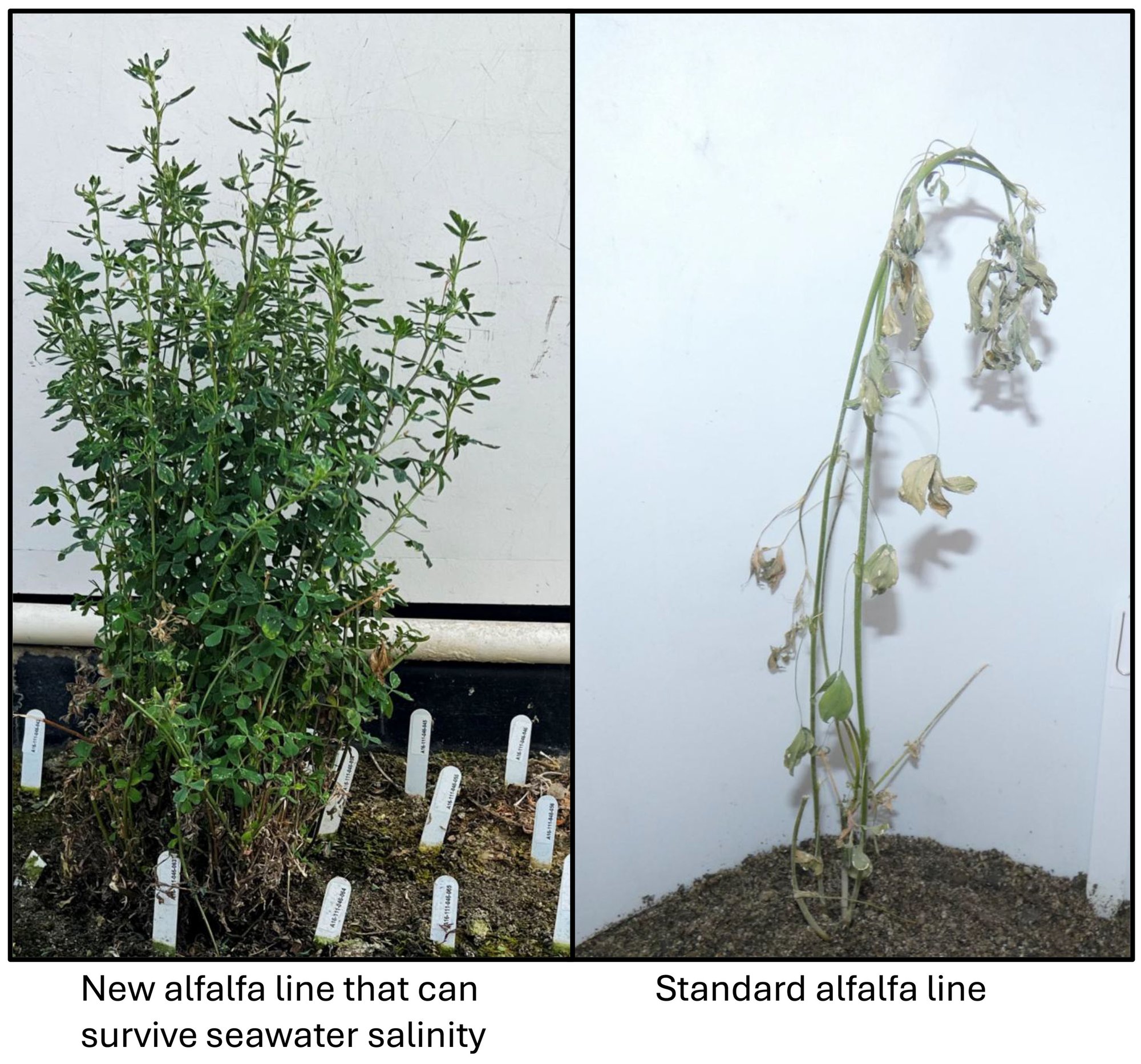
After further breeding, alfalfalines were created that can survive using seawater.
Photo: Devinder Sandhu
Sandhu and his colleagues started with a very large alfalfa germplasm collection. “Using traditional breeding, we have screened over 2,700 lines and we see a mixture of several mechanisms of salt tolerance,” he reports. “There is the mechanism of exclusion of sodium from roots into the soil. Root cells also place excess sodium ions in vacuoles, rendering them harmless to the cytoplasm of the cell. We also see sodium ions being regulated in the xylem transpiration pathway where they are sent back down to the root.”
There is also the situation where, if sodium makes it to the leaves, there are variations in tolerance to this within the leaf tissues, Sandhu notes. He adds, “some of these mechanisms are more active in some lines than others and they are
found in other plants as well. In some plants, chloride (Cl) is the more important ion, not sodium (Na).”
The team has narrowed germplasm down to 12 lines. Further evaluation in trials with water at various salinity levels revealed two lines that produced equivalent biomass (to plants receiving normal water) under salinity levels equivalent to 1/3 seawater. Then astonishingly, after further breeding with tests with water with higher and higher salt levels, alfalfa lines were created that can survive using actual seawater from the Pacific Ocean.
But crop research at the U.S. salinity lab goes well beyond alfalfa, to 15 other species spanning vegetables, fruit trees and nut trees. Looking at specific salt-tolerance mechanisms – and while a species may display several salt-tolerance mechanisms, one generally stands out – Sandhu explains that in almond trees, Na and Cl exclusion is the main process. In strawberries, it’s so far been found that they contain a lot of chloride in roots, when irrigated with saline water, but not leaves. Alfalfa and spinach treated with salty water both have high tissue tolerance to Na and Cl. But Sandhu explains that “these plants can tolerate it to a level that is still fine for humans in the case of spinach, and fine for cows in alfalfa. Cows don’t get enough sodium in their diets and that’s why salt licks are used.”
From a breeding and genetics perspective, the focus is on the genes related to the mechanism that plays the most important role. “We have identified, for example, three genes in alfalfa related to exclusion of salt in the water absorption of root cells,” Sandhu reports. “We have put them in [the model plant] Arabidopsis to confirm this, and we will be putting them into a salt-sensitive line. These genes should also be able to be engineered in spinach and other crops.”
With alfalfa, they are also focused on producing seeds of the lines that can survive seawater salinity, “for broader testing and potential distribution within the next year or two,” Sandhu adds.
Why drip irrigation matters Across the Pacific Ocean, using saline water for irrigation has also been under investigation at the Department of Primary Industries and Regional Development (DPIRD) in Western Australia. While a significant amount of better-quality water in the region – the Swan Coastal Plain – is already allocated for irrigation and other water users, there are large volumes of marginally-saline water available for irrigation.
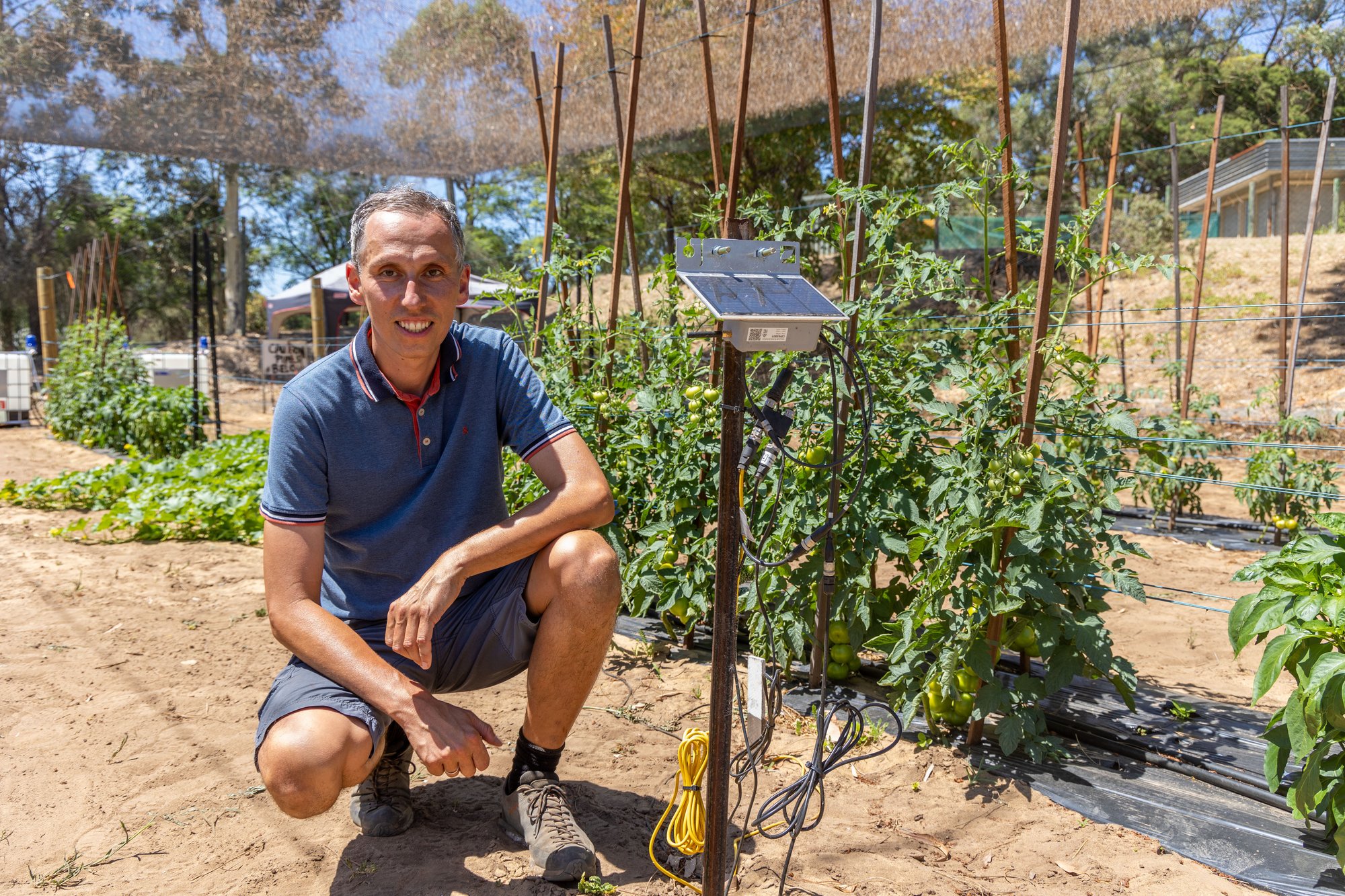
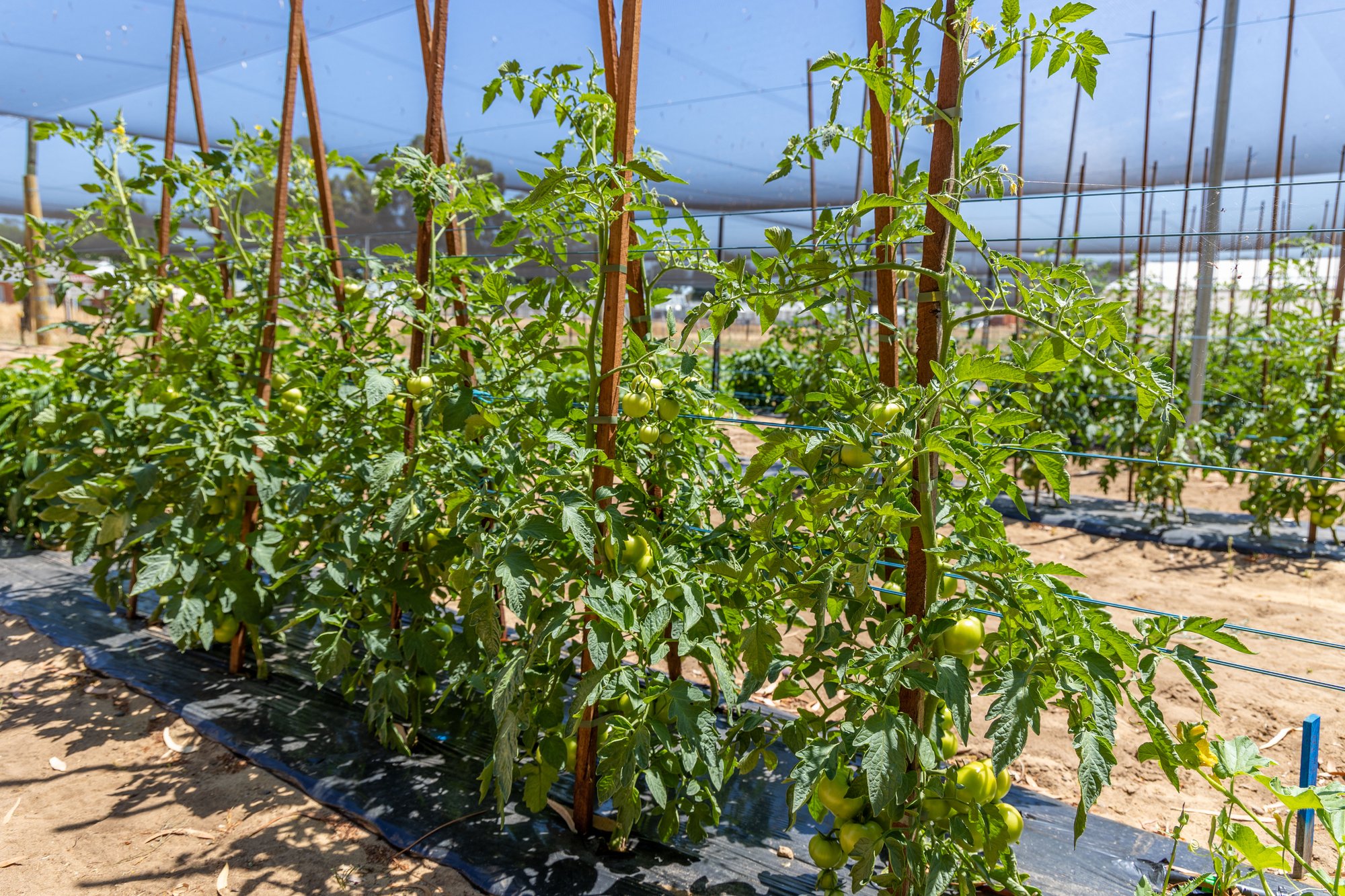
At DPIRD’s South Perth research facility, trials have been carried out on tomato and rockmelon in coarse sandy soils with plastic sheeting used to reduce evaporation. The two-year study, which has been submitted for journal publication, included a look at optimal irrigation frequency, soil moisture levels and evaporation rates, time of year and crop growth stage.
Type of irrigation was not a factor in the study, however. Dr. Lukasz Kotula, who led the DPIRD study but is currently a dual research fellow in the School of Biological Sciences and the Institute of Agriculture at the University of Western Australia, explains that when using saline water for irrigation, drip irrigationis key.
Dr. Lukasz Kotula, who led the DPIRD study but is currently a dual research fellow in the School of Biological Sciences and the Institute of Agriculture at the University of Western Australia
Compared to overhead spray irrigation, drip irrigation obviously conserves water in scenarios where saline water is available for use, which tend to be arid. And using overhead irrigation with saline water generally causes leaf burn anyway. In addition, a fairly steady drip application of saline water to the soil around the plant roots ensures that the salt in the water continually flows downward away from the root zone. That is, if soil dries out in saline environments, salt concentrates in the root zone and serious plant damage ensues.
Looking at the key findings of his study, Kotula reports positive results. Marketable yields were maintained up to an ECi (Electrical Conductivity is one measure of salinity) of 2.5 decisiemens/meter in both tomato and rockmelon. “We also found that tomato fruit quality improved with salinity,” adds Kotula, “and rockmelon quality was maintained.”
Some of the biggest challenges with applying this research, he says, will be to properly manage ion-specific toxicities (particularly Cl and Na), to maintain soil health and otherwise produce practical solutions that growers can use on their farms. But these challenges, in Kotula’s view, must be met.
“From my perspective, if current climate predictions for Australia are accurate, we will likely need to rely more on marginal or salty water for irrigation,” Kotula says. “Research like this should continue to help growers find the best ways to manage salinity, such as adjusting irrigation frequency, using techniques to leach salt out of the soil and choosing the right crops.”
In its study, DPIRD“found that tomato fruitquality improved with salinity,” noted Lukasz Kotula. Photo: Lukasz Kotula
New breeding technologies On the topic of breeding crops for salt tolerance, genetic engineering is critical according to those at the USDA Agricultural Research Service’s Appalachian FruitResearch Station in Kearneysville, West Virginia.
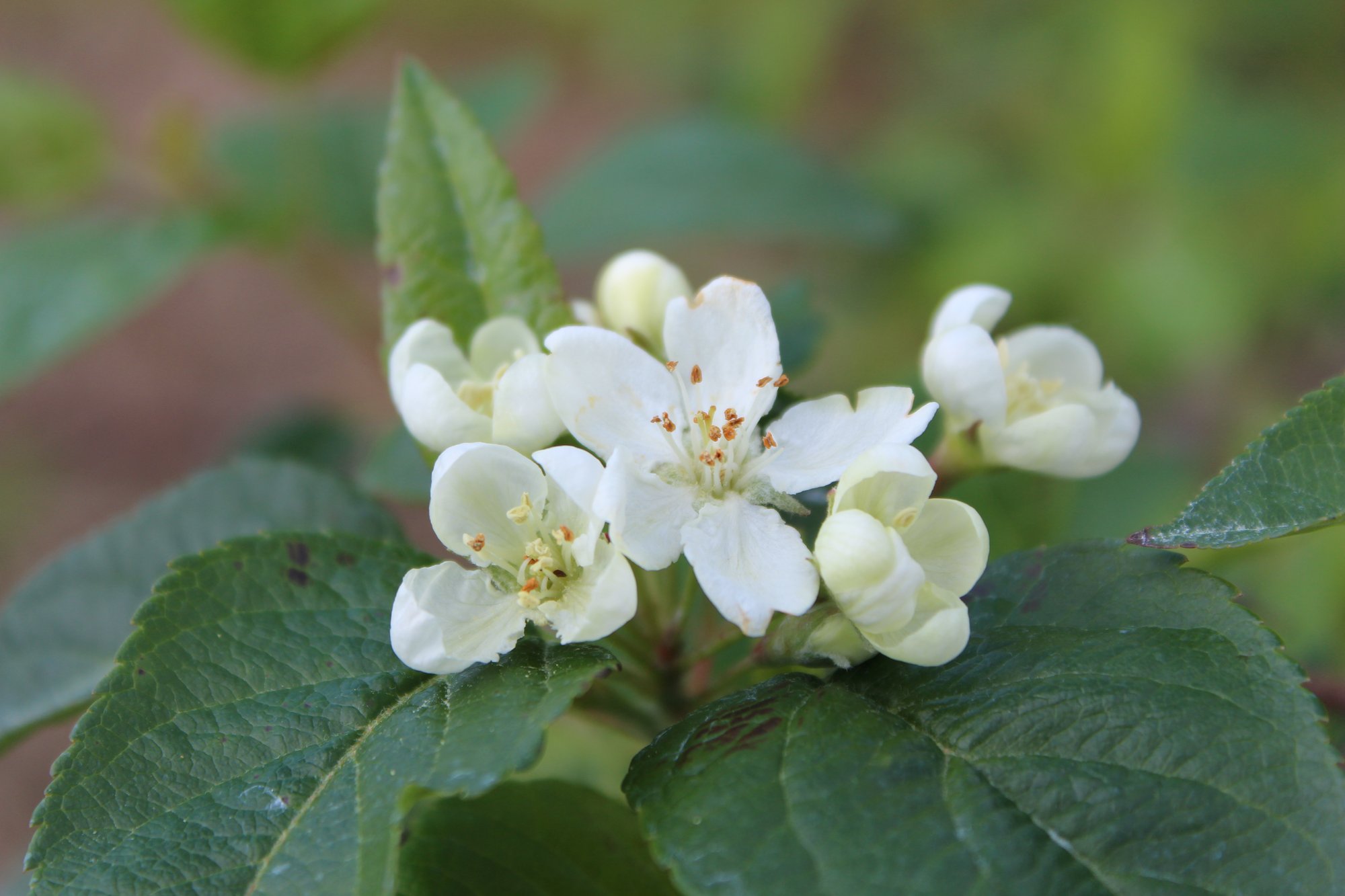
There, Dr. Chris Dardick is leading the project ‘Genetic Improvement of Fruit Crops using advanced Genomics and Breeding Technologies.’ He notes that for fruit trees such as plum and peach, apple and pear, salt stress is a growing problem. “We’re going to have to pay more attention to it in future,” he says, “but salt tolerance is not understood in fruit trees. We do have germplasm resources from around the world, and some of it was collected in areas with salty conditions such as Malas fusca (crabapple) from the shores of Alaska. This will help us define the degree of heritability of traits,but of course, trees have a long generation time.”
Malas fusca (crabapple).
Photo: Germplasm Resources Information Network (GRIN)
The approach being used to accelerate breeding cycles – very successfully – is genetic engineering. “We have shortened breeding time to a year or two in apple,” says Dardick. But the genetics of salt tolerance are also a focus. Dardick’s colleague Dr. Chris Gottschalk has found two candidate genes for salt tolerance in M. fusca and Dardick says it should be possible to engineer changes to these genes in M. domestica, the common apple tree, as well. “But we also need to understand how the traits function,” he says. “It’s challenging to study these traits, as salt stress testing in a lab does not correlate well, similarly to drought and heat stress, to testing in the field. However, there is potential for great progress, especially as gene editing makes advances.”
The potential of halophytes Halophytes are the group of plants with intrinsic salt tolerance – but what is the potential to develop some of them as a food source? This idea has been around for a long time, first emerging in the 1970s. By 1979, a group of five U.S. scientists had published a whole book on the subject, The Biosaline Concept: An Approach to the Utilization of Underexploited Resources.
Recently, a group of Chinese scientists looked at current studies in this area in a recent review study published in late 2024. They note that “evolution has created many close halophyte relatives of our major glycophytic/non-halophytic crops. These include a relative of barley and wheat called Puccinellia tenuiflora, a relative of rice called Oryza coarctata, and a relative of soybean called Glycine soja. There are also some halophytes that have been subjected to semi-domestication and are considered minor crops, such as Chenopodium quinoa.”
Since 2007 ICBA has run an international program to evaluate quinoa germplasm and single out lines suited to different geographic locations and environmental conditions. Multi-year trials have been held in Egypt, India, Jordan, Kyrgyzstan, Morocco, Oman, Pakistan, Spain, Tajikistan, UAE, Uzbekistan and Yemen. In the UAE, ICBA reports that its lines “produce, on average, up to 5.41 tonnes of seed per hectare under highly saline, sandy and arid conditions. In Central Asia, the lines have been reported to yield as much as 5.57 tonnes of seed per hectare.” Further work by ICBA and many others are helping spread the use of especially salt-tolerant quinoa around the world.
But there’s also potential in another halophyte as a food source. It’s described in a new book called Harnessing Sesuvium Portulacastrum for Biosaline Agriculture, published in April 2025 by scientists from India. This herb has edible leaves and flowers, and grows in coastal mangrove areas, tidal flats and salt marshes throughout much of the world. It is native to Africa, Asia, Australia, Hawaii, North America and South America, but has spread to many other places as well.
Beyond halophytes themselves for food, a team of scientists from Texas, Bangladesh and Vietnam concluded in another review paper that “the recent identification and characterization of salt tolerance-related genes encoding signaling components from halophytes have paved the way for the development of transgenic crops with improved salt tolerance.” These genes relate to ion transport and transport blockage, as well as the production of antioxidants and defense proteins that aid in salt tolerance.
Changing soil – and nearby plants But some halophytes also possess another powerful quality – they hold great potential in rehabilitating salt-contaminated soils so that conventional crops can begrown afterwards.
A team in Saudia Arabia, for example, has looked at duckweed in this context. Ten samples from throughout the country were examined for morphological and physiological parameters, including frond length, frond number, root length, root number, ion levels and more. They concluded that one variety called Al-Qassim “could be used in a brackish-water duckweed-based treatment program.”
But there’s more. Some halophytes can also aid nearby plants in their own soil salinity tolerance. In July 2025, a team from Romania published a review, concluding that “using halophyte-derived allelochemicals and complementary signaling molecules offers a viable, environmentally-friendly way to increase crop production in saline areas, reduce soil salinizationand more.” ●
By Luke Hutson
Founded 10 years ago by husband-and-wife team Colin and Annemarie Bremner, Kleinskuur Aquaponics has developed a robust and scalable aquaponic system, now used throughout Africa. In this exclusive interview, Annemarie Bremner shares their journey into aquaponics, the science behind their unique system, and their plans to expand internationally. The company will be exhibiting at AgraME, Dubai World Trade Centre, 6–7 October.
How did you and your husband get into aquaponics? Ours is a story of a quest for health, life – and a little love too! About 18 years ago, Colin was diagnosed with oesophageal cancer. After surgery, his doctor gave him four options: chemo, radiation, coffin or cremation. He chose a fifth: lifestyle change. Out went sugars, processed foods, and artificial additives; in came raw and natural food.
Colin started a hydroponic farm but was dissatisfied with the chemical inputs. Discovering aquaponics sparked a new direction – and we met while he was looking for land to set up his first system. As an agricultural journalist, I became fascinated with this natural way of farming, and eventually, we set up house together.
We trained under world experts like Murray Hallam (Australia) and Dr. Jim Rakocy (Hawaii). Both challenged us to create an aquaponic system suited for African conditions – and that’s what we did. Today, our systems are operating across Africa, designed to be climate-resilient and productive.
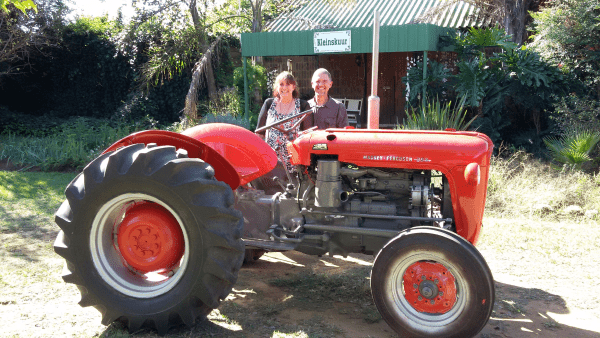
Starting up Kleinskuur Aquaponics 10 years ago a little red tractor joined Annemarie and Colin Bremner to do the heavy hauling and levelling for terrain preparation.
For readers unfamiliar with aquaponics, how does it work – and how is it different from hydroponics? Our true circulating aquaponics system mimics a natural river ecosystem. In nature, fish and plants coexist in balance – waste becomes food, and every organism has a role. In our system, fish waste is converted by bacteria into nitrates that plants use to grow. This is known as the nitrification process and takes about 40 days to establish. Once balanced, we maintain the system through staggered production of fishand plants.
Unlike hydroponics, which requires synthetic nutrient mixes and is often limited to single-crop production, aquaponics supports a diverse, natural crop mix with lower input costs and higher ecological benefit.
Your Gravel Barrel Auto Syphon system addresses key challenges. Can you explain how it works – and why it’s suitable for certain latitudes? In aquaponics, gravel is often used to filter solids from fish tanks and support fruiting crops like tomatoes and peppers. Traditional large media beds (with 1–2 tonnes of gravel) are heavy, hard to clean and prone to clogging. They can harbour anaerobic bacteria, leading to denitrification and system failure. Bell siphons often malfunction due to movement or blockages.
Our Gravel Barrel Auto Syphon system solves all these issues. Each barrel supports a vine crop and can be cleaned or replaced individually – no disruption to the system. The auto-siphon is sturdy, has no moving parts, and reliably flushes and aerates the gravel.
The design also considers sunlight angles – ideal for regions like Africa and the Middle East, where the sun shines from above. Vertical systems, suited for far northern latitudes, create unnecessary complications in our climate. Why fight nature with expensive LEDs and cooling towers when you can work with it?
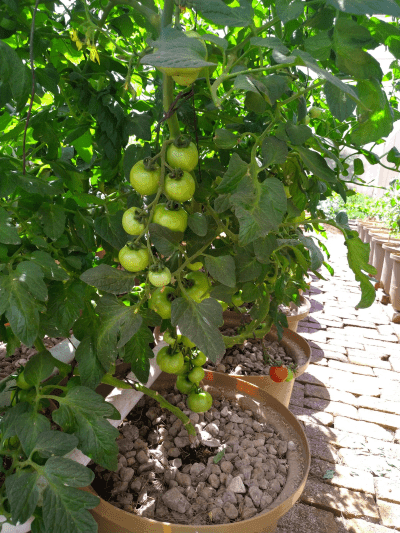
The KSBA Gravel Barrel Auto Syphon system provides the ideal growing environment for fruiting crops such as tomatoes in an aquaponic system.
What limits scaling up in aquaponics? Does a modular system offer biosecurity benefits? There’s a golden design ratio – not just for biological balance but also to optimize component sizes like
110mm piping. You can’t endlessly expand a single dam or grow bed and expect the system to remain stable. That’s why we created the KSBA1000 (named for its numberof barrels).
Multiple KSBA1000 units can be combined into larger systems (e.g., KSBA4000), and further scaled to meet production goals. Each unit operates independently, so a disease or failure in one doesn’t affect others. This modular design enhances biosecurity, simplifies access control, and makes system management more efficient.
You mentioned your system uses much less water than conventional methods. Could you share the numbers – and why the MENA region is a good fit? Our systems are closed-loop and self-cleaning – no need to dump water. Once filled, water is only topped up for what’s lost to evaporation or plant use.
To grow 1 kg of tomatoes, open-field farming uses around 200 litres of water. Our system uses just 1.8 litres – an astonishing saving.
This is exactly why the MENA region, with its arid conditions, is a natural fit. Our technology helps grow food where water is most precious.
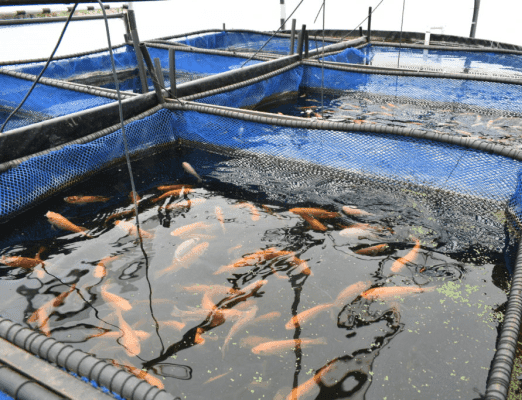
The engine room for nutrient production in the KSBA aquaponic system is the raceway fish dam with staggered productionin the net cages.
Why do you use Nile Tilapia fish in your system? Nile Tilapia is ideal for aquaponics in warm climates. It’s a hardy, fast-growing fish with tasty white meat and good bone structure – similar to sea bream. They grow to plate size (350–450 g) in just six months, compared to 19 months for trout.
They tolerate higher stocking densities (up to 300 fish per m³), are resilient to fluctuating oxygen, ammonia or nitrite levels, and breed prolifically. Tilapia also produce neat string-like waste, making filtration easier than with, for example, catfish, which produce amessy slurry.
Their optimal temperature range (24–30C) closely aligns with plant preferences, reducing the need for costly heating or cooling. What kind of partners are you looking for at AgraME? We’re looking to connect with:
Investors and agri-entrepreneurs interested in commercial food production.
NGOs and government bodies working on food security and climate-resilient agriculture.
Suppliers of raw materials (steel, canvas, greenhouse plastics) and consumables (fish feed, seeds, grow media).
Our systems are globally deployable with minor adjustments. With geothermal cooling/heating, they can even work in cold regions. The Middle East & Africa aquaponics
market is projected to reach USD 147 million by 2030 (CAGR 10.6%), and the global industry could top USD 4 billion. We’re ready to lead.
You mentioned the black soldier fly as part of a zero-waste vision. Can you explain this further? We were honoured to be featured by the World Economic Forum in their report Five Big Bets for the Circular Economy in Africa.
Our goal is zero waste. For example: instead of discarding fish innards, we feed them to black soldier fly (BSF) larvae. Plant waste (stems, leaves, roots) also goes to the BSF unit. The larvae can be used as raw chicken feed or dried and processed into fish feed. Oils released during drying can be sold separately.
Fish scales are a source of collagen, and tilapia skin is used in medical
treatment of burns. The final plant and fish waste can be composted for use in wicking beds or organic feed production (e.g., soya).
Nothing goes to waste. ●
This December, the irrigation industry will come together in one of America’s most vibrant cities — and you’re invited. From Dec. 8-11, 2025, irrigation professionals from across the globe will gather for the Irrigation Show and Education Week in New Orleans, Louisiana. Whether you work in agriculture, landscape, golf or water management, this is the event to see the latest technologies, meet the people behind the innovations, and expand your professional network.
The Irrigation Show is the largest event in the world dedicated to irrigation. It’s where ideas flow freely, partnerships form and solutions for today’s water challenges are on full display. For professionals in Europe, North America, Latin America and beyond, it’s a chance to connect directly with U.S. and international manufacturers, suppliers, researchers and peers – all in one place.
Why attend? At its heart, the Irrigation Show is about connection – to the industry, to new ideas and to the people who are shaping the future of irrigation.
Networking at a global scale: Attendees represent every corner of the irrigation sector, from seasoned experts to ambitious startups. You’ll find opportunities to exchange experiences and learn from others while forging relationships that could lead to your next project or partnership.
Technology and trends: The exhibit floor is a window into where irrigation is heading, showcasing everything from precision agriculture tools to smart water management systems.
Business growth: Whether you’re looking for distributors, customers or suppliers, contacts made during the show can open new markets and opportunities.
A destination worth the trip New Orleans is a city that celebrates life in every note of music, every plate of food and every step through its historic streets. Known for its jazz, Creole and Cajun cuisine, and vibrant culture, it offers international visitors a rich taste of theAmerican South.
We’re kicking things off in style with the Bayou Bash Welcome Party. This high-energy evening will feature live music, local flavors and a festive atmosphere.
Experience the Exhibit Floor The exhibit hall is the heartbeat of the Irrigation Show – buzzing with activity, ideas and conversation. This is your chance to:
see products up close: Touch, test and compare solutions from hundreds of exhibitors representing every segment of the industry.
discover the next big thing: The New Product Contest showcases the most innovative technologies introduced in the past year, giving you a first look at what’s shaping the market.
meet the disruptors: The Startup Showcase puts the spotlight on emerging companies with bold ideas for the future of irrigation.
From product demonstrations to spontaneous hallway conversations, the exhibit floor is where connections happen naturally.
Double the connections through co-location This year, the Irrigation Show once again co-locates with Groundwater Week, hosted by the National Ground Water Association. This collaboration expands your networking possibilities far beyond irrigation — bringing together professionals from across the broader water-use industry.
You’ll have access to more exhibits and more people to meet. The week wraps up with joint closing receptions, creating a shared celebration of innovation, learning and industry growth.
Learning that makes a difference Education is a cornerstone of the Irrigation Show. In New Orleans, you’ll find opportunities for every learning style and schedule:
IA University: Intensive, instructor-led courses designed to deepen your expertise and improve your skills.
Industry Insights sessions: Short-format presentations (20 and 45 minutes) that deliver timely market updates, practical tips and real-world case studies.
Certification exams: Take advantage of being on-site to earn or renew your Irrigation Association certification — a globally recognized mark of professionalism that demonstrates your commitment to best practices.
Whether you’re focused on technical training, market intelligence or personal career growth, the show offers an education track to fityour goals.
Make the most of your trip For international visitors, the Irrigation Show offers the perfect combination of business and cultural discovery. Plan your schedule to take advantage of the rich New Orleans experience — from exploring the French Quarter and sampling beignets at Café du Monde, to listening to live jazz on Frenchmen Street or taking a riverboat cruise on the Mississippi. Irrigation Show attendees receive exclusive discounts on area tours and an evening jazz dinner cruise.
How to join us Registration is simple at irrigationshow.org. Register early, as rates go up on Oct. 25. You’ll find details on travel, lodging, schedules and special events. International attendees are encouraged to book early to secure the best rates and make the most of travel planning.
The Irrigation Association is happy to issue letters of invitation to international attendees and exhibitors applying for a U.S. visa.
The IA invitation letter does not guarantee that you will be granted a visa. Plan ahead and apply early to allow enough time for application approval:
Complete this invitation letter request form.
Apply for a visa through the U.S. Department of State.
See you in New Orleans In one week, you can expand your professional network, deepen your expertise, explore new technologies and enjoy one of America’s most distinctive cities. The combination of high-energy exhibits, targeted education and cultural immersion is what makes the Irrigation Show truly unique.
Mark your calendar for Dec. 8-11, 2025. We look forward to welcoming you to New Orleans for a week that celebrates innovation, connection, and the future of irrigation.
For information about the 2025 Irrigation Show, go to irrigationshow.org. ●
With increasing scarcity of good irrigation water, the need for alternative sources is growing. Surface water is increasingly seen as a promising option worldwide, but because of its variable composition, it requires customized research, assessment and treatment. This white paper by Van der Ende Group* describes the technical and process steps required to successfully use surface water as an irrigation source.
As is well known, depending on the location, water is a scarce resource. Due to a variety of factors, good quality water is not always available, making it necessary to look for alternative sources. Rainwater is often used as a primary source. However, its availability is highly dependent on local weather conditions, climate and available storage capacity.
Ground or spring water is often used as a secondary source. Its use is increasingly restricted by laws and regulations. In order to still meet the desired water demand, additional sources are necessary. Surface water is increasingly seen worldwide as a valuable alternative to rainwater and well water, particularly in areas where there is insufficient space for rainwater storage or where groundwater extraction is not possible.
However, the use of surface water is less obvious than it seems. This white paper describes the entire process that must be completed before a suitable surface water treatment plant can be designedand realized.
The main components of a surface water treatment plant, compared to other applied water treatment plants, are fairly similar. However, it is the specific characteristics of surface water, such as seasonal variations in quality, that make treatment non-uniform. In addition, there is a difference with the treatment of surface water for drinking water purposes. This is due in part to the intended use and the time required to treat the water.
In new construction, surface water studies should be started immediately, because not all surface water is suitable. This is closely related to the specific characteristics of the water.
This white paper discusses the defining characteristics of surface water, as well as the steps to be taken to reach a go/no-go decision and ultimately the design ofthe facility.
Characteristics of surface waterIt is important to understand that there is no one type of surface water. Surface water is an umbrella term for all streams of water that are on the earth’s surface. This includes natural waters such as seas, oceans, lakes, ponds, rivers, streams, marshes and wetlands. In addition to these natural waters, there are also artificial waters, such as canals, ponds, reservoirs, ditches and drainage ditches.
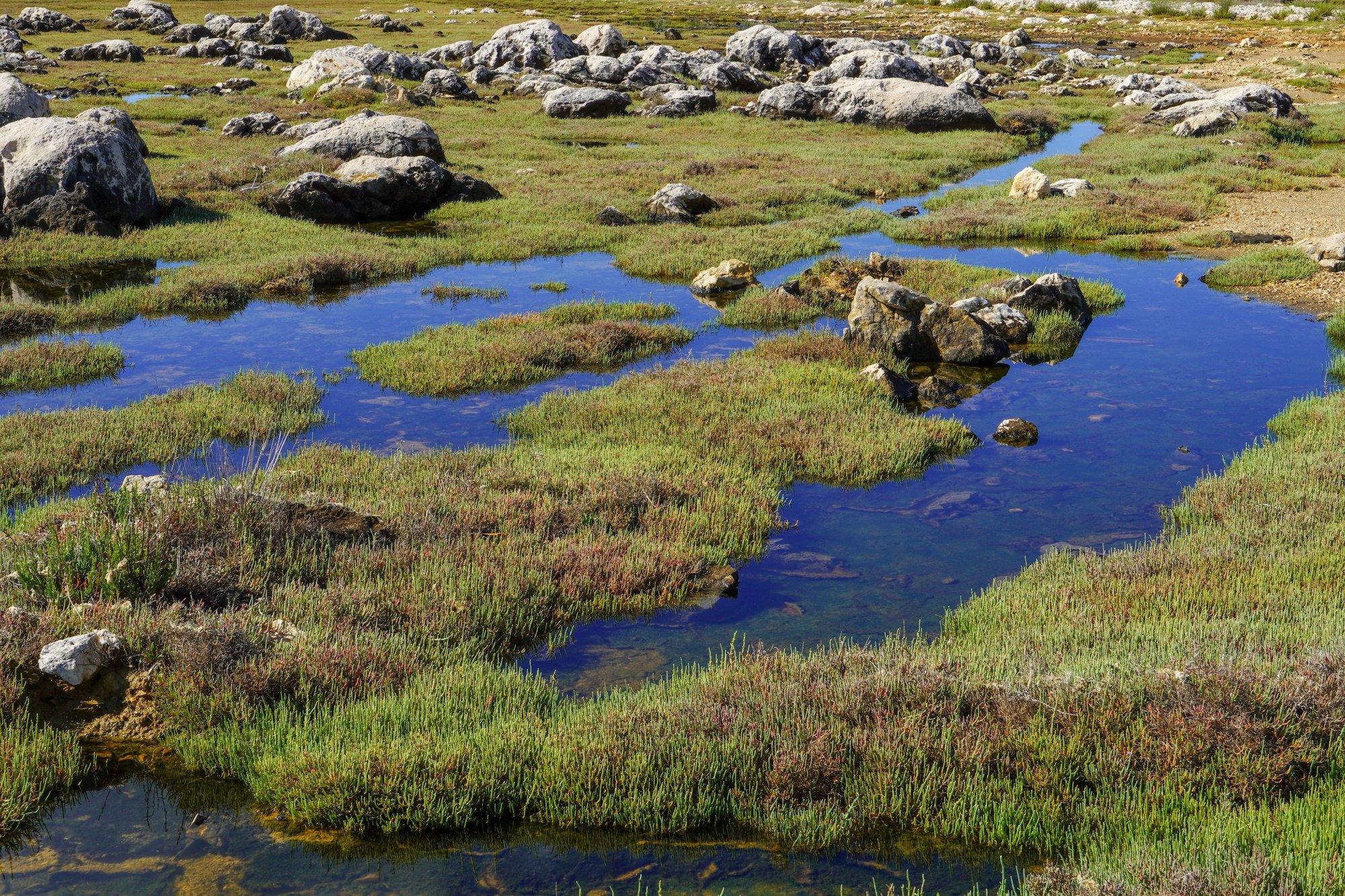
Surface water can be further divided into fresh, brackish and salt water.
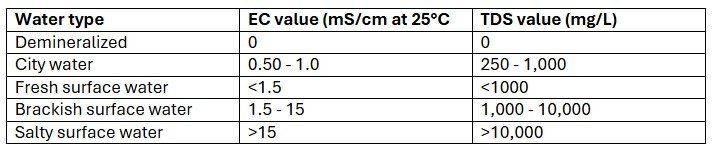
Only fresh and brackish water are considered for application in horticulture. Fresh water typically has an electrical conductivity (EC) of less than 1.5 mS/cm. Brackish surface water can reach an EC of up to 15 mS/cm, but is usually only suitable for use up to about 5 mS/cm. Saline surface water is discarded because of high salinity levels; this leads to high energy consumption and low clean water yield.
However, there are many more parameters that play a role in assessing surface water. In addition to salinity, expressed as EC or TDS, the organic and biological composition of the water and the presence of solids must also be considered. Temperature is also an important factor in surface water treatment. Moreover, the exact composition of the water is highly dependent on the location and environment in which the waterbody is located.
When talking about the organic composition of water, we often think of biological components such as bacteria and algae. While these organisms do indeed contribute to the total organic load, surface water quality assessment usually focuses on chemical-organic compounds. This includes drug residues, industrial discharges, pesticides and other synthetic or naturally occurring organic compounds. The amount of organics in water can be measured using total organic carbon(TOC) analysis.
The presence of organic substances in surface water poses a significant challenge for water treatment plants. Indeed, these substances can cause contamination in various treatment technologies, such as the widely used reverse osmosis systems.
In addition to the organic load, the amount of solids in the water is also very important. Suspended and solid particles can cause blockages in pipes, filters and other components of the water treatment system. An effective pre-filtration or sedimentation strategy is therefore essential to prevent disruptions and damage to systems.
Surface water is naturally rich in biological activity and contains microorganisms such as viruses, bacteria and fungi. These organisms can adhere to the inner walls of pipes and form biofilm there, which can lead to contamination of the
distribution network or even the water treatment system.
Temperature affects the solubility of substances, microbial activity and the efficiency of filtration processes. Higher temperatures can accelerate the growth of microorganisms, while lower temperatures increase the viscosity of water. Among other things, this affects the pressure required to filter water with reverse osmosis.
Weather influences on surface water characteristics The composition of surface water changes with the seasons. Each season, to a greater or lesser extent, brings specific challenges to the water treatment system.
WinterDepending on the location of the surface water, the water may freeze. This reduces flow and can limit the exchange of gases with the atmosphere. An advantage of winter is that low temperatures inhibit microbial activity and reduce algae growth. However, external factors, such as the use of road salt, can lead to increased EC/TDS levels in the water.
In addition, the flow patterns of surface waters can change in winter. Storms can cause the upper layer of water to mix with deeper layers through waves and turbulence, affecting water quality.
SpringIn spring, biological activity increases due to rising temperatures. This can lead to algal blooms, especially when nutrients such as nitrate and phosphate are present in the water. Depending on the source of the water, meltwater and rainfall can cause increased nutrient and sediment inputs. This
affects water quality, including an increase in solids content.
SummerIn summer, high temperatures lead to evaporation of water, which can affect water levels. Evaporation also increases the EC/TDS value of surface water. Higher temperatures also promote the growth of algae and bacteria, especially at high nutrient concentrations. This complicates water treatment, as organic matter and microorganisms spread more rapidly. This leads to contamination and an increased risk of biofilm formation.
AutumnIn autumn, the water cools, leading to a redistribution of oxygen and nutrients within the water column. Cooling and increasing wind create mixing of water layers, further affecting water quality. Depending on the location, increasing precipitation can lead to inflows of streams into the surface water body that carry agricultural chemicals, organic matter and other contaminants. Fallen organic material, such as leaves, also contributes to the organic load of the water, thus affecting water quality.
Water treatment problems of surface water The aforementioned seasons affect the water characteristics of surface waters. This creates diverse challenges in its treatment.
First, microbiological contaminants such as viruses, bacteria and fungi are present. These organisms come from external sources that enter surface water and must be removed to prevent contamination of the water treatment system and distribution network.
Second, excess nutrients, such as nitrogen and phosphorus, can lead to algal blooms. This can then cause taste problems in the treated water.
Third, external influences, such as pollutants from agriculture and industry, can cause pesticides, heavy metals and pharmaceutical residues to enter the water.
Finally, changing water levels and increased turbidity due to rainfall or drought can cause sediment
movement, which can interfere with water treatment processes.
In short, seasonal influences have a major impact on surface water quality. Depending on the location, customization of filtration, coagulation and temperature regulation is often required. Effects such as underflow and overflow of surface water during the seasons are not discussed in more detail in this paper, but they do affect the treatment process. The same is true of thermal stratification: the formation of temperature-related layers in the water. This phenomenon, in which hot and cold water barely mix, has only been discussed in limited detail, but has a significant impact on water composition and thustreatment strategy.
ResearchDetermining whether surface water is suitable as a source for irrigation requires an extensive and lengthy research process. Because of the strong seasonal influences and site-dependent variation in water quality, this path must be carefully navigated.
Step 1: Location analysis The process begins with assessing the potential site for water intake. This considers the size of the water
body, its accessibility, its surroundings (such as nearby agricultural or industrial areas), and the impact of seasonal influences on flow and water quality. This global assessment provides a first indication of whether the site is promising.
Step 2: Initial assessment (go/no-go) Based on the site analysis, an initial decision is made: does it make sense to continue the study? If the location and general characteristics are evaluated positively, a “go” is issued and the process continues with a detailed analysis of the water itself.
Step 3: Sampling and analysis For a minimum period of 12 months, water samples are taken monthly at the intended surface water intake point. These samples are analyzed for relevant parameters, such as electrical conductivity (EC), total dissolved solids (TDS), the presence of organic matter, microbiological contaminants, solids, and temperature. This long-term measurement series provides a representative picture of seasonal variations in water quality.
Step 4: Evaluation and system design Based on the measurement results, the challenges posed by the water become clear. These insights form the basis for the design of a suitable surface water treatment system. This includes determining which filtration techniques, pre-treatment steps and purification processes are necessary to make the water suitable for the intended application. Consider combinations of sedimentation, pre-filtration, disinfection and possibly reverse osmosis.
Conclusion Using surface water as an alternative water source offers many opportunities, especially in situations where rainwater storage or groundwater extraction is limited. At the same time, it presents several challenges. Indeed, due to strong seasonal influences, biological activity and external contaminants, the composition of surface water is less predictable than that of other water sources.
A number of conditions are important for successful application. These include:
• A low to moderate electrical conductivity (preferably < 1.5 mS/cm);
• Understanding organic loads, such as pesticides, drug residues and natural organic matter;
• Presence of microorganisms, such as bacteria, algae and fungi;
• The influence of seasons on temperature, turbidity and nutrient levels;
• A suitable location for water intake, keeping in mind proximity to agriculture, industry and precipitation runoff.
The selection and investigation process plays a crucial role in assessing surface water suitability. Thorough sample collection and analysis over an extended period provide insight into variations and risks, and form the basis for a custom installation.
With a careful approach and appropriate treatment techniques, surface water can become a reliable resource within a sustainable water system. This requires time, preparation and site-specific customization, but offers many long-term benefits for growers and other users.
*Author: Jason Wiersma, Process Engineer, Filtration Division, Van der Ende Group
This White Paper is reprinted with permission of Van der Ende Group. ●