Engage Crop Solutions can support its claims with morethan 300 field trials across 17 countries and has built a successful trial portfolio by building a network of partners who conduct trials.
Thank you for giving your details to review theAqualatus Trials results pack. for:
Lettuce 2018 in Valley Kraymeh in Jordan
Cantaloupe in Almeria Spain
Wine grapes Rutigilano, Bari, Italy
Tomato in Almeria, Spain
Citrus 2016 Molina de Seguara, Spain
Peaches in Veria, Greece
Limited availability: Secure your complimentary trial and explore potential partnerships with the team by visiting www.engagecropsolutions.com or contact Peter Blezard, Founder and Director, at Engage Crop Solutions on +44 7764 654416 or at peter.blezard@engagecropsolutions.com
Limited availability: Secure your complimentary trial by
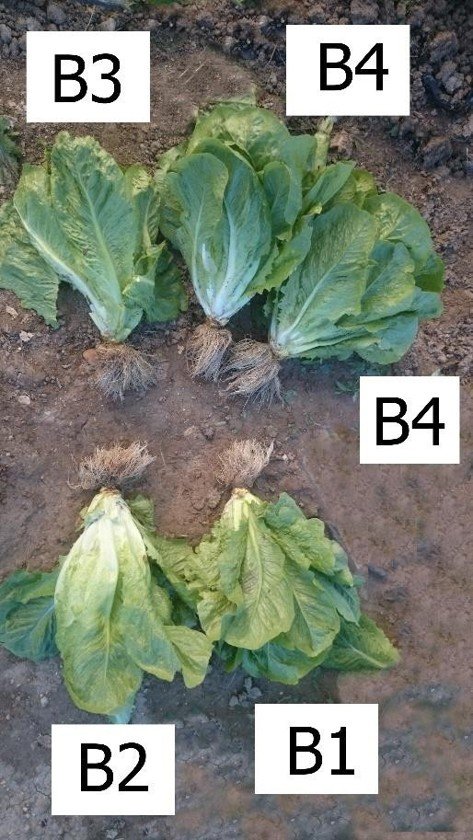
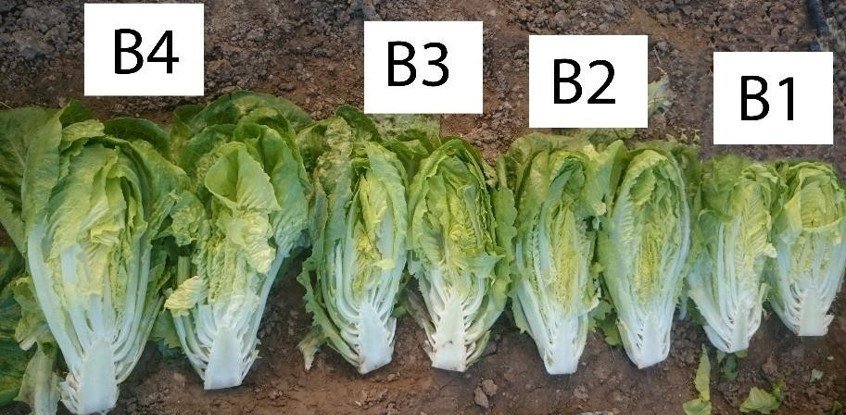
Aim of study To evaluate to best rate of Aqualatus for the region based on a water reduction of 40%-50%.
Application data Due to the length of crop (6 weeks) only one application of Aqualatus was given at planting.
Applications as follows: B1 -1.5 litres per ha -40% irrigation. B2 - 2.0 litres per ha -40% irrigation. B3 - 2.5 litres per ha -40% irrigation. B4 – 2.0 litres per Ha -50% irrigation Soil type. Terrain and Irrigation Clay loam flat terrain. Lay flat tube irrigation. All other parameters of spraying and field preparations remained as normal. Fertiliser reduced in line with reduced irrigation.Conclusion from study Of the trials areas it was thought that 2.0 litres at -50% irrigation gave the best results in terms of establishment, root growth, size and quality.
Aim of study To assess if Aqualatus soil water saving technology could reduce the level of water required to produce a high quality crop over total crop period (3 months) and effect marketable yield.
Application data 1st application – 2 litres per hectare after planting2nd application – 2 litres per hectare 2 weeks laterSubsequent applications given at 1 litre per hectare at monthly intervals (total 6 litres).
Soil type & terrainSand loam in levelled greenhouse.
Irrigation typeMains water mixed with fertiliser and injected through layflat irrigation.Results and FindingsAqualatus-treated plots required significantly less irrigation time, reducing watering from 1 hour 30 minutes to just 20 minutes per day. This resulted in a 65% reduction in water and nutrient requirements without compromising crop quality. Yield was taken from 4 x 5m2 plots and these plots showed that the use of Aqualatus increased yield from 4.55 kg/m² in control plots to 5.64 kg/m² in treated plots, which commercially would generate an additional €5450 per hectare. Conclusion from study Aqualatus increased marketable yield of the cantaloupes by 1.5kg per square metre of production even with a water reduction of 65%.
Business Case SummaryWater savings from Aqualatus usage amounted to €1,404to €2106 per hectare, while fertilizer savings ranged from €203.12 to €243.75. Overall, total savings per hectare could reach between €1,607.12 and €2,481.00, highlighting the economic benefits of Aqualatus in melon cultivation.
Thomas Perez, grower at CASI
The area of Rutigliano is in southern Italy and is renown for the growing of wine grape. The area has good levels of rainfall but still requires irrigation when required.
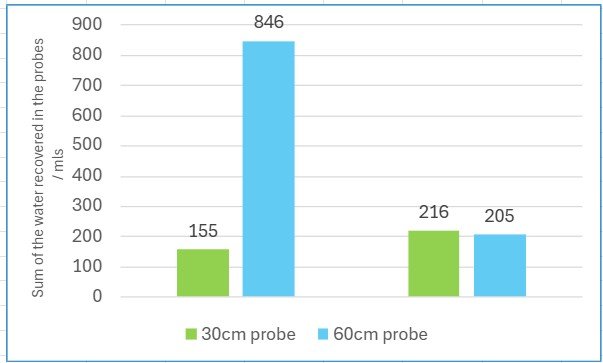
Aim of study To improve the absorption of nutritional solutions to the grapevines by reducing gravitational loss of water using probes at 30cms and 60cms. 60cms is below the root line meaning it is lost to the crop.
Application data 2 plots were chosen 1 Ha each. One received 2.0 litres per Ha of Aqualatus on the 27th of August in a water volume equal to 48lts.
Irrigation27 Aug 48 litres of water per plant across the day01 Sept 12mm rain02 Sept 56 litres of water per plant across the day09 Sept 40mm of rain18 Sept 5mm of rain29 Sept 48 litres of water per plant across the day18 Oct 20mm of rain30 Oct soil moisture reading taken.
Conclusion from study From the moisture recorded from the probes it was concluded that as the level of water in the control was far higher than the Aqualatus area that Aqualatus reduced leaching by 400% compared to the control.
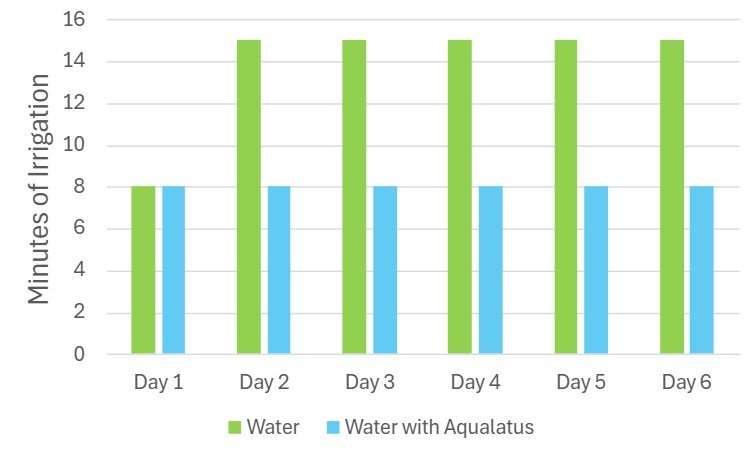
Aim of study To assess if Aqualatus soil water saving technology could reduce the level of water required to produce a high-quality crop over total crop period (8 months) and effect marketable yield.
Application data 1st application – 2 litres per hectare after planting2nd application – 2 litres per hectare 4 weeks later
Subsequent applications given at 2 litres per hectare at monthly intervals (total 14 litres).
Irrigation typeMains water mixed with fertiliser and injected through layflat irrigation.
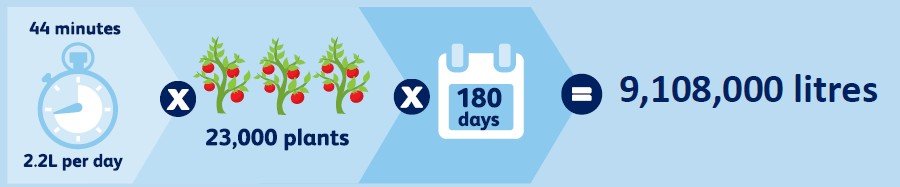
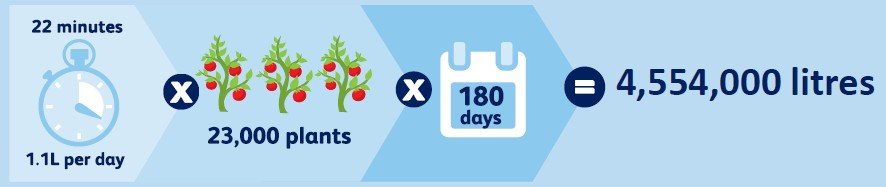
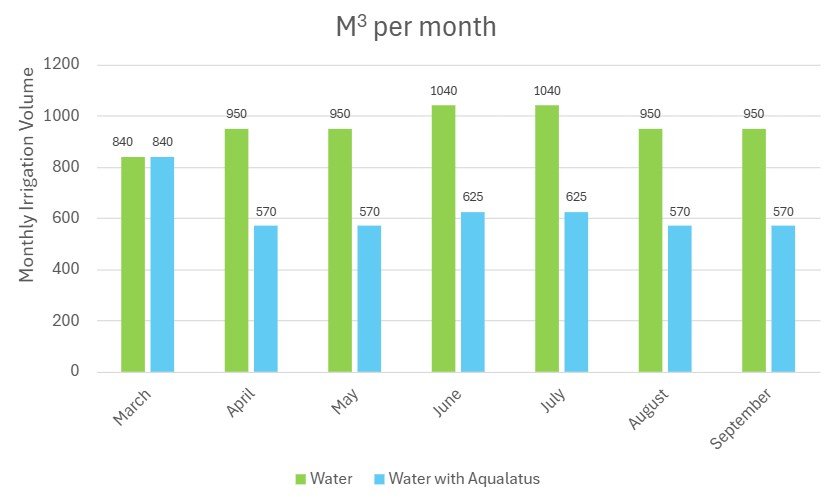
Conclusion from study Aqualatus reduced the water requirement of the tomato crop by 40% in this crop which used 12000M3 of water per season per ha is a saving for Mr Perez of 14400M3
Data courtesy of CASI food company , Murcia, Spain.
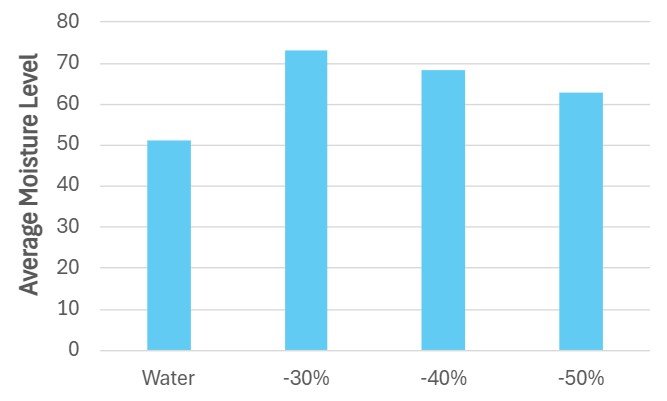
Aim of study Using 8 growers, trial is to assess which would be the best % reduction of irrigation to optimise water saving against yield increase.
Application data 1st application – 2 litres per hectare pre flowering2nd application – 1 litre per hectare 4 weeks laterSubsequent applications givenat 1 litre per hectare at monthly intervals (total 7 litres)
Soil type & terrainSand loam flat terrain.
IrrigationRiver water mixed with fertiliser and injected through permanent irrigation.
Conclusion from study Aqualatus increased moisture levels across all groups even though irrigation levels were reduced. Overall, it was decided by Guillamon consulting that -40% irrigation offered the best balance increased moisture level with the saving in irrigation and fertiliser which was also reduced by 40%.
Aim of study To assess if Aqualatus soil water saving technology could reduce the level of water required to produce a high-quality crop over total crop period (7 months).
Application data 1st application – 2 litres per hectare after planting2nd application – 2 litres per hectare 4 weeks laterSubsequent applications given at
1 litre per hectare at monthly intervals (total 8 litres).
IrrigationMain's water mixed with fertiliser and injected through plastic irrigation.
Conclusion from study Aqualatus allowed a reduction in water application of 40%. This reduction allowed grower greater flexibility with their overall water allowance and saved the grower 40% in the cost of his water, fertiliser and energy with no loss in growth, yield or quality.